Akali Dal backs exam bill, demands states get recruitment powers
Synopsis
The Akali Dal's backing of the 2026 exam bill comes with a pointed condition: give states the power to run their own exams. With the NEET-UG 2026 paper leak still raw, the party is framing centralised examinations as a structural liability — not just an administrative failure.
Key Takeaways
The Shiromani Akali Dal (SAD) welcomed the Public Examinations (Prevention of Unfair Means) Amendment Bill, 2026 on 26 July .
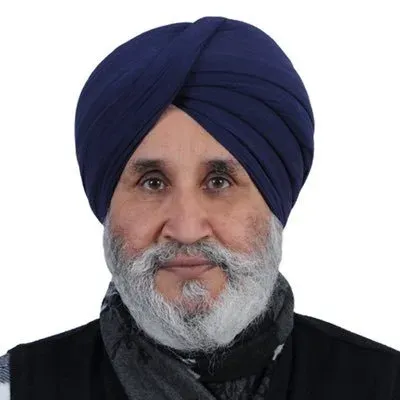
Senior SAD leader Daljit Singh Cheema demanded that states be empowered to conduct examinations for their own recruitments and institutions.
The party called for uniform national SOPs alongside decentralisation, arguing this reduces systemic risk and improves accountability.
The amendment bill is set to be introduced in the Lok Sabha on 27 July by Minister of State Jitendra Singh .
The bill follows the NEET-UG 2026 paper leak and subsequent student protests across multiple states.
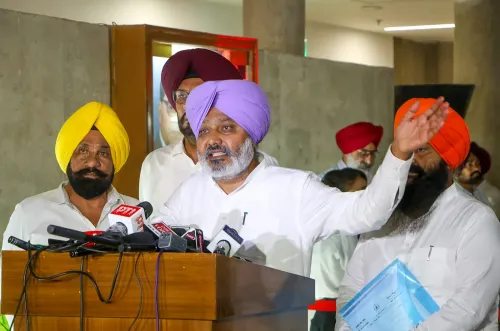
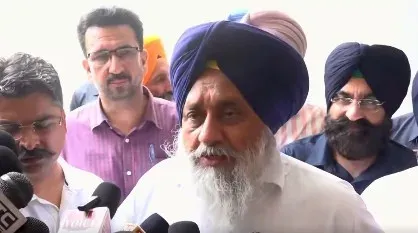
The Shiromani Akali Dal (SAD) on Sunday, 26 July welcomed the proposed Public Examinations (Prevention of Unfair Means) Amendment Bill, 2026 but called on the Centre to empower states to independently conduct examinations for their own recruitments and institutions. The party argued that stiffer penalties alone cannot secure the integrity of competitive exams without structural decentralisation.
What the Akali Dal Demanded
Senior SAD leader Daljit Singh Cheema said the Union government should frame uniform national security standards while allowing states to manage their own examination processes. He argued this approach aligns with the spirit of cooperative federalism.
'Decentralisation, coupled with strong national Standard Operating Procedures (SOPs) will reduce systemic risks, improve accountability, strengthen public confidence and ensure better protection of the aspirations of millions of honest students,' Cheema said.
The Case Against Centralisation
Cheema contended that India's scale makes highly centralised examinations structurally vulnerable. He cited the country's 'vast geography, linguistic diversity, varying infrastructure and technology levels, and the enormous logistical challenge of transporting confidential papers to thousands of examination centres' as factors that inherently raise the risk of leaks under a centralised model.
Beyond decentralisation, the SAD demanded that the amended law place equal emphasis on preventive measures — including robust SOPs, secure technology, end-to-end accountability, regular security audits, and foolproof examination protocols — rather than focusing primarily on punishment after the fact.
The Bill and Its Context
The Centre is set to introduce the amendment bill in the Lok Sabha on Monday, 27 July. Minister of State for Personnel, Public Grievances and Pensions Jitendra Singh will move the legislation to amend the Public Examinations (Prevention of Unfair Means) Act, 2024, according to the Lok Sabha's legislative business schedule.
The proposed amendments follow the NEET-UG 2026 paper leak controversy, which triggered widespread student protests across several states over alleged examination irregularities. This is not the first time a major centralised exam has been rocked by a leak scandal, and the recurrence has intensified political pressure on the government to overhaul the framework.
What Happens Next
With the bill expected to be tabled in Parliament on Monday, debate is likely to centre on whether stronger punishments are sufficient or whether a federal restructuring of examination authority is warranted. Opposition parties and regional outfits like the SAD are expected to push for state-level autonomy provisions during the legislative process.
Point of View
Not architecture. India has passed or amended examination integrity legislation before, yet paper leaks have recurred with striking regularity — most recently in NEET-UG 2026. The party's federalism argument has merit on logistics grounds, but state-level examinations have their own track record of irregularities. The real gap is the absence of an independent, technology-backed audit mechanism that operates regardless of who conducts the exam. Until that exists, the centralisation-versus-decentralisation debate risks becoming a political football rather than a structural fix.
NationPress
25 Oct 2026
Frequently Asked Questions
What is the Public Examinations (Prevention of Unfair Means) Amendment Bill, 2026?
It is a proposed amendment to the Public Examinations (Prevention of Unfair Means) Act, 2024, set to be introduced in the Lok Sabha on 27 July 2026. The bill seeks to strengthen penalties for those involved in examination malpractice, including paper leaks, and follows the NEET-UG 2026 controversy.
What is the Shiromani Akali Dal demanding from the Centre?
The SAD is demanding that while the Centre sets uniform national security standards, states should be empowered to independently conduct examinations for their own recruitments and institutions. The party argues this decentralisation, paired with strong SOPs, will reduce systemic risk and improve accountability.
Why does the Akali Dal say centralised exams are more vulnerable?
Senior SAD leader Daljit Singh Cheema cited India's vast geography, linguistic diversity, varying infrastructure levels, and the logistical challenge of transporting confidential papers to thousands of centres as factors that make highly centralised examinations inherently more prone to leaks.
What triggered the push for the 2026 amendment bill?
The bill was prompted by the NEET-UG 2026 paper leak controversy and the student protests that followed across multiple states over alleged examination irregularities.
Who will introduce the bill in Parliament?
Minister of State for Personnel, Public Grievances and Pensions Jitendra Singh is scheduled to introduce the amendment bill in the Lok Sabha on Monday, 27 July 2026.