Akali Dal Slams Bhagwant Mann's President Meet Plan as Political Drama
Synopsis
Shiromani Akali Dal has called CM Bhagwant Mann's plan to meet President Murmu over seven AAP Rajya Sabha MPs joining BJP a constitutional non-starter and political drama. With two-thirds of AAP's Upper House bloc defecting together, anti-defection law offers no remedy — exposing AAP's crisis while handing BJP and SAD a major political win.
Key Takeaways
Shiromani Akali Dal on April 25, 2025 labelled Punjab CM Bhagwant Mann 's plan to meet President Droupadi Murmu over AAP MP defections as "political theatre" with no constitutional validity.
Seven AAP Rajya Sabha MPs — including Raghav Chadha , Harbhajan Singh , and Swati Maliwal — quit AAP and joined BJP on April 24, 2025 , with six of them representing Punjab .
Under the Tenth Schedule of the Constitution , the two-thirds defection threshold protects all seven MPs from disqualification under the anti-defection law .
Daljit Singh Cheema of SAD highlighted that CM Mann had himself facilitated the defection of a SAD MLA into AAP and rewarded the legislator with a PSU chairmanship .
SAD challenged AAP to seek a fresh mandate from the Governor of Punjab rather than pursuing symbolic presidential petitions in New Delhi .
The defection of 7 out of 10 AAP Rajya Sabha MPs signals deepening fractures within the party, potentially reshaping Punjab 's political landscape ahead of future elections.
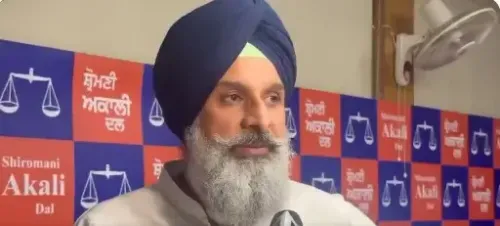
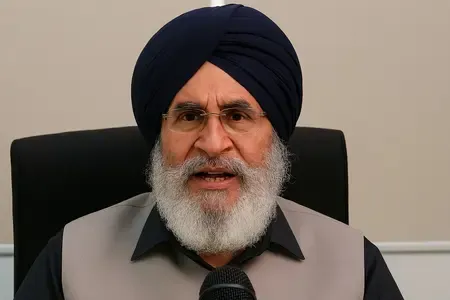
Chandigarh, April 25: The Shiromani Akali Dal (SAD) on Saturday, April 25, sharply dismissed Punjab Chief Minister Bhagwant Mann's move to seek a meeting with President Droupadi Murmu over the mass defection of AAP's Rajya Sabha MPs to the BJP as nothing more than political theatre. Senior SAD leader Daljit Singh Cheema reminded the Chief Minister that under the Tenth Schedule of the Constitution, action against MPs for defection falls squarely within Parliament's domain — not the President's discretion.
Akali Dal's Constitutional Counter-Argument
Daljit Singh Cheema, speaking in Chandigarh, stated that the anti-defection law is unambiguous: when two-thirds or more members of a political party merge with another party, no disqualification action can be initiated against them. He argued that CM Bhagwant Mann's petition to the President has no constitutional basis and amounts to symbolic posturing designed to distract from AAP's internal crisis.
Cheema pointed out a glaring contradiction in Mann's moral stance — the Chief Minister had himself approved the defection of one out of three SAD MLAs into AAP and subsequently rewarded that legislator with the chairmanship of a public sector undertaking. "He has no right to take the high moral ground on this issue," Cheema said bluntly.
The Mass Defection That Triggered the Crisis
The political storm erupted after seven AAP Rajya Sabha members — Raghav Chadha, Sandeep Pathak, Ashok Mittal, cricketer-turned-politician Harbhajan Singh, Rajinder Gupta, Swati Maliwal, and Vikramjit Sahney — announced their resignation from AAP and formal induction into the BJP on Friday, April 24.
Of these seven, six represent Punjab in the Rajya Sabha, with Swati Maliwal being the sole exception. Crucially, since seven out of AAP's 10 Rajya Sabha MPs have defected together, they comfortably cross the two-thirds threshold stipulated by the Tenth Schedule, making disqualification under the anti-defection law legally untenable.
SAD Questions AAP's Democratic Credentials
Cheema went further, questioning why AAP had nominated what he called "ultra-wealthy outsiders" to the Rajya Sabha instead of genuine representatives of Punjab's common people — a direct jab at the party's founding identity as the movement of the aam aadmi. "The people deserve clarity: if accountability is the principle, do citizens have the right to recall MLAs who have failed them, or is your accountability selective?" he asked pointedly.
The Akali Dal challenged AAP to abandon symbolic petitions in New Delhi and instead approach the Governor of Punjab at Lok Bhawan to seek a fresh public mandate. "Only that — and not constitutional posturing — will restore public trust in the party," Cheema asserted.
CM Mann's Response and What He Seeks
Chief Minister Bhagwant Singh Mann has formally requested time to meet President Droupadi Murmu, accompanied by AAP MLAs, to present his party's position on the recall of the seven defecting Rajya Sabha members. The move is widely seen as an attempt to keep the political narrative alive and signal to Punjab voters that AAP is fighting back against what it frames as BJP's poaching of elected representatives.
However, constitutional experts and opposition leaders alike note that the President has no direct mechanism to recall or disqualify sitting members of the Upper House — that authority rests with the Chairman of the Rajya Sabha under the anti-defection provisions, and even then, only if the legal threshold for disqualification is met, which it is not in this case.
Broader Political Implications for Punjab
This episode exposes a deepening vulnerability within AAP's political architecture in Punjab. The party swept to power in the state in March 2022 with a historic 92-seat majority, but the mass exit of its Rajya Sabha bloc signals fractures that could embolden further defections ahead of the next assembly cycle. The BJP, which has been seeking a stronger foothold in Punjab — especially after its alliance with the SAD dissolved — stands to gain both organisational strength and symbolic credibility from this acquisition.
For the Akali Dal, the crisis offers a rare opportunity to reassert relevance by positioning itself as the constitutional voice of reason in Punjab's chaotic political landscape. As all three major parties — AAP, BJP, and SAD — manoeuvre ahead of future electoral contests, the defection drama is likely to intensify, with the people of Punjab watching closely to see which party's accountability rhetoric translates into genuine governance.
Point of View
On closer constitutional examination, a carefully staged performance with no legal teeth. The Tenth Schedule is unambiguous — two-thirds defections are protected, and the President has no role in MP disqualification. CM Bhagwant Mann's Delhi visit is designed for optics, not outcomes, revealing how a party that built its brand on transparency is now resorting to the same symbolic politics it once condemned. More troubling is the pattern: AAP's Rajya Sabha nominees were never Punjab's grassroots voices — they were wealthy, well-connected insiders — making the party's outrage over their departure ring hollow before its own voter base.
NationPress
25 Sept 2026
Frequently Asked Questions
Why did Akali Dal call Bhagwant Mann's President meeting political theatre?
Akali Dal said CM Mann's move has no constitutional basis because the President cannot recall or disqualify Rajya Sabha MPs under the anti-defection law. The Tenth Schedule gives that authority to the Rajya Sabha Chairman, and only when the two-thirds merger threshold is not met — which is not the case here.
Which AAP Rajya Sabha MPs joined the BJP in April 2025?
Seven AAP Rajya Sabha MPs — Raghav Chadha, Sandeep Pathak, Ashok Mittal, Harbhajan Singh, Rajinder Gupta, Swati Maliwal, and Vikramjit Sahney — announced their switch to BJP on April 24, 2025. Six of the seven represent Punjab in the Upper House.
Can the seven AAP MPs who joined BJP be disqualified under the anti-defection law?
No. Since seven out of AAP's ten Rajya Sabha MPs defected together, they meet the two-thirds merger threshold under the Tenth Schedule of the Constitution, which exempts them from disqualification. The anti-defection law does not apply in this scenario.
What hypocrisy did Akali Dal point out against CM Bhagwant Mann?
Akali Dal's Daljit Singh Cheema noted that CM Mann had himself approved the defection of one SAD MLA into AAP and rewarded that legislator with the chairmanship of a public sector undertaking. This, Cheema argued, disqualifies Mann from taking a moral stand on defections.
What did Akali Dal suggest AAP should do instead of meeting the President?
Akali Dal urged AAP to approach the Governor of Punjab at Lok Bhawan and seek a fresh public mandate rather than filing symbolic petitions in Delhi. The party argued that only a fresh electoral mandate — not constitutional posturing — can restore public trust in AAP.