Akhilesh alleges BJP-EC nexus to rig 2027 UP voter rolls
Synopsis
Samajwadi Party president Akhilesh Yadav alleged on 14 October 2026 that a BJP-Election Commission-administration axis is inserting duplicate voters into UP's Special Intensive Revision process to rig the 2027 assembly elections, promising documentary proof at a press conference on 15 October.
Key Takeaways
Akhilesh Yadav accused a 'three-pronged axis' of BJP, the Election Commission, and the state administration of planting duplicate voters in the SIR electoral-roll exercise.
The allegation targets the Special Intensive Revision (SIR) , a periodic voter-list update conducted before every major UP poll cycle.
Uttar Pradesh has 403 assembly seats ; the next election is due in 2027 , with BJP holding power since 2017.
Yadav's post ended with a '420 cheating' taunt, invoking the penal code section for fraud to underscore his fraud allegation.
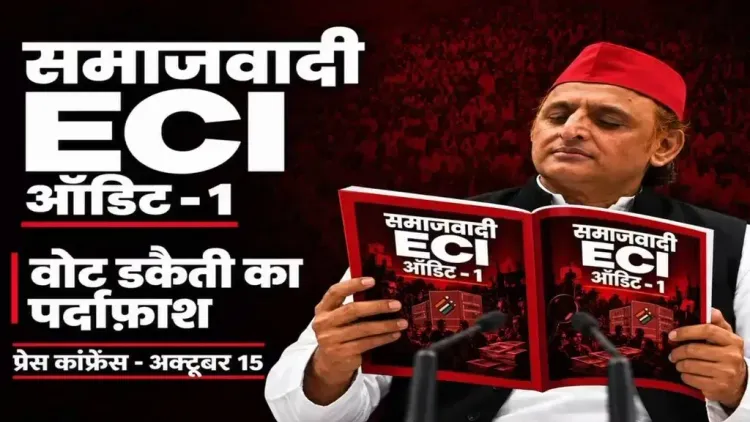
A Samajwadi Party press conference on 15 October 2026 is expected to present the evidence behind the charge.
No formal response from the Election Commission or BJP has been issued as of the time of posting.
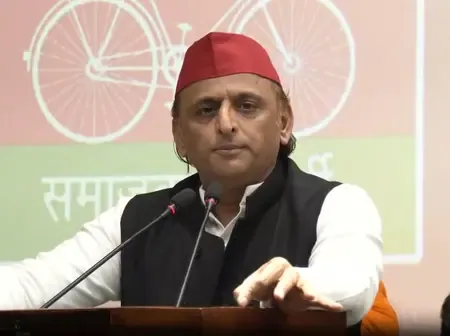
A conspiracy to steal the 2027 Uttar Pradesh assembly elections through duplicate voter entries — that is the explosive charge Samajwadi Party president Akhilesh Yadav has levelled on Wednesday, 14 October 2026, promising a full exposé at a press conference the very next day.
In a sharp Hindi post, Yadav accused what he called a 'trigut' — a 'three-pronged axis' — of BJP, the Election Commission of India, and the state administration of engineering the insertion of duplicate voters into the ongoing Special Intensive Revision (SIR) process for electoral rolls. The goal, he alleged, is to manufacture a pre-baked majority ahead of the 403-seat assembly contest.
He closed with a crisp electoral taunt: 'Chaar sau teen mein chaar sau beesi nahin chalegi!' — roughly, 'In a house of 403, four-hundred-and-twenty trickery won't work!' The number 420 carries unmistakable weight in Indian public life: it is the penal code section for cheating and fraud, a shorthand for brazen dishonesty that every voter in Uttar Pradesh immediately recognises.
What the SIR exercise is — and why it matters
The Special Intensive Revision is a periodic exercise through which election authorities physically verify, add, and delete entries on the electoral rolls ahead of a major poll cycle. The Election Commission of India has conducted these drives before every UP election, including the 2022 assembly cycle. On paper, the SIR is a housekeeping exercise meant to keep rolls clean. Yadav's allegation turns that logic on its head — he claims it is being used to stuff rolls with phantom or duplicate votes rather than purge them.
Uttar Pradesh is India's most populous state and its 403 assembly constituencies make it the single biggest prize in any non-general election year. Control of Lucknow has historically shaped national politics: the BJP has held the state since 2017, and the next election is due in early 2027.
A pattern of pre-election roll disputes
Allegations of voter-list manipulation before UP polls are not new territory. Indian opposition parties have repeatedly raised concerns about roll integrity ahead of major state contests — ranging from ghost entries in urban booths to mass deletions of minority-community voters. What makes Yadav's charge structurally different this time is the explicit naming of the Election Commission itself as a party to the alleged collusion, not merely a passive or negligent bystander.
The Samajwadi Party holds the principal opposition position in the UP assembly and has an organisational stake in every booth. Yadav's decision to announce the press conference a day in advance — rather than simply releasing documents — suggests a calculated media build-up designed to maximise attention to whatever evidence the party intends to present.
The press conference to watch
All eyes now turn to Thursday, 15 October 2026. Yadav has promised a 'parda-faash' — an 'unmasking' — with specific evidence of duplicate voter additions. Whether the party produces data sets, field affidavits, or whistleblower testimony will determine how seriously the charge lands in the public domain. A formal response from the Election Commission or the BJP would signal how much political heat the allegation is already generating.
With 2027 now squarely on the horizon, the battle for Uttar Pradesh's voter rolls may well be the opening skirmish of its fiercest election campaign yet.
Point of View
Rather than a passive enabler, marks a significant escalation in opposition rhetoric ahead of 2027. It fits a broader pattern in Indian state politics where pre-election roll disputes serve as both genuine grievance channels and mobilisation tools for the base. The structured 24-hour media build-up to a press conference suggests the SP is confident in the material it holds — or is betting that the allegation itself, regardless of evidence, will define the early narrative of the campaign cycle. How the Election Commission responds, or chooses not to, will itself become a political data point.
NationPress
14 Oct 2026
Frequently Asked Questions
What is Akhilesh Yadav's allegation about the 2027 UP elections?
Akhilesh Yadav alleged that BJP, the Election Commission of India, and the Uttar Pradesh administration are jointly inserting duplicate voter entries into the Special Intensive Revision (SIR) process to fraudulently boost votes in the 2027 assembly elections.
What is the Special Intensive Revision (SIR) process in UP?
The Special Intensive Revision is a periodic exercise by election authorities to verify, add, and delete entries in voter rolls before major elections. It has been conducted before every Uttar Pradesh assembly election cycle, including 2022.
What did Akhilesh Yadav mean by '420' in his post?
The number 420 is a reference to Section 420 of the Indian Penal Code, which deals with cheating and fraud. Yadav used it as a pointed wordplay on the 403 assembly seats in UP, accusing the ruling establishment of criminal-scale electoral deceit.
When is the Samajwadi Party press conference on this issue?
Akhilesh Yadav announced that the press conference to present evidence of the alleged voter-roll conspiracy will be held on Thursday, 15 October 2026.
Has the Election Commission or BJP responded to Akhilesh Yadav's allegation?
As of Yadav's post on 14 October 2026, no formal response from the Election Commission of India or the BJP had been issued publicly.