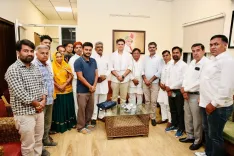
Haryana CM meets Russian delegation to build drone and aerospace hub
Synopsis
Haryana Chief Minister hosted a high-level Russian delegation on October 14, 2026, to advance the state's ambition of becoming a global hub for drone and aerospace technology — a meeting that sits at the intersection of India's Atmanirbhar Bharat push and deepening India-Russia cooperation in dual-use technology.
Key Takeaways
High-level Russian delegation met the Haryana Chief Minister on October 14, 2026 to discuss drone and aerospace collaboration.
Haryana is positioning itself as a global hub for drone and aerospace technology.
India's Drone Rules (2021) and a Production Linked Incentive (PLI) scheme for drones form the national policy backbone for this push.
India-Russia aerospace cooperation, historically defence-focused, is extending into civilian and dual-use technology domains.
Indian states are increasingly engaging foreign delegations independently to attract high-tech investment under the Atmanirbhar Bharat framework.
Potential follow-up MoUs or investment commitments between Haryana and Russian entities could emerge from this engagement.
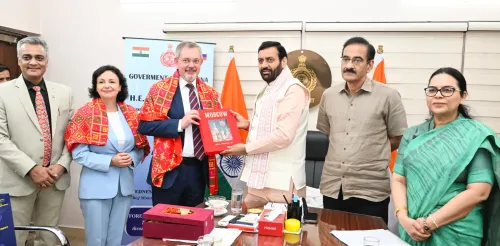
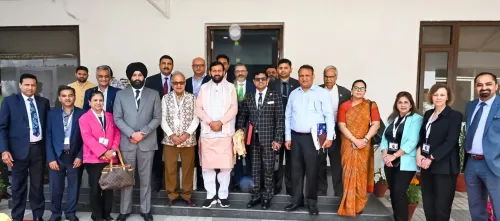
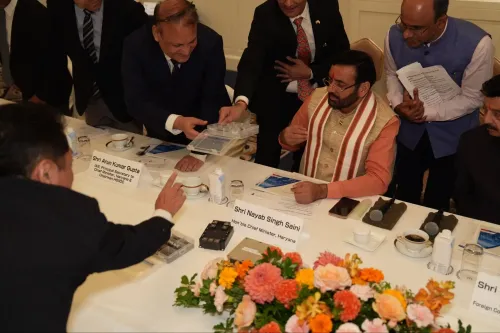
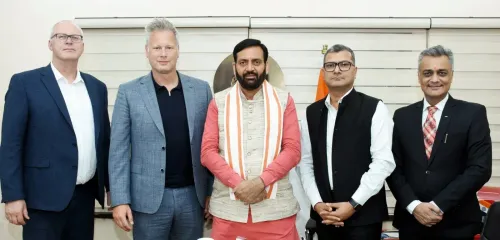
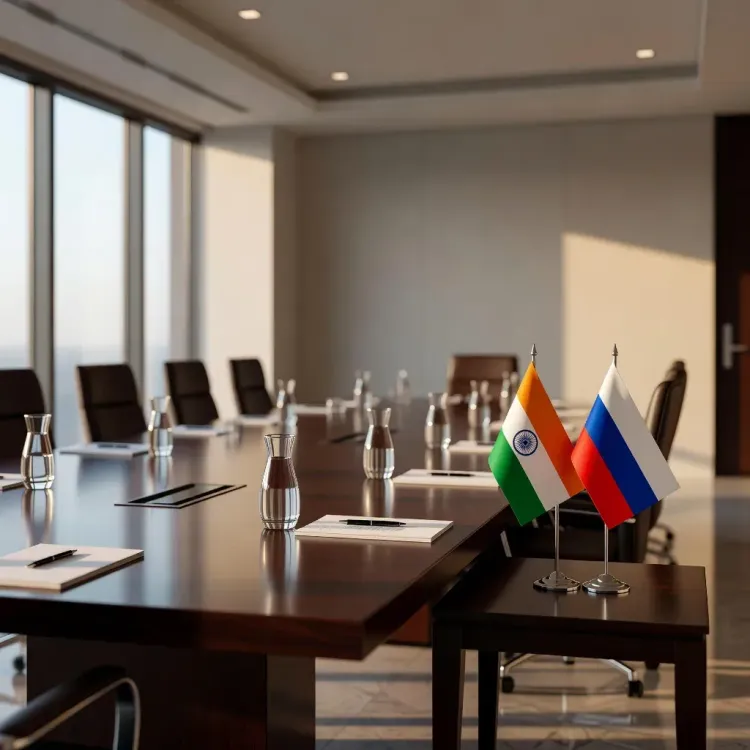
A high-level Russian delegation called on Haryana Chief Minister on Wednesday, October 14, 2026, signalling the northern state's increasingly ambitious push to position itself as a global destination for drone and aerospace technology — a sector where India and Russia share decades of strategic common ground.
Why Haryana is pitching itself to Moscow on aerospace
Haryana, which borders New Delhi and already hosts a dense manufacturing corridor in districts like Gurugram and Faridabad, has been sharpening its identity as a high-tech industrial state. Drone and aerospace manufacturing fits naturally into that narrative — these are sectors that demand precision engineering, skilled labour, and strong connectivity, all of which the state can credibly claim. The Chief Minister's Office framed the meeting explicitly around making Haryana a 'global hub' (Global Hub) for drone and aerospace technology.
Russia brings weight to that conversation. Decades of defence and aerospace collaboration with India — spanning fighter aircraft, missile systems, and space technology — are now extending into dual-use and civilian domains. A Russian delegation at the state level, rather than only the central government level, reflects how quickly this dynamic is shifting: foreign partners are increasingly willing to engage sub-nationally to find faster, more flexible entry points into India's technology ecosystem.
India's drone policy runway — and where states fit in
The backdrop matters. India overhauled its drone regulatory framework in 2021, simplifying rules and opening the skies to commercial and industrial operators. That same year, the central government launched a Production Linked Incentive (PLI) scheme specifically for drones, pumping financial muscle into indigenous manufacturing under the Atmanirbhar Bharat self-reliance mission. The policy architecture is set — what states are now racing to do is capture the investment flows that follow.
Haryana entering this race with a Russian partnership angle adds a distinct dimension. While many states are courting domestic startups or Western tech firms, a Russia tie-up could open pathways in propulsion technology, navigation systems, and materials science where Russian expertise runs deep. Whether the meeting translates into formal MoUs, investment commitments, or state-level policy incentives for aerospace firms will be the measure of its real significance.
The sub-national diplomacy pattern
This meeting is part of a visible and accelerating pattern: Indian state governments hosting foreign delegations to attract high-value, strategically relevant investment — essentially running their own parallel tracks of economic diplomacy. Chief Ministers across the country have hosted delegations from Japan, South Korea, Germany, and the Gulf states in recent years. A Russian delegation arriving at Chandigarh for drone and aerospace talks is the newest data point in that trend. It tells you how seriously emerging technology sectors are being treated — not just in New Delhi, but at the state level where actual land, infrastructure, and incentives get allocated.
If Haryana secures even one anchor investment from this engagement, the ripple effect — in jobs, supply chains, and the credibility it lends to future pitches — could be substantial. The state is not just chasing a headline. It is competing for a position in a global industry that will define the next decade of strategic manufacturing.
Point of View
Haryana is signalling that it wants technological depth, not just capital. This sub-national diplomacy trend is maturing fast: states are no longer passive recipients of central policy but active players in India's industrial geopolitics. The real test will be whether this meeting produces binding commitments or remains a photo-opportunity in a crowded field of similar pitches.
NationPress
14 Oct 2026
Frequently Asked Questions
What was discussed between Haryana CM and the Russian delegation?
The meeting centred on positioning Haryana as a global hub for drone and aerospace technology, exploring potential collaboration between the state and Russian entities in these sectors.
Why is Haryana focusing on drones and aerospace?
Haryana is leveraging its location near New Delhi, its existing manufacturing base, and India's national PLI scheme for drones to attract high-tech investment and create skilled employment in emerging strategic sectors.
What is India's PLI scheme for drones?
India launched a Production Linked Incentive scheme for drones in 2021 to financially incentivise domestic manufacturing of drones and drone components, as part of the Atmanirbhar Bharat self-reliance mission.
How does India-Russia cooperation extend to drone and aerospace technology?
Historically focused on defence platforms like aircraft and missiles, India-Russia cooperation is now expanding into dual-use and civilian technology domains, making state-level engagements like this one increasingly relevant.
What could come out of Haryana's meeting with the Russian delegation?
Possible outcomes include memoranda of understanding, investment commitments in drone manufacturing or aerospace R&D, and state-level policy incentives tailored to attract Russian aerospace firms or joint ventures.