Akhilesh Yadav calls Modi's austerity appeal 'announcement of downfall'
Synopsis
Akhilesh Yadav turned PM Modi's austerity call — triggered by crude oil crossing $105 a barrel amid the Iran-US conflict — into a direct political attack, calling it an 'announcement of downfall' for the BJP. With UP elections on the horizon, the SP chief is framing India's economic stress as a governance failure squarely owned by the ruling party.
Key Takeaways
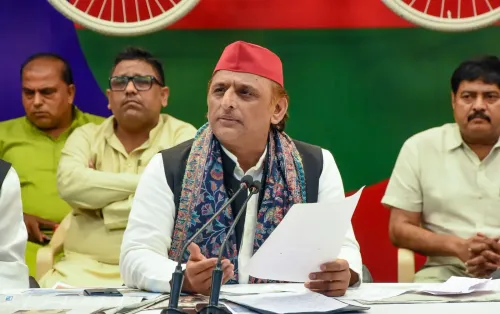
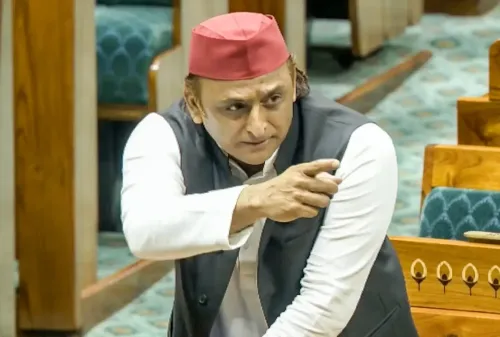
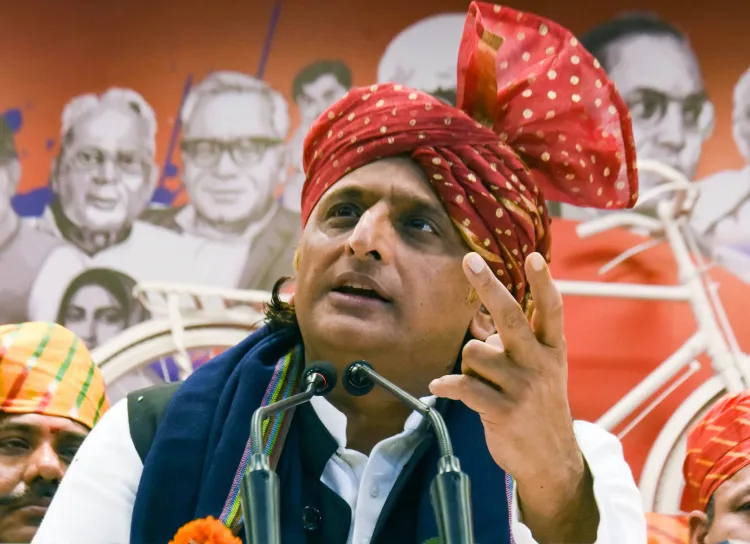
Akhilesh Yadav on Tuesday called PM Modi's austerity appeal an "announcement of his own downfall" while speaking in Prayagraj .
PM Modi urged Indians to avoid gold purchases, postpone foreign travel, and work from home amid the Iran-US conflict 's economic fallout.
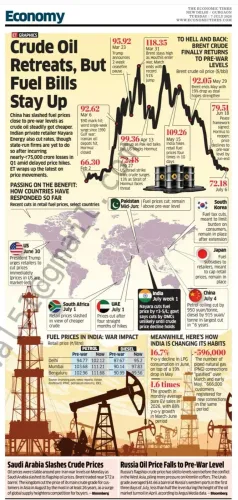
Global crude oil prices crossed $105 a barrel after US President Donald Trump rejected Iran 's latest peace proposals.
Iran reportedly offered to transfer enriched uranium abroad but refused to dismantle its nuclear facilities — a key US demand.
Akhilesh Yadav declined to reveal the Samajwadi Party 's strategy for the upcoming Uttar Pradesh Assembly elections .
Samajwadi Party chief Akhilesh Yadav on Tuesday sharply attacked Prime Minister Narendra Modi over his call for austerity measures, saying it was not an appeal but an "announcement of his own downfall." Yadav's remarks came from Prayagraj as PM Modi urged Indians to avoid gold purchases, postpone foreign travel, and work from home amid rising crude oil prices and the economic fallout of the ongoing Iran-US conflict.
Akhilesh's Direct Attack on BJP
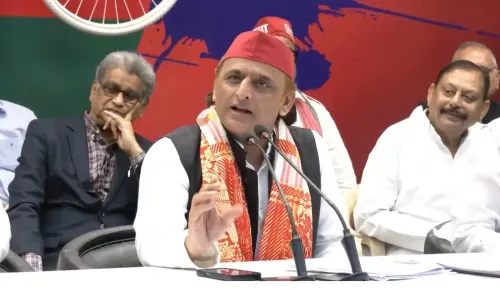
Speaking to reporters in Prayagraj, Akhilesh Yadav said: "This is not an appeal; rather, it is an announcement of his own downfall. You speak of a crisis, yet the BJP itself is the crisis. Who is in power? It is the BJP itself. Those who used to boast about the economy — why has the economy faltered today? Why has the economy derailed? They had spoken about doubling farmers' income and improving per capita income."
Yadav further questioned the Bharatiya Janata Party (BJP)'s economic management, asking why the rupee was weakening against the dollar and why such an appeal had become necessary at all. "This is not an appeal; it is an announcement of decline. They will lose after this appeal," he said.
What Triggered the Exchange
PM Modi, while addressing a BJP rally in Hyderabad on Sunday, called on Indians to conserve foreign exchange reserves and reduce fuel consumption. He cited prolonged pressure on global supply chains due to the conflict in West Asia as the primary reason for these measures.
The appeal followed US President Donald Trump's rejection of Iran's latest peace proposals, which pushed global crude oil prices above $105 a barrel. Iran had reportedly proposed transferring part of its enriched uranium stockpile to another country while refusing to dismantle its nuclear facilities — a key US demand — a condition Washington did not accept.
UP Elections and Political Posturing
When asked about the Samajwadi Party's strategy for the forthcoming Uttar Pradesh Assembly elections, Yadav declined to reveal specifics, saying: "How did you all think that I would reveal the strategy here in this Triveni city, Prayagraj?" He nonetheless framed the current economic turbulence as a political liability for the ruling BJP, arguing that the party in power bears full responsibility for the state of the economy.
This is not the first time Yadav has used a national economic flashpoint to sharpen his political messaging ahead of the UP polls. The SP chief has consistently sought to link Centre-level governance failures to voter sentiment in Uttar Pradesh, India's most populous state and a crucial electoral battleground.
Broader Economic Context
The Iran-US standoff has had measurable consequences for oil-importing nations like India. Crude prices crossing $105 a barrel raise the risk of imported inflation, pressure on the Indian rupee, and widening of the current account deficit. Analysts note that prolonged high oil prices could complicate the Reserve Bank of India (RBI)'s monetary policy calculus and squeeze household budgets ahead of a politically sensitive election season.
With the UP election cycle approaching and global energy markets volatile, the political battle over economic messaging is expected to intensify in the weeks ahead.
Point of View
He forces the BJP onto the defensive on the economy — traditionally its strongest suit. The irony is that the very appeal Modi made, however prudent in intent, hands the opposition a ready-made narrative of crisis and incompetence. With UP elections approaching, every rupee the currency loses against the dollar and every rupee more Indians pay at the pump becomes campaign material. The BJP's challenge is that its 2014 and 2019 victories were partly built on economic confidence; an austerity message from the same party risks eroding that foundational credibility precisely when it is needed most.
NationPress
26 Sept 2026
Frequently Asked Questions
What did Akhilesh Yadav say about PM Modi's austerity appeal?
Akhilesh Yadav said PM Modi's call for cost-cutting measures was "not an appeal, but an announcement of his own downfall." Speaking in Prayagraj on Tuesday, he blamed the BJP for the economic crisis and questioned why the rupee was weakening and the economy faltering under the ruling party's watch.
Why did PM Modi urge Indians to cut costs?
PM Modi made the appeal at a BJP rally in Hyderabad on Sunday, citing the economic fallout of the ongoing Iran-US conflict and rising global crude oil prices. He asked citizens to avoid gold purchases, postpone foreign travel, and work from home to help conserve foreign exchange reserves.
Why have crude oil prices risen above $105 a barrel?
Crude oil prices crossed $105 a barrel after US President Donald Trump rejected Iran's latest peace proposals in the ongoing Iran-US conflict. Iran had reportedly offered to transfer enriched uranium abroad but refused to dismantle its nuclear facilities, a condition the US did not accept.
How does the oil price rise affect India?
Higher crude prices raise the risk of imported inflation, pressure on the Indian rupee, and a wider current account deficit for India, which is a major oil importer. Analysts say prolonged high prices could complicate RBI's monetary policy and squeeze household budgets ahead of elections.
What is the political significance of this exchange ahead of UP elections?
The Uttar Pradesh Assembly elections are approaching, and Akhilesh Yadav is using the economic stress caused by the global oil shock to frame the BJP as responsible for India's financial difficulties. He declined to reveal the Samajwadi Party's election strategy but signalled that the economy would be a central campaign issue.