Akhilesh Yadav Hails PDA Coalition for Honouring Talent
Synopsis
Samajwadi Party president Akhilesh Yadav invoked the PDA (Pichhda-Dalit-Alpsankhyak) framework on 26 May 2026, crediting it with honouring talent among OBC, Dalit and minority communities. The post, backed by four images, signals the party's intent to keep its social-justice coalition energised ahead of the next Uttar Pradesh assembly elections.
Key Takeaways
Akhilesh Yadav posted on 26 May 2026 attributing the recognition of talent to the PDA (Pichhda-Dalit-Alpsankhyak) coalition.
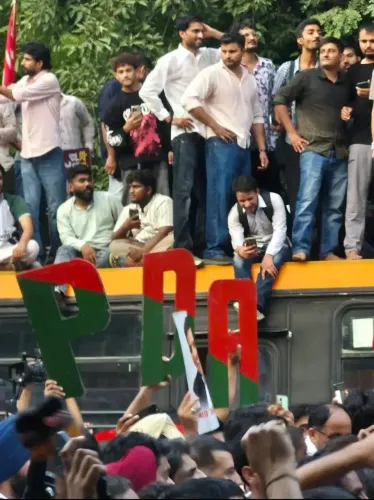
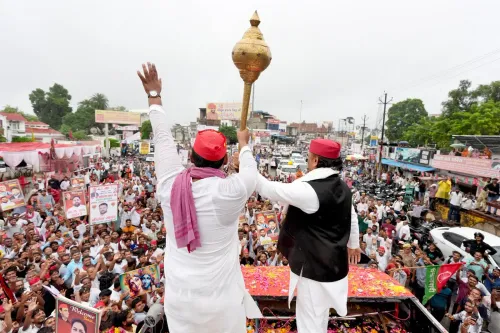
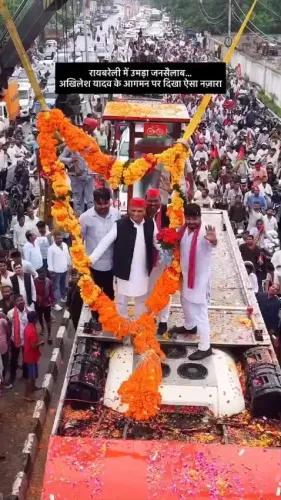
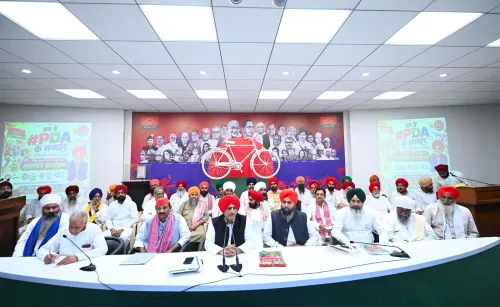
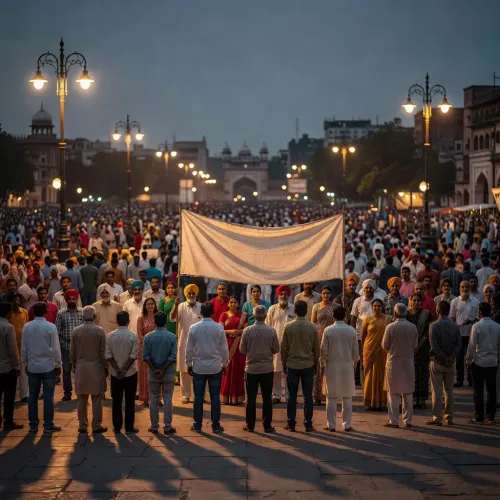
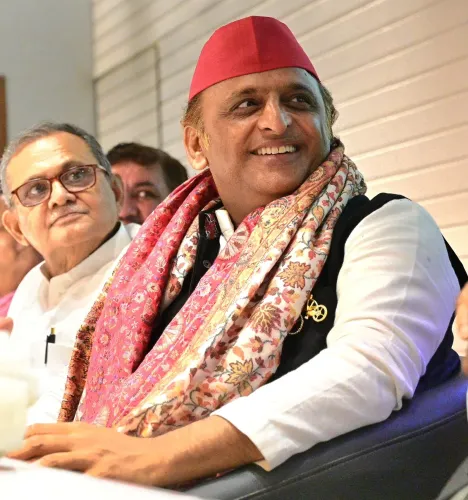
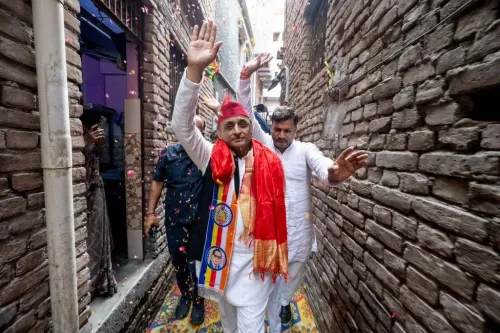
The post was accompanied by four images , indicating a specific felicitation or award event.
The PDA strategy was formally adopted by the Samajwadi Party ahead of the 2022 UP assembly elections to consolidate OBC, Dalit and minority voters.
The Samajwadi Party's 2012–2017 government launched multiple welfare and scholarship schemes for OBCs, Scheduled Castes and minorities.
The messaging directly counters the BJP 's development-and-Hindutva narrative by framing recognition along caste and community lines.
Increased PDA-branded events are expected as the next Uttar Pradesh assembly elections approach.
Samajwadi Party president Akhilesh Yadav on Tuesday, 26 May 2026, invoked the party's signature PDA (Pichhda-Dalit-Alpsankhyak) framework, declaring it the vehicle through which talent among historically marginalised communities is being recognised and honoured.
Context
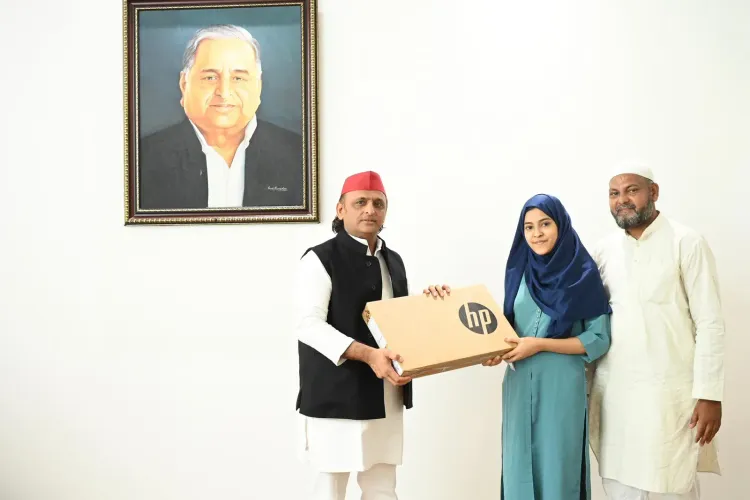
Akhilesh Yadav's post — 'PDA ka kaam, pratibhaon ka samman!' ('The work of PDA: honouring talents!') — was accompanied by four images, suggesting a specific felicitation or award event centred on the PDA coalition. The statement is brief but pointed, positioning the PDA umbrella as an active governance and social-recognition mechanism, not merely an electoral slogan.
The PDA acronym stands for Pichhda (Other Backward Classes), Dalit (Scheduled Castes) and Alpsankhyak (minorities). Together these groups constitute a substantial share of Uttar Pradesh's electorate and have historically been the core constituency the Samajwadi Party seeks to consolidate.
Policy Backdrop
The Samajwadi Party formally articulated the PDA strategy ahead of the 2022 Uttar Pradesh assembly elections, seeking to broaden its traditional Yadav-Muslim base by explicitly reaching out to non-Yadav OBC communities and Dalit voters. The framing was designed to update the classic Mandal-era social-justice politics championed by party founder Mulayam Singh Yadav for a new political moment.
During its 2012–2017 term in government, the Samajwadi Party launched multiple scholarship and welfare schemes targeting OBCs, Scheduled Castes and minorities. Akhilesh Yadav has consistently sought to keep that governance record alive in public memory, linking past welfare delivery to present political identity.
Honouring talent — through scholarships, awards or public felicitation — fits a longstanding pattern in the party's messaging: framing state resources and symbolic recognition as instruments of social justice rather than universal entitlement.
Stakeholders and Impact
OBC youth, Dalit students and minority communities across Uttar Pradesh are the primary audience for this messaging. For these groups, public recognition of achievement carries both material and symbolic weight in a state where access to higher education and professional opportunity has historically been uneven along caste lines.
The post also speaks to the Samajwadi Party's internal coalition management. By attributing the recognition of talent explicitly to the PDA framework, the party reinforces to each constituent group — backward classes, Dalits, minorities — that their advancement is a shared political project rather than a favour extended by any single dominant community within the alliance.
For the ruling Bharatiya Janata Party in Lucknow, such messaging represents a direct counter-narrative: where the BJP emphasises development and Hindutva, the Samajwadi Party insists that meaningful development requires explicit caste and community recognition.
What's Next
With the next Uttar Pradesh assembly elections on the horizon, the frequency and visibility of PDA-branded events — talent awards, community scholarships, public felicitations — is likely to increase as the Samajwadi Party seeks to convert social-coalition messaging into durable voter mobilisation. Whether the party translates this symbolic politics into a concrete programmatic agenda will be closely watched by political observers across the state.
Point of View
Reminding OBC, Dalit and minority constituents that their recognition is institutionally tied to the Samajwadi Party's coalition project. The move sits within a broader arc of post-Mandal identity politics in which symbolic gestures — awards, felicitations, public naming — are treated as substantive policy acts. By branding talent recognition under the PDA label, the party attempts to give the coalition a governing identity beyond the ballot box. As UP's next election cycle draws closer, such messaging will be tested against voters' appetite for concrete programmatic delivery.
NationPress
15 Oct 2026
Frequently Asked Questions
What is the PDA in Samajwadi Party politics?
PDA stands for Pichhda (Other Backward Classes), Dalit (Scheduled Castes) and Alpsankhyak (minorities) — a social coalition the Samajwadi Party formally promoted ahead of the 2022 Uttar Pradesh assembly elections to broaden its voter base beyond its traditional Yadav-Muslim support.
What did Akhilesh Yadav post on 26 May 2026?
Akhilesh Yadav posted a Hindi message meaning 'The work of PDA: honouring talents!' along with four images, indicating a felicitation or talent-recognition event held under the PDA framework.
What welfare schemes did the Samajwadi Party run for OBCs and Dalits?
During its 2012–2017 government in Uttar Pradesh, the Samajwadi Party launched multiple scholarship and welfare schemes targeting Other Backward Classes, Scheduled Castes and minorities.
How does the PDA strategy differ from earlier Mandal politics?
While Mandal-era politics focused primarily on OBC reservation, the PDA framework explicitly adds Dalits and minority communities to the coalition, making it a broader social-justice alliance aimed at countering the BJP's consolidation of Hindu voters.
What is the significance of talent recognition events for the Samajwadi Party?
Publicly honouring talent from OBC, Dalit and minority communities allows the Samajwadi Party to frame symbolic recognition as a form of governance, reinforcing its social-justice identity and keeping its coalition energised between election cycles.