Akhilesh targets BJP over Ayodhya funds and NEET leak

Synopsis
SP president Akhilesh Yadav attacked the BJP on 26 June 2026, alleging corruption in Ayodhya temple donation funds and linking it to the NEET paper leak scandal, using Ramayana metaphors to predict the ruling party's political downfall in Uttar Pradesh.
Key Takeaways
Akhilesh Yadav posted a multi-pronged attack on the BJP on 26 June 2026 , targeting alleged corruption in Ayodhya temple funds and the NEET paper leak in a single post.
He used the Ramayana metaphor of Lanka's fall to predict political consequences for the BJP, calling its leadership 'Lankadhipati' ('lord of Lanka').
Yadav alleged that BJP-affiliated trusts, organisations and volunteer wings would expose one another in an internal fight over alleged misappropriated funds.
He directly referenced NEET aspirants' demands for the resignation of those responsible for the 2024 paper leak , coining the term 'Leekaadhipati' .
The post called for accountability from both registered and unregistered entities connected to the BJP's ecosystem, invoking the phrase 'God's audit' .
The attack signals the Samajwadi Party's strategy of merging religious-governance and examination-integrity failures into a unified opposition narrative ahead of Uttar Pradesh elections.
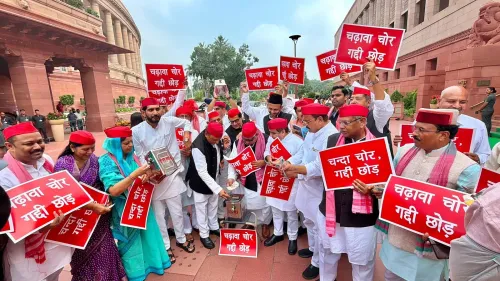
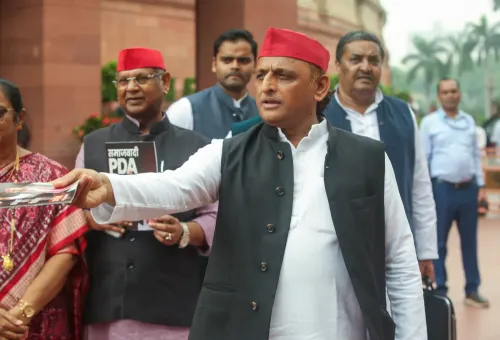
Samajwadi Party president Akhilesh Yadav launched a sharp attack on the Bharatiya Janata Party on Friday, 26 June 2026, invoking Ramayana imagery to allege corruption in Ayodhya temple donation funds and demanding accountability for the NEET paper leak scandal, calling the ruling party's tenure a period of institutional decay.
Context
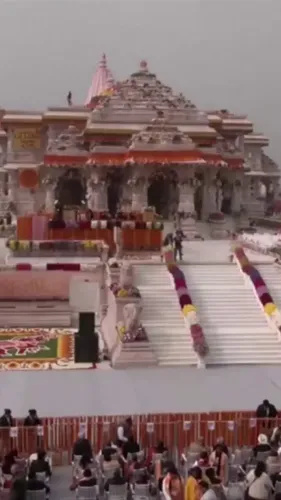
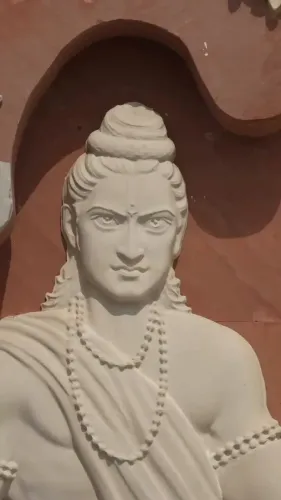
In his post, Yadav declared that 'भाजपा का लंकाकांड, अयोध्या में ही होगा' — 'the BJP's Lanka-episode will unfold in Ayodhya itself' — a metaphor drawing on the Ramayana's destruction of the demon king Ravana's golden kingdom. He accused the party of wearing the mask of devotion while allegedly siphoning offerings and donations, saying the mask had now slipped. He coined the term 'लंकाधिपति' ('lord of Lanka') for BJP leadership, predicting its downfall.
Yadav also mocked the government's earlier claim that resignations do not happen under its rule, sarcastically noting that BJP functionaries were now distinguishing between 'इस्तीफ़ा' and 'त्यागपत्र' — two Hindi words both meaning resignation — to save face. He alleged that internal factions within the party, its affiliated organisations and trusts would now expose one another in a fight over ill-gotten gains.
Policy Backdrop
The Ram Mandir in Ayodhya was inaugurated on 22 January 2024 by Prime Minister Narendra Modi, with a trust established to manage the temple's donations, offerings and construction funds. The temple has since received donations running into hundreds of crores of rupees from devotees across the country, making the management of these funds a subject of public scrutiny.
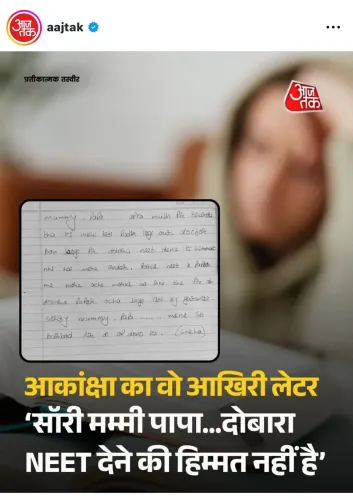
Separately, the NEET undergraduate medical entrance examination was embroiled in a paper leak controversy in 2024, triggering nationwide student protests, a CBI probe and hearings before the Supreme Court over demands for a fresh examination. Yadav referenced student anger directly, quoting NEET aspirants as demanding that the 'लीकाधिपति' — 'lord of the leak' — also be made to resign now that resignations have begun.
Stakeholders and Impact
The post targets multiple constituencies simultaneously: temple devotees who donated in faith, NEET aspirants whose futures were disrupted by the alleged paper leak, and voters in Uttar Pradesh where the Samajwadi Party is the principal opposition to the BJP. By linking religious trust management with an examination scandal, Yadav attempts to build a composite narrative of governance failure.
Yadav further alleged that unregistered individuals and entities connected to the BJP ecosystem — referring to what he called a network of party units, affiliates, trusts and volunteer wings — would be compelled to account for their actions, warning that 'borders would be closed' before those responsible could flee with stolen funds. He invoked the phrase 'भगवान के ऑडिट' ('God's audit') to suggest that divine as well as institutional reckoning awaited those involved.
What's Next
Opposition pressure for an independent audit of Ayodhya temple trust accounts is likely to intensify following Yadav's post, which explicitly calls for accountability of both registered and unregistered fund-management bodies. On the NEET front, any fresh judicial or parliamentary action on the paper leak case could amplify the political narrative Yadav is constructing.
With assembly elections in Uttar Pradesh on the horizon, the Samajwadi Party's strategy of merging religious-institution governance failures with central examination scandals signals a broader effort to frame the BJP's 'Amrit Kaal' as a period of moral and administrative collapse — a line of attack the party is likely to sustain in the months ahead.
Point of View
Yadav attempts to reclaim the religious narrative on the opposition's terms. The timing, with references to internal BJP resignations, suggests the SP is seeking to exploit any visible cracks in the ruling party's organisational discipline. This fits a broader opposition pattern of contesting the BJP's 'Amrit Kaal' framing by cataloguing institutional failures across sectors as evidence of systemic decay rather than isolated incidents.
NationPress
25 Sept 2026
Frequently Asked Questions
What is Akhilesh Yadav's 'Lanka' remark about BJP and Ayodhya?
Akhilesh Yadav used the Ramayana metaphor of Lanka's destruction to allege that the BJP's political empire, built on claims of religious devotion, would collapse in Ayodhya itself due to alleged corruption in temple donation funds.
What is the Ayodhya temple donation controversy?
The Ram Mandir trust in Ayodhya manages donations from devotees that run into hundreds of crores of rupees. Opposition parties, including the SP, have raised questions about the transparency and accountability of these funds, though specific irregularities remain unverified officially.
What does Akhilesh Yadav say about NEET in his post?
Yadav quoted NEET aspirants demanding that the person responsible for the paper leak — whom he called 'Leekaadhipati' or 'lord of the leak' — should also be forced to resign, linking the examination scandal to broader BJP accountability failures.
What is the NEET paper leak controversy?
The NEET undergraduate medical entrance exam was hit by a paper leak scandal in 2024, triggering student protests across India, a CBI investigation and Supreme Court proceedings over demands for a re-examination.
Why is Akhilesh Yadav attacking BJP over resignations?
Yadav mocked the BJP government's earlier claim that resignations do not occur under its rule, sarcastically noting that party functionaries were splitting hairs between two Hindi words for resignation to avoid admitting political embarrassment.