Akhilesh Yadav targets BJP over Varuna River pollution in Varanasi
Synopsis
Samajwadi Party president Akhilesh Yadav posted a pointed Hindi couplet on 24 June 2026 blaming BJP for dried-up farmland and a pollution-choked Varuna River in Varanasi, PM Modi's constituency, reigniting debate over the Namami Gange programme's on-ground impact.
Key Takeaways
Akhilesh Yadav posted a Hindi couplet on 24 June 2026 attacking BJP over the Varuna River 's condition in Varanasi .
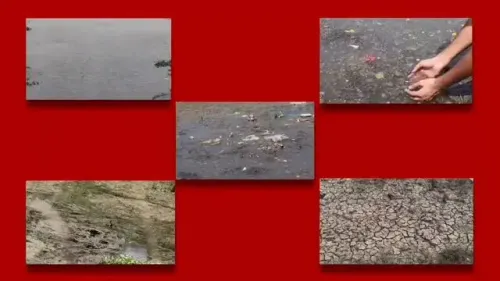
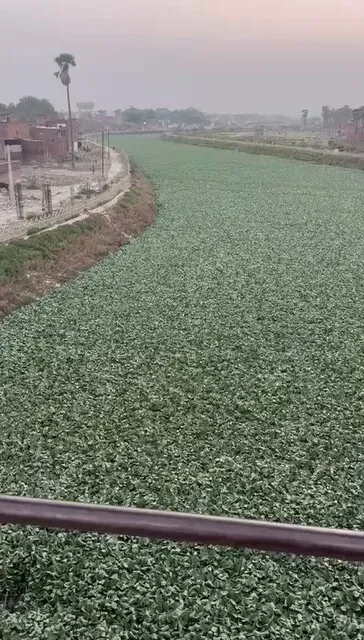
The couplet contrasts parched agricultural fields with a river 'turned green' — a reference to algal bloom from untreated sewage and industrial waste.
The Varuna River is a Ganga tributary flowing through Varanasi, PM Narendra Modi 's parliamentary constituency.
The central government's Namami Gange scheme, launched in 2014 , was meant to address pollution in the Ganga basin including tributaries like the Varuna.
The BJP has governed Uttar Pradesh since 2017 and the centre since 2014 , making it the direct political target of Yadav's critique.
Annual water quality data from the Central Pollution Control Board for the Varuna will be a key metric in assessing the competing political claims.
Samajwadi Party president Akhilesh Yadav on Wednesday, 24 June 2026, sharply criticised the Bharatiya Janata Party over the state of the Varuna River in Varanasi, posting a pointed couplet on X that accused the ruling party of presiding over parched farmland while the river turned green with pollution.
The post, in Hindi, reads: 'Khet sookhe nadi hariyaai, jab se hai BJP aayi' — translated as 'Fields have dried up, the river has turned green, ever since the BJP came.' The hashtag #वरूणा_नदी_वाराणसी (Varuna River Varanasi) anchors the message squarely in the constituency of Prime Minister Narendra Modi.
Context
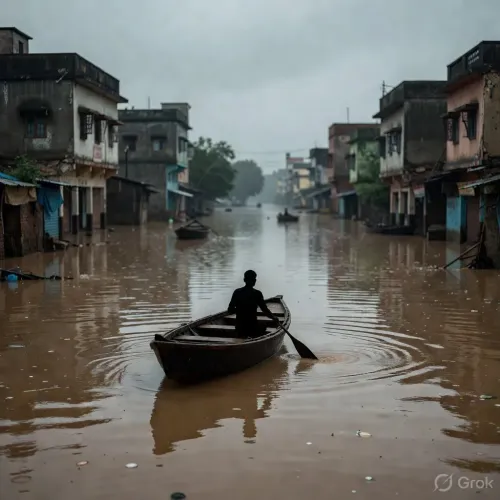
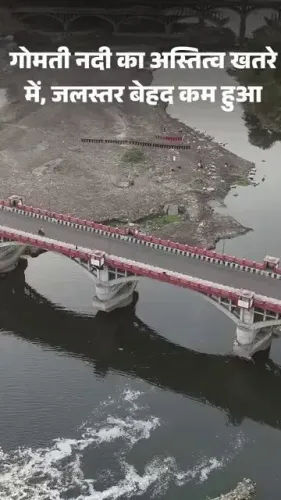
The Varuna River is a tributary of the Ganga that flows through the heart of Varanasi. It has long been flagged in public discourse for severe pollution caused by urban sewage discharge and industrial effluents. The river's greenish tint — a visible marker of algal bloom driven by untreated waste — has become a recurring symbol in political debates about governance in the city.
Yadav's couplet draws a deliberate contrast: farmers facing water scarcity in their fields while a river running through the same district chokes with pollutants. The two-line verse is crafted for maximum recall and shareability, a format Yadav has used before to make pointed political arguments.
Policy Backdrop
The Namami Gange programme, launched by the central government in 2014, was designed as an integrated conservation mission for the Ganga basin, explicitly including tributaries such as the Varuna. The scheme allocated dedicated funding for sewage treatment plants, pollution abatement works, and riverfront development across the basin.
Despite sustained spending under the programme, opposition parties have consistently argued that visible improvements in tributary water quality have not kept pace with the scale of investment. The BJP has governed Uttar Pradesh since 2017 and has held power at the centre since 2014, making it the primary political target for any critique of river-cleaning outcomes in the state.
During Akhilesh Yadav's tenure as Chief Minister of Uttar Pradesh from 2012 to 2017, the state government emphasised minor irrigation and check-dam projects to address agricultural water scarcity in eastern districts, including those around Varanasi.
Stakeholders and Impact
Farmers in Varanasi and surrounding districts are the primary stakeholders in the irrigation dimension of Yadav's critique. Eastern Uttar Pradesh has significant dependence on canal and groundwater irrigation, and any gap in water availability during the growing season carries direct economic consequences for smallholder cultivators.
Varanasi residents, particularly those living along the Varuna's banks, bear the immediate health and livelihood burden of river pollution. The river's condition also carries symbolic weight: Varanasi is not only the Prime Minister's parliamentary constituency but one of India's most prominent religious and cultural centres, making the state of its waterways a politically sensitive subject.
Indian opposition parties have routinely linked persistent pollution in Ganga tributaries to questions about the real-world efficacy of centrally sponsored river projects. Varanasi has seen repeated political exchanges between the BJP and the Samajwadi Party on whether infrastructure spending has translated into measurable improvements in water quality and farm water availability.
What's Next
The Central Pollution Control Board's annual water quality data for the Varuna will be closely watched as an objective measure against which political claims on both sides can be assessed. Any supplementary budget allocations for tributary works under Namami Gange will also draw scrutiny from opposition benches in Parliament and the Uttar Pradesh assembly.
With Varanasi perpetually in the political spotlight as the Prime Minister's seat, the condition of the Varuna River is unlikely to fade as a flashpoint. Yadav's post signals that the Samajwadi Party intends to keep local environmental grievances at the centre of its campaign narrative against BJP governance in the state.
Point of View
Shareable verse aimed at voters in the Prime Minister's own backyard. By hashtagging the Varuna in Varanasi, Yadav is not merely raising an environmental concern but contesting the BJP's central narrative that Namami Gange has delivered visible results. The post fits a broader pattern in which regional parties use hyper-local environmental data points to erode the credibility of large-ticket central schemes. Whether the critique gains traction will depend on whether objective water-quality and irrigation data backs the political charge — a question the Central Pollution Control Board's next report may help answer.
NationPress
23 Sept 2026
Frequently Asked Questions
What did Akhilesh Yadav say about the Varuna River?
Akhilesh Yadav posted a Hindi couplet on 24 June 2026 saying 'Fields have dried up, the river has turned green, ever since the BJP came,' targeting BJP governance over the Varuna River's pollution in Varanasi.
What is the Varuna River and why is it significant?
The Varuna River is a tributary of the Ganga that flows through Varanasi. It has been repeatedly flagged for severe pollution from urban sewage and industrial waste, and its condition is politically sensitive because Varanasi is Prime Minister Narendra Modi's parliamentary constituency.
What is the Namami Gange programme?
Namami Gange is a central government scheme launched in 2014 to clean the Ganga and its tributaries, including the Varuna, through sewage treatment plants, pollution abatement works, and riverfront development. Opposition parties have questioned whether it has produced visible on-ground improvements.
Why is Varanasi central to this political dispute?
Varanasi is Prime Minister Narendra Modi's Lok Sabha constituency, making the state of its rivers and farmland a high-profile political battleground between the BJP and opposition parties like the Samajwadi Party.
What will determine whether Akhilesh Yadav's claims are borne out?
Annual water quality data released by the Central Pollution Control Board for the Varuna River, along with any new budget allocations for tributary works under Namami Gange, will serve as key objective benchmarks against which the political claims can be assessed.