Akhilesh questions BJP over Ram Mandir donation probe
Synopsis
Samajwadi Party president Akhilesh Yadav on 23 July 2026 accused the BJP government of trying to suppress the Ayodhya Ram Mandir donation theft case, questioning the credibility of parallel clean chits issued by multiple bodies amid a disputed SIT formation.
Key Takeaways
Akhilesh Yadav accused the BJP government of an 'extremely irresponsible attitude' in handling the Ayodhya Ram Mandir donation theft allegations.
He questioned the legitimacy of multiple parallel bodies issuing clean chits without presenting verified evidence.
The state SIT 's formation was challenged on procedural grounds, prompting the centre to announce a new SIT.
The Shri Ram Janmabhoomi Teerth Kshetra Trust , set up in 2020 post the Supreme Court verdict, manages the temple inaugurated on 22 January 2024 .
Yadav warned that those who shield the guilty in this 'great sin' are themselves 'destroyers of Ram,' raising the political temperature significantly.
The controversy is expected to intensify opposition pressure on the Uttar Pradesh government ahead of future state elections.
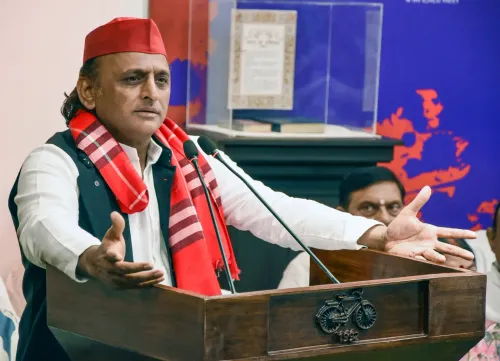
Samajwadi Party president Akhilesh Yadav on Thursday, 23 July 2026, sharply attacked the Bharatiya Janata Party government over what he called a deliberate attempt to suppress allegations of theft of offerings and donations at the Ayodhya Ram Mandir, demanding accountability from parallel bodies issuing clean chits without verified evidence.
Context
In his post, Akhilesh Yadav accused the BJP government of adopting an 'extremely irresponsible attitude' — bेहद ग़ैरज़िम्मेदाराना रवैया — on the issue of chadhawa-chanda-daan chori (theft of offerings, subscriptions, and donations) at the Ram Mandir. He alleged that the government was trying to 'hush up' the matter by orchestrating statements from various quarters. 'Those who are partners in this great sin are destroyers of Ram,' he wrote, coining the phrase jo mahaapaap mein saathi, wo Raamaghati.
The post, tagged #CC_to_CC, appeared to reference the chain of accountability from the alleged commission of the offence to its cover-up. Yadav raised pointed questions about how individuals issuing clean chits had obtained confidential evidence, or whether they were simply engaging in bayaanbaazi (rhetorical posturing) to shield the guilty.
Policy Backdrop
The Shri Ram Janmabhoomi Teerth Kshetra Trust was constituted in 2020 following the 2019 Supreme Court verdict, with a mandate to oversee construction and administration of the temple. The Ram Mandir was inaugurated on 22 January 2024 with central and state government participation, after which attention shifted to the management of the temple's significant revenue flows from pilgrims and donors.
Yadav noted that when the state SIT — constituted to probe the alleged misappropriation — came under scrutiny for 'faulty formation,' the central government floated the idea of a new SIT. He questioned why multiple parallel bodies were simultaneously issuing clean chits, arguing that this multiplicity itself pointed to an attempt to deflect rather than investigate. 'If they have evidence, the question is how it reached them; if they don't, the question is on what basis they are certifying the innocence of those implicated,' he said.
Stakeholders and Impact
The controversy directly concerns millions of devotees who contribute offerings and donations to the Ayodhya Ram Mandir trusting that funds will be managed transparently. For the Uttar Pradesh opposition, the issue represents a potent political opportunity to challenge the BJP's stewardship of a project it has placed at the centre of its cultural identity.
The Samajwadi Party has consistently argued that BJP-led governments in both Lucknow and New Delhi have failed to ensure administrative accountability at prominent religious institutions. The Ram Mandir donation controversy fits a broader opposition narrative that the BJP's promotion of Hindu cultural projects has not been matched by transparent governance of those same institutions.
Temple trust stakeholders, the state finance apparatus, and central investigative agencies all find themselves implicated in Yadav's critique. Any audit or SIT report that fails to satisfy public scrutiny risks deepening the perception of a cover-up ahead of future electoral cycles in Uttar Pradesh.
What's Next
The central government's signalled formation of a new SIT will now face heightened public and opposition scrutiny regarding its composition, mandate, and independence. Yadav's intervention raises the political stakes for any probe outcome, making it harder for either a clean chit or a partial inquiry to be accepted without challenge.
Observers will watch whether the Shri Ram Janmabhoomi Teerth Kshetra Trust issues a formal statement on donation audit mechanisms, and whether the Uttar Pradesh government responds to the specific procedural questions Yadav has raised about the state SIT's formation. With assembly elections in the state on the horizon, the handling of this controversy is likely to remain a live issue in the political arena.
Point of View
He forces the BJP to defend its stewardship of its most symbolically significant project. The hashtag #CC_to_CC and the coinage Raamaghati signal a deliberate attempt to turn the BJP's cultural capital into a liability. The multiplication of SITs and parallel clean chits — rather than reassuring the public — has inadvertently handed the opposition a procedural argument that is difficult to rebut without full transparency. This episode fits a recurring pattern in Uttar Pradesh politics where religious institution governance becomes a proxy battleground for broader electoral contestation.
NationPress
23 Jul 2026
Frequently Asked Questions
What is the Ayodhya Ram Mandir donation theft controversy?
The controversy refers to allegations of misappropriation of offerings, subscriptions, and donations collected at the Ayodhya Ram Mandir. Opposition parties, including the Samajwadi Party, have demanded a credible and independent investigation into the alleged theft.
What did Akhilesh Yadav say about the Ram Mandir donation probe?
Akhilesh Yadav accused the BJP government of trying to hush up the case by orchestrating statements from multiple quarters and questioned how various bodies were issuing clean chits without presenting any verified evidence of innocence.
What is the SIT formed for the Ram Mandir donation case?
A state Special Investigation Team was constituted to probe the alleged misappropriation of temple funds. When its formation was questioned on procedural grounds, the central government indicated the formation of a new SIT, a move Akhilesh Yadav has criticised as another deflection.
Who manages the Ayodhya Ram Mandir and its funds?
The Shri Ram Janmabhoomi Teerth Kshetra Trust, constituted in 2020 following the Supreme Court's 2019 verdict, is responsible for the administration of the Ram Mandir, which was inaugurated on 22 January 2024.
What does #CC_to_CC mean in Akhilesh Yadav's post?
Akhilesh Yadav used the hashtag #CC_to_CC to signal a chain of accountability — from the alleged commission of the crime to its cover-up — implying that the corruption and the concealment are linked and must both be investigated.