Akhilesh Yadav Slams BJP Over CUET UG Exam Irregularities
Synopsis
Samajwadi Party president Akhilesh Yadav on 30 May 2026 targeted the BJP over the CUET UG examination, calling the exam system corrupt and claiming that today's students have rejected the ruling party. The attack deepens opposition pressure on the NTA and the Ministry of Education over exam integrity.
Key Takeaways
Akhilesh Yadav posted on 30 May 2026 targeting the BJP over alleged corruption in the CUET UG examination system.
He quoted exam aspirants as saying they 'do not want the BJP', framing student discontent as a direct electoral verdict.
CUET was launched in 2022 by the UGC and NTA to unify undergraduate admissions across central universities.
The NTA , under the Ministry of Education , has faced repeated opposition criticism over exam conduct in tests including CUET and NEET .
Students from Hindi belt states such as Uttar Pradesh and Bihar are among the largest groups affected by CUET irregularities.
The post signals that examination integrity will be a sustained political issue for the Samajwadi Party ahead of upcoming elections.
Samajwadi Party president Akhilesh Yadav on Saturday, 30 May 2026, attacked the BJP-led central government over what he called a corrupt examination system, targeting the Common University Entrance Test (CUET UG) as emblematic of broader governance failures under the ruling party.
Context
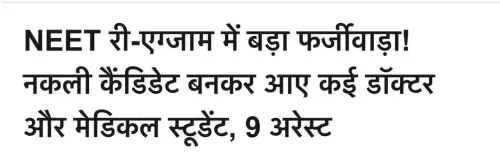
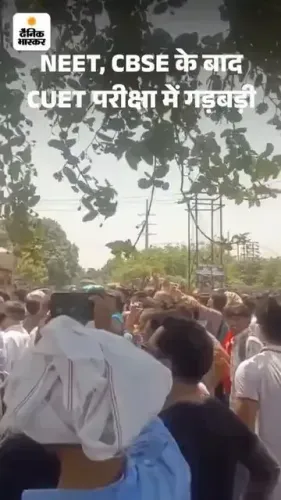
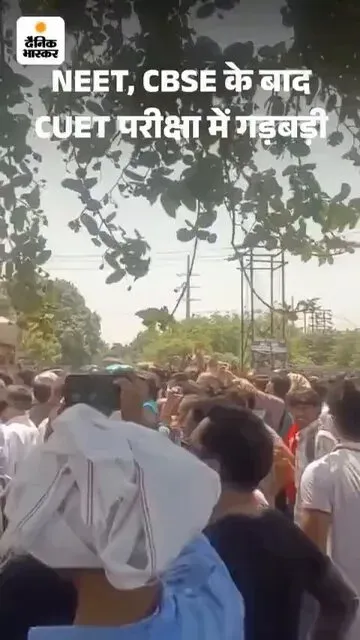
Posting on X with the hashtag #CUET_UG_EXAM, Yadav wrote in Hindi: 'भाजपाई भ्रष्टाचार के रूप अनेक, भ्रष्ट परीक्षा प्रणाली उनमें से एक' — ['BJP corruption takes many forms; a corrupt examination system is one of them']. He added a pointed verse attributing the sentiment to exam aspirants themselves: 'परीक्षार्थी कहे आज का, नहीं चाहिए भाजपा!' — ['Today's exam-taker says: we do not want the BJP!']. The post was accompanied by a video.
The attack frames student grievances around CUET UG as a direct political indictment of the Bharatiya Janata Party, drawing a line between institutional exam management and electoral accountability.
Policy Backdrop
CUET was introduced in 2022 by the University Grants Commission (UGC) and the National Testing Agency (NTA) as a single national entrance test for undergraduate admissions across central universities, replacing the earlier system of institution-specific entrance examinations. The stated goal was to standardise admissions and reduce the burden on students appearing in multiple tests.
The NTA, an autonomous body under the Ministry of Education, has faced sustained scrutiny from opposition parties and student groups over the conduct of large-scale examinations. Concerns about logistical lapses and examination integrity in NTA-administered tests — including CUET and NEET — have become a recurring flashpoint in the national education debate.
Stakeholders and Impact
The immediate stakeholders are lakhs of undergraduate aspirants across India, particularly students from Hindi belt states such as Uttar Pradesh, Bihar, and Madhya Pradesh, who depend on CUET scores for admission to central universities. Any perception of irregularity in the examination process directly affects their academic futures and amplifies anxieties around meritocracy.
For Akhilesh Yadav and the Samajwadi Party, the youth vote — especially first-time voters and students — represents a critical constituency. By voicing student frustration publicly, the party seeks to consolidate anti-incumbency sentiment among young voters ahead of upcoming electoral cycles.
What's Next
Attention will now turn to the conduct of the current CUET UG exam cycle, any corrective measures announced by the Ministry of Education, and whether opposition demands for NTA reforms gain traction in Parliament during education budget discussions. Yadav's intervention signals that examination integrity will remain a live political issue. If student grievances around CUET persist, they are likely to fuel further parliamentary pressure and street-level mobilisation, shaping the education policy conversation well into the next legislative session.
Point of View
First-time voters. By tying the CUET UG controversy directly to BJP governance, the Samajwadi Party is building an education-corruption narrative that mirrors its earlier success in mobilising youth sentiment in Uttar Pradesh. The attack on the NTA fits a broader opposition pattern of using institutional failures in youth-facing sectors as proxies for anti-incumbency. If the Ministry of Education does not address CUET grievances credibly, the political cost among student communities could compound ahead of both state assembly and national polls.
NationPress
14 Oct 2026
Frequently Asked Questions
What did Akhilesh Yadav say about CUET UG exam?
Akhilesh Yadav posted on 30 May 2026 calling the CUET UG examination system corrupt and claiming that exam aspirants themselves are rejecting the BJP over this issue.
What is CUET UG and who conducts it?
CUET UG, or the Common University Entrance Test for undergraduates, is conducted by the National Testing Agency under the Ministry of Education. It was introduced in 2022 to standardise admissions across central universities.
Why is the NTA under criticism?
The NTA has faced opposition criticism over alleged logistical lapses and integrity concerns in major exams it administers, including CUET and NEET, which affect lakhs of students across India.
How does CUET affect students in Uttar Pradesh?
Students from Uttar Pradesh and other Hindi belt states form a large share of CUET aspirants. Any irregularity in the exam directly impacts their chances of admission to central universities, making it a sensitive political issue in the region.
What is the Samajwadi Party's position on education policy?
The Samajwadi Party, led by Akhilesh Yadav, has consistently opposed what it describes as centralisation and mismanagement of education under the BJP, using exam controversies to build a narrative of governance failure among student voters.