Akhilesh Yadav thanks Gorakhpur for 56-ft garland welcome
Synopsis
Samajwadi Party president Akhilesh Yadav thanked Gorakhpur supporters for welcoming him with a 56-foot garland — described as the longest in the city's history — and promised to return, signalling continued SP outreach in eastern Uttar Pradesh.
Key Takeaways
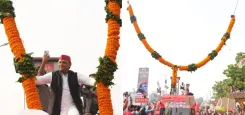
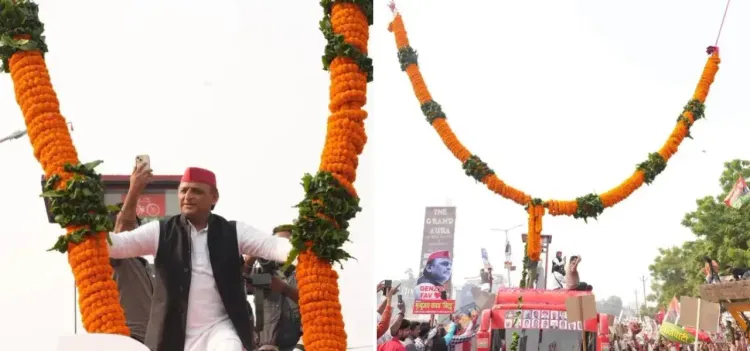
Samajwadi Party president Akhilesh Yadav visited Gorakhpur and was welcomed with a 56-foot garland , described as the longest in the city's history.
Akhilesh posted his gratitude on 18 November 2026 , calling it a maha-maala and promising to return.
Gorakhpur is the home constituency of UP Chief Minister Yogi Adityanath , giving SP visits to the city added political significance.
The visit is part of the Samajwadi Party's ongoing strategy to maintain grassroots visibility in eastern Uttar Pradesh between election cycles.
Large garland welcomes are a longstanding feature of Indian political campaigning, used to signal popular enthusiasm.
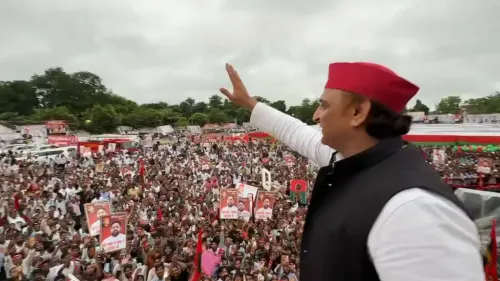
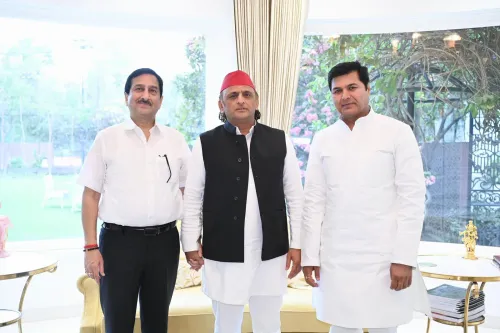
A 56-foot garland — billed as the longest in Gorakhpur's history — greeted Samajwadi Party president Akhilesh Yadav on his latest visit to the city, and the former Chief Minister did not let the gesture go unacknowledged.
Posting on Wednesday, 18 November 2026, Akhilesh wrote: 'Gorakhpur ke itihas ki sabse lambi 56 feet ki maha-maala' — 'the grandest garland of Gorakhpur's history, 56 feet long' — and expressed heartfelt gratitude to the supporters who organised it, signing off with a promise: 'We will come again.'
A political welcome in BJP's eastern UP stronghold
Gorakhpur carries particular political weight in Uttar Pradesh. It is the home turf of Chief Minister Yogi Adityanath, making every Samajwadi Party foray into the city a statement of intent as much as a constituency visit. For the SP, sustained visibility in eastern UP — a region that has historically swung between the two parties — is a key plank of its between-elections strategy. Large garlands, or maha-maalas, are a vivid, deeply rooted feature of Indian political culture: a crowd's way of measuring enthusiasm in metres of marigolds. A 56-foot garland, whatever its precise dimensions, signals to both supporters and rivals that the opposition still draws a crowd in unfriendly territory.SP's steady drumbeat in opposition
Since the Samajwadi Party lost power in Uttar Pradesh in 2017, Akhilesh has worked to keep the party's grassroots networks alive through regular district visits, rallies, and public engagement across the state. Gorakhpur — with its dense population, significant OBC voter base, and symbolic status as the CM's own constituency — is a recurring stop on that circuit. The pledge 'Hum phir aayenge' — 'We will come again' — is characteristically brief but pointed. It frames the visit not as a one-off courtesy call but as part of a continuing presence. For a party rebuilding momentum between election cycles, the optics of an enthusiastic Gorakhpur welcome matter as much as the garland itself. Akhilesh's post makes sure that message travels well beyond the city limits.Frequently Asked Questions
Why did Akhilesh Yadav visit Gorakhpur?
Akhilesh Yadav visited Gorakhpur as part of Samajwadi Party's ongoing outreach in eastern Uttar Pradesh. He was welcomed by supporters with a 56-foot garland, which he described as the longest in the city's history.
What is the significance of a 56-foot garland welcome in Indian politics?
Large garlands, or maha-maalas , are a traditional way for supporters to demonstrate enthusiasm during political visits in India. A record-length garland is used to signal strong grassroots backing and generate public attention.
Is Gorakhpur an important city for Samajwadi Party?
Yes. Gorakhpur is politically significant because it is the home turf of UP Chief Minister Yogi Adityanath. Any SP show of strength there carries symbolic weight in the state's political rivalry.
What did Akhilesh Yadav say about Gorakhpur on X?
Akhilesh Yadav thanked Gorakhpur supporters for welcoming him with the city's longest-ever garland — 56 feet — and promised to return, writing 'Hum phir aayenge' (We will come again).
What is the Samajwadi Party's strategy in Uttar Pradesh ahead of elections?
The Samajwadi Party has been focused on sustained district-level visits and public engagement across Uttar Pradesh to rebuild organisational strength and visibility, particularly in eastern UP, in the run-up to future assembly elections.