Akhilesh Yadav hails Azam Khan's release, warns BJP of 'end times'
Synopsis
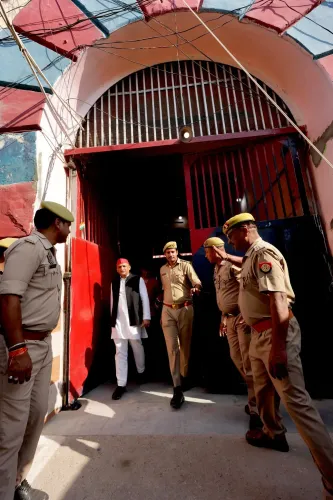
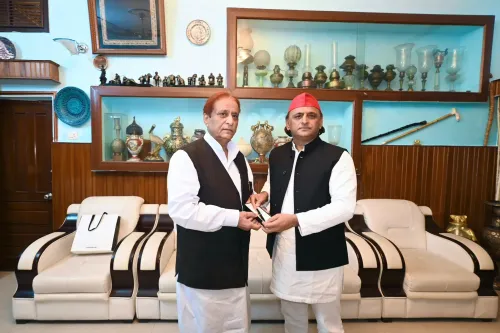
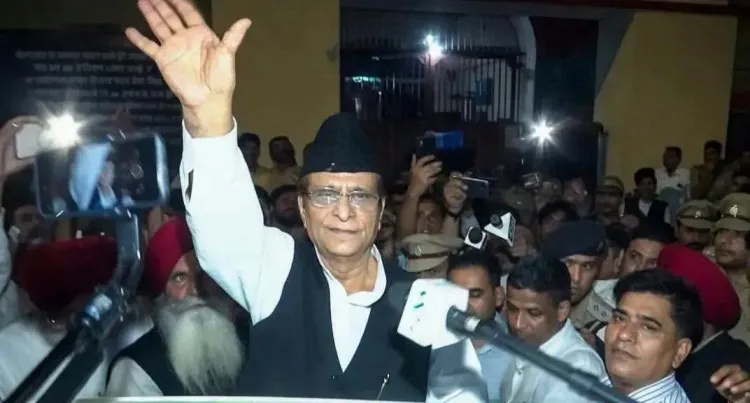
Samajwadi Party chief Akhilesh Yadav welcomed the release of veteran leader Azam Khan on 18 November 2026, calling it a vindication of justice and warning that rulers who unleash unchecked oppression are heading for their inevitable downfall.
Key Takeaways
Akhilesh Yadav posted on 18 November 2026 welcoming Azam Khan's release and framing it as a restoration of faith in justice.
He used the charged Urdu-Hindi term antkaal ('end-times') to warn the ruling establishment against crossing limits of oppression.
Azam Khan has faced multiple criminal cases — including alleged hate speech and land disputes — since the BJP took power in Uttar Pradesh in 2017 .
The SP has consistently framed legal proceedings against its leaders as politically motivated; this post continues that pattern.
Further court proceedings in remaining cases against Azam Khan are expected, keeping the issue politically live.
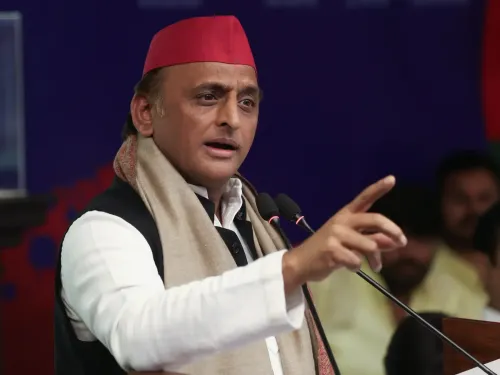
A sharp political salvo landed on Wednesday evening when Samajwadi Party president Akhilesh Yadav declared that the release of senior SP leader Azam Khan had renewed public faith in justice — and followed it with a pointed warning that rulers who cross the limits of oppression are nearing their end.
Posting on 18 November 2026, Akhilesh wrote in Urdu-inflected Hindi: 'आदरणीय आज़म ख़ान साहब की रिहाई ने इंसाफ़ पर ऐतबार को बढ़ाया है। जब जुल्म और ज़्यादती हो जाए बेहद के पार तो समझो आ गया है हुक्मरानों का अंतकाल' — 'The release of respected Azam Khan sahab has strengthened faith in justice. When oppression and excess go beyond all limits, understand that the end-times of the rulers have arrived.'
Azam Khan's long legal battle and SP's political narrative
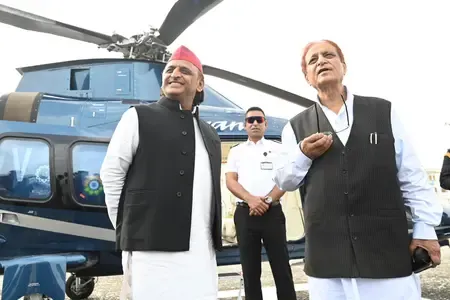
Azam Khan, a towering figure in the Samajwadi Party and long-time Rampur legislator, has faced a string of criminal cases since the BJP government took power in Uttar Pradesh in 2017. The charges have ranged from alleged hate speech to land-related disputes. The SP has consistently characterised these proceedings as politically motivated — a narrative the party returns to every time a court grants bail or relief to one of its leaders.
Akhilesh's post fits squarely into that established pattern. Each legal reprieve for an SP figure becomes, in the party's framing, not merely a personal victory but proof of systemic overreach by the state. The language this time is notably more apocalyptic: 'अंतकाल' — literally 'end of time' or 'doom' — directed squarely at those in power.
The rhetoric of 'justice restored' ahead of the political cycle
The timing of such statements is rarely accidental in Uttar Pradesh politics. The SP has spent years building a counter-narrative to the BJP administration's law-and-order messaging, arguing that the state's legal machinery has been wielded selectively against opposition figures. Invoking Azam Khan — one of the party's most recognisable, and most legally embattled, faces — amplifies that argument to a core voter base that sees him as a symbol of resistance.
The post's elevated, almost literary register — drawing on classical Urdu vocabulary of justice (insaaf), oppression (zulm), and rulers' downfall (hukmaraan ka antkaal) — signals that this is not a casual reaction but a crafted political message aimed at both galvanising supporters and putting the ruling dispensation on notice.
With further court proceedings still pending in remaining cases against Azam Khan, every development in that legal saga will continue to be a flashpoint between the two parties — and a test of how far each side's narrative holds.
Point of View
Hinting at a broader electoral mobilisation pitch. Historically, opposition parties in UP have found that grievance-based legal narratives energise base voters more reliably than policy arguments — a calculus that appears firmly in play here. How the BJP government responds, and whether further legal relief for Azam Khan follows, will determine whether this moment becomes a durable talking point or fades quickly.
NationPress
18 Nov 2026
Frequently Asked Questions
Why was Azam Khan in legal trouble?
Azam Khan, the veteran Samajwadi Party leader and Rampur legislator, has faced multiple criminal cases since 2017 — including allegations related to hate speech and land disputes — following the BJP's assumption of power in Uttar Pradesh. The SP has argued these cases were politically motivated.
What did Akhilesh Yadav say about Azam Khan's release?
Akhilesh Yadav said Azam Khan's release had strengthened public faith in justice. He also warned that when oppression and excess cross all limits, it signals the 'end-times' of the rulers — a pointed message directed at the BJP government in Uttar Pradesh.
What does 'antkaal' mean in Akhilesh's post?
'Antkaal' is a Hindi-Sanskrit term meaning 'end of time' or 'doom'. Akhilesh used it to suggest that rulers who engage in extreme oppression are heading toward their own political downfall.
Is Azam Khan still facing other cases?
According to available information, further court proceedings in remaining cases against Azam Khan are still pending. His legal situation has been a recurring flashpoint in Uttar Pradesh politics since 2017.
What is the Samajwadi Party's position on legal cases against its leaders?
The Samajwadi Party has consistently characterised criminal proceedings against its leaders as politically motivated misuse of state agencies by the BJP government. This position has been reiterated following bail grants or acquittals in multiple cases since 2017.