Akhilesh Yadav Rallies Behind Azam Khan, Targets BJP Over Jauhar University
Synopsis
SP president Akhilesh Yadav on 22 October 2026 backed Azam Khan from Rampur, condemning what he called BJP's fabricated cases and branding the pressure on Jauhar University a conspiracy to rob the PDA coalition of its right to education.
Key Takeaways
Akhilesh Yadav declared on 22 October 2026 that Azam Khan — despite criminal cases — remains and will remain an enduring figure.
He accused the BJP government in UP of using corrupt officials and fabricated cases as deliberate political weapons.
Jauhar University in Rampur, founded by Azam Khan, is at the centre of the dispute; Akhilesh called moves against it a conspiracy to deny PDA communities educational rights.
The SP has consistently described the cases against Khan — who was imprisoned after 2017 — as politically motivated; Khan has denied all charges.
Akhilesh closed with a direct electoral warning, saying the public would 'permanently replace' the BJP for what he called its revenge-driven governance.
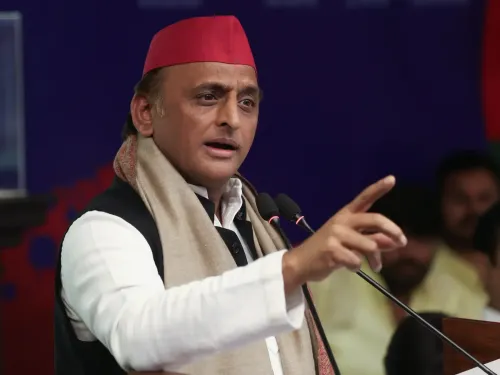
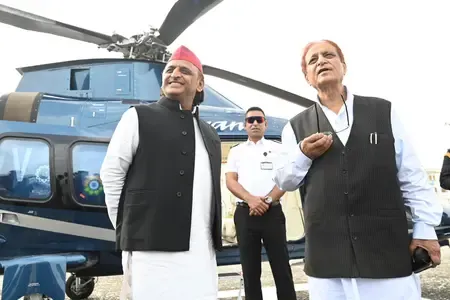
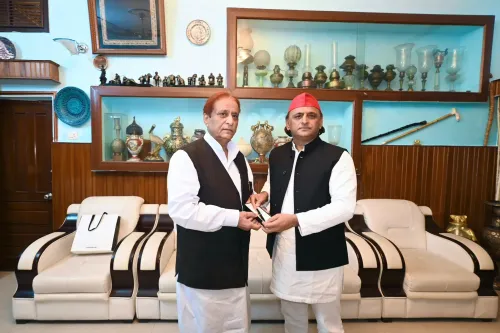
From the soil of Rampur, Samajwadi Party president Akhilesh Yadav fired a sharp political salvo on Thursday, 22 October 2026 — declaring that no amount of what he called fabricated cases could silence Azam Khan, and squarely blaming the BJP government for orchestrating a campaign of legal and administrative harassment against one of Uttar Pradesh's most recognisable opposition figures.
Posting on X in Urdu-inflected Hindi, Akhilesh wrote: 'Jo Azam the, wo Azam hain, wo Azam rahenge' — 'What Azam was, Azam is, Azam shall remain.' The declaration was addressed directly to Azam Khan and cast the senior SP leader as a man of progress and positivity whom the BJP, in Akhilesh's framing, resents precisely because it can never match him.
The Jauhar University Flashpoint
At the centre of Akhilesh's broadside is Mohammad Ali Jauhar University in Rampur — the institution Khan founded and which has faced sustained regulatory and legal scrutiny since the BJP formed the government in Uttar Pradesh in 2017. Akhilesh called moves against the university a 'saazish' (conspiracy) to strip the PDA — his shorthand for the Pichhda-Dalit-Alpsankhyak (Backwards-Dalit-Minority) coalition — of the right to education.
'Those who can shut thousands of schools will hardly spare a university,' he wrote, invoking an implied record on education that he left without specific numbers. The charge lands as a pointed contrast: a state government that, in SP's telling, dismantles learning while targeting the one institution a minority leader built from scratch.
Azam Khan's Legal Battles and Rampur's Symbolic Weight
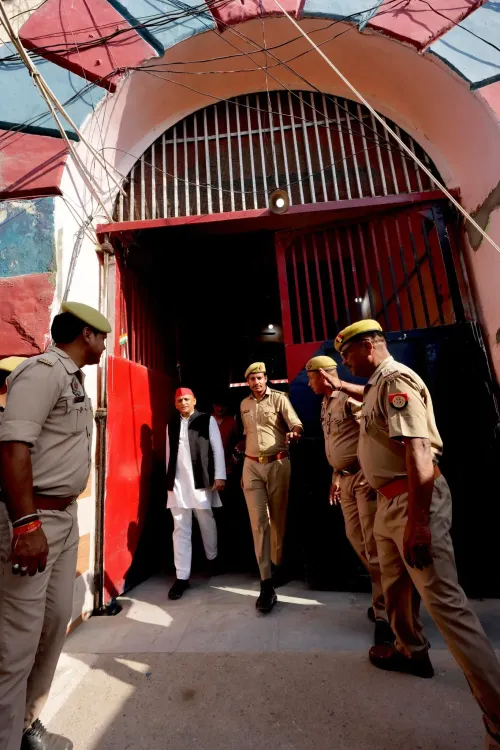
Since 2017, Azam Khan has faced a cascade of criminal cases — covering allegations ranging from land encroachment to theft — that led to his actual imprisonment. He has consistently denied wrongdoing, and the SP has consistently maintained the cases were politically motivated. Rampur, the constituency Khan shaped over decades, remains a barometer of UP's Muslim-majority political sentiment and a recurring fault line between the SP and the BJP.
Akhilesh's language on Thursday was deliberately philosophical as much as combative. He argued that the person who imprisons others through conspiracies lives trapped in a mental prison of their own fear — 'rotting inwardly, dreading the day truth emerges and the reckoning arrives.' The imagery was designed less for the courts and more for the voters.
BJP, Education, and the PDA Consolidation Play
'Corrupt officials and fabricated cases are the BJP's two most important weapons,' Akhilesh wrote. He went further, arguing that the BJP has a fundamental antipathy to ilm (knowledge) and taalim (education), calling the party 'zero in matters of learning.' The closing line was a direct electoral threat: 'Badle ki bhaavna rakhnewaali BJP ko janta hamesha ke liye badal degi' — 'The public will permanently replace the revenge-driven BJP.'
The rhetoric maps onto the SP's core electoral arithmetic. With assembly and national elections perpetually on the horizon in a state as large as Uttar Pradesh, the PDA frame — minority solidarity plus OBC and Dalit outreach — is Akhilesh's primary counter-mobilisation strategy against a BJP that has dominated the state since 2017. The Azam Khan cause serves as both a genuine grievance and a galvanising symbol for that coalition.
Next hearings in Khan's pending cases and any fresh regulatory action against Jauhar University will determine how long this confrontation stays at a simmer — or whether it boils over into something that reshapes Rampur's political calculus entirely.
Point of View
He converts a personal loyalty declaration into a structural grievance that travels across caste and community lines. The timing reflects a recurring SP pattern of amplifying institutional-pressure narratives whenever electoral cycles loom in UP. What makes this notable is the explicit conflation of judicial process with political conspiracy — a framing that deepens the SP-BJP polarisation in western UP while simultaneously signalling to Khan's loyalists that the party has not moved on without him. Whether the courts ultimately validate or reject that framing will shape Rampur's political identity for years.
NationPress
22 Oct 2026
Frequently Asked Questions
Why is Akhilesh Yadav defending Azam Khan?
Akhilesh Yadav maintains that the multiple criminal cases against Azam Khan are politically motivated fabrications by the BJP government in UP, and considers Khan a senior SP leader who deserves public solidarity.
What is Jauhar University and why is it controversial?
Mohammad Ali Jauhar University in Rampur was established by Azam Khan. Since 2017 it has faced regulatory and legal scrutiny, which the SP calls a conspiracy to dismantle a minority-founded educational institution.
What cases is Azam Khan facing?
Azam Khan has faced numerous criminal cases filed after the BJP formed the UP government in 2017, covering allegations including land encroachment and theft. He has denied the charges and the SP calls them fabricated.
What is the PDA coalition Akhilesh Yadav refers to?
PDA stands for Pichhda-Dalit-Alpsankhyak — Backwards, Dalit, and Minority communities. It is the Samajwadi Party's primary voter-consolidation framework designed to counter BJP's dominance in Uttar Pradesh.
What did Akhilesh Yadav say about BJP and education?
Akhilesh accused the BJP of being fundamentally hostile to knowledge and education, claiming those who shut thousands of schools would not spare a university, and labelling the party 'zero in matters of learning.'