Akhilesh Yadav bets on 'Damdaar Dalit' bloc after Agra rally
Synopsis
At a large Dalit Mahasammelan in Agra on 16 November 2026, SP president Akhilesh Yadav rebranded the PDA coalition's Dalit plank as 'Damdaar Dalit', declared PDA opposed to all BJP allies, and pledged to form a social-justice government in Uttar Pradesh in 2027.
Key Takeaways
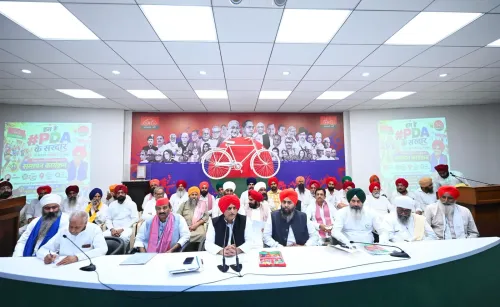
Akhilesh Yadav addressed a Dalit Mahasammelan in Agra on 16 November 2026 , describing it as representative of Dalits from across Uttar Pradesh , not just the western region.
He upgraded the SP's PDA formula , declaring the 'D' now stands for 'Damdaar Dalit' (powerful Dalit) rather than simply Dalit.
Yadav issued a sharp political warning: anyone aligned with BJP will face the PDA coalition's opposition.
The rally renewed the pledge 'Samvidhan bachega, toh samman bachega' — linking defence of constitutional reservations to social dignity.
Yadav projected that the rally's success confirms a PDA government will come to power in the 2027 UP assembly elections .
The SP's stated governing vision includes a 'bandhu-rashtra' (fraternal nation) built on social justice, anti-discrimination, and progressive values.
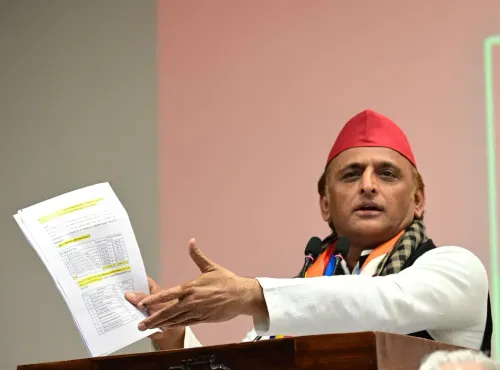
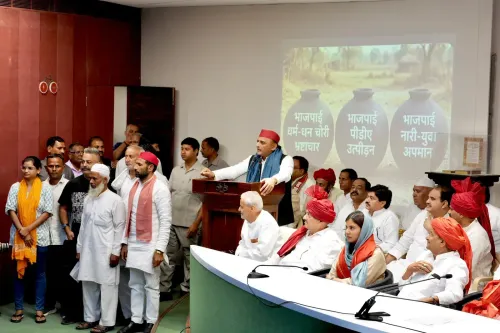
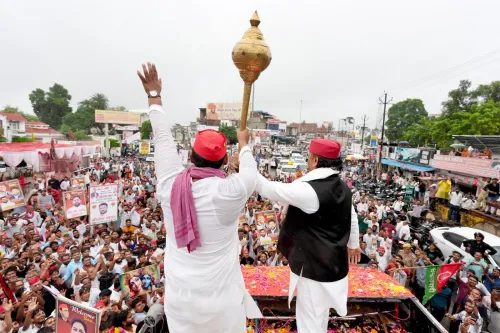
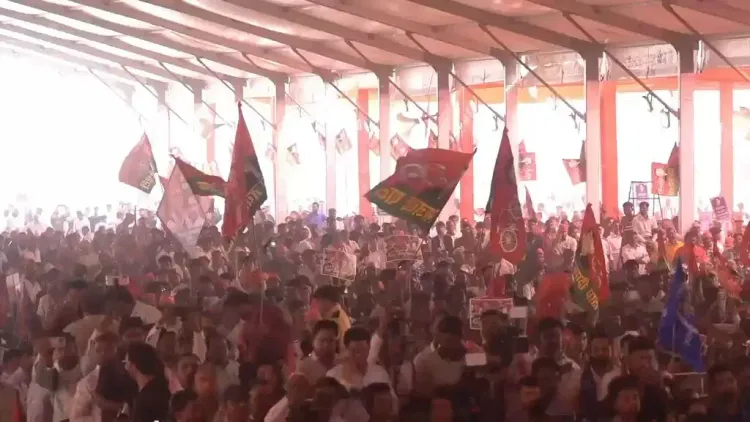
A sea of people in Agra on 16 November 2026 gave Samajwadi Party president Akhilesh Yadav the image he needed: a Dalit Mahasammelan that looked less like a western Uttar Pradesh event and more like the entire state had converged on one city. Yadav wasted no time turning the moment into a declaration of electoral war, sharpening his party's PDA formula and training it squarely at the BJP ahead of the 2027 Uttar Pradesh assembly elections.
From 'Dalit' to 'Damdaar Dalit' — the PDA formula gets an upgrade
Yadav announced a pointed rebranding of his party's political coalition on the spot. The PDA formula — shorthand for Pichhda, Dalit aur Alpsankhyak (OBC, Dalit, and Minority) — has anchored Samajwadi Party strategy since the 2022 assembly elections. But the Agra rally, he argued, had earned the 'D' an upgrade: from simply 'Dalit' to 'Damdaar Dalit' — powerful Dalit. The difference, in his framing, is not just semantic. It signals a community that is no longer a passive constituent of the coalition but its assertive, driving force.
The SP chief also issued an unambiguous political line in the sand: 'Whoever is with BJP, PDA is against them.' That formulation, delivered from the rally stage, is designed to consolidate wavering Dalit voters who may have split between SP and Bahujan Samaj Party in previous cycles — a persistent vulnerability in UP's caste arithmetic.
'Samvidhan bachega, toh samman bachega' — the constitutional pledge
The rally's centrepiece oath was a phrase Yadav has deployed across multiple platforms this election cycle: 'Samvidhan bachega, toh samman bachega' — 'If the Constitution is saved, dignity is saved.' The slogan fuses two currents of opposition messaging that have run through national politics since the 2024 Lok Sabha elections: the defence of constitutional reservations, and the assertion of social dignity for marginalised communities. By repeating it at a Dalit-specific gathering in Agra, Yadav is embedding that national frame into the specifically Uttar Pradesh electoral context.
The pitch is direct — BJP rule, the SP argues, threatens both reservations and the constitutional protections that underpin them. It is a charge the BJP rejects, but one that has proven effective at motivating lower-caste turnout in opposition-friendly cycles.
Agra, 2027, and the long road to a PDA government
Uttar Pradesh, with its 403 assembly constituencies and massive Dalit population — Scheduled Castes make up roughly 21 percent of the state's electorate — is a state where caste coalition arithmetic can decide outcomes by itself. The SP's repeated attempt to assemble a durable PDA bloc has historically been complicated by the BSP's own claim on Dalit votes and by BJP's counter-mobilisation through sub-caste outreach.
Yadav declared from Agra that the rally's scale proved a 'PDA government is coming in 2027' — one that would deliver 'samajik nyay ka raaj' (the rule of social justice), erase discrimination, and build what he called a 'bandhu-rashtra' (fraternal nation) built on progressive values and universal dignity. That is an ambitious governing vision extrapolated from a single rally. Whether the momentum holds through two more years of mobilisation is the real question.
What is not in question is the strategic clarity: the SP is making western UP's Dalit heartland the first front of its 2027 campaign, and Agra has just been handed the status of its opening salvo.
Point of View
' Yadav is attempting to draw a sharper distinction between his coalition and the BSP, which has traditionally owned that vote bank. The 'Constitution and reservation' plank, now embedded in a mass Dalit rally, signals that SP intends to nationalise the Dalit-dignity frame that helped opposition parties overperform in the 2024 Lok Sabha elections and re-deploy it at the state level. The binary 'PDA vs BJP and its allies' framing also forecloses any ambiguity about post-poll alignments, a message aimed as much at coalition partners as at voters. With two years to polling day, the SP is betting that early, high-visibility Dalit mobilisation in western UP will set the narrative terms before the BJP can recalibrate its own caste outreach.
NationPress
16 Nov 2026
Frequently Asked Questions
What is the PDA formula of the Samajwadi Party?
PDA stands for Pichhda, Dalit aur Alpsankhyak — OBC, Dalit, and Minority communities. The Samajwadi Party uses this framework to build a broad caste and social coalition against the BJP in Uttar Pradesh, particularly ahead of assembly elections.
What happened at the Agra Dalit Mahasammelan on 16 November 2026?
Samajwadi Party president Akhilesh Yadav addressed a large Dalit Mahasammelan in Agra, rebranding the PDA coalition's Dalit component as 'Damdaar Dalit,' declaring opposition to all BJP allies, and pledging to protect constitutional reservations ahead of the 2027 UP elections.
What does 'Damdaar Dalit' mean in Akhilesh Yadav's speech?
'Damdaar Dalit' means 'powerful Dalit.' Yadav used the phrase at the Agra rally to signal that Dalits are no longer just a constituent of the SP's PDA alliance but its assertive, driving force going into the 2027 Uttar Pradesh assembly elections.
What is the slogan 'Samvidhan bachega toh samman bachega'?
The slogan translates as 'If the Constitution is saved, dignity is saved.' Samajwadi Party uses it to argue that constitutional reservations and the social dignity of marginalised communities are under threat under BJP rule, making their defence a central electoral issue.
When are the next Uttar Pradesh assembly elections?
The next Uttar Pradesh assembly elections are scheduled for 2027 . Akhilesh Yadav has declared that the success of the Agra Dalit Mahasammelan confirms the PDA alliance will form the state government after those polls.