Akhilesh Yadav demands resignations over fresh NEET fraud
Synopsis
Samajwadi Party president Akhilesh Yadav on 22 June 2026 demanded BJP resignations over fresh NEET fraud allegations, citing biometric manipulation and impersonation at exam centres, and called on students and families to unite against what he termed systemic betrayal of India's youth.
Key Takeaways
Samajwadi Party president Akhilesh Yadav demanded resignations from the BJP on 22 June 2026 over fresh NEET fraud allegations.
He alleged that a 'BJP gang' used disguises to solve papers for candidates and that biometric verification was deliberately compromised.
Yadav charged that collusion ran 'from bottom to top' and that fraud likely extended beyond the single centre where it was exposed.
NEET has been under scrutiny since at least 2024 , when paper leak allegations triggered a CBI probe and Supreme Court hearings.
The post carried hashtags #NEET and #NEET_REEXAM , signalling an organised push for a fresh examination.
Opposition parties have consistently linked NTA failures to broader governance critiques of the ruling BJP .
Samajwadi Party president Akhilesh Yadav on Monday, 22 June 2026, launched a sharp attack on the ruling Bharatiya Janata Party, demanding resignations over fresh allegations of fraud in the National Eligibility cum Entrance Test (NEET), and accusing the party of orchestrating systemic cheating that has betrayed millions of medical aspirants.
Context
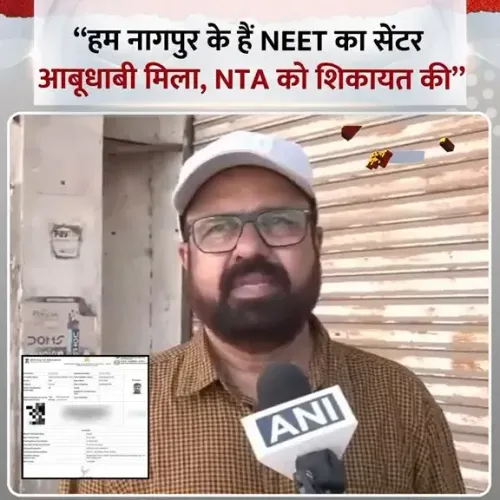
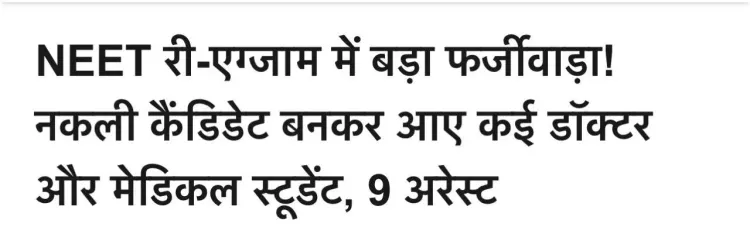
Posting on X, Yadav wrote — 'अब तो इस्तीफ़ा दे दो!' ('Now just resign!') — alleging that a 'BJP gang' had arrived at examination centres in disguise to solve papers on behalf of candidates, and that biometric verification had been deliberately compromised to enable the fraud. He charged that collusion ran 'from bottom to top,' and that the exposure at one centre was only the visible tip of a far larger problem spread across an unknown number of venues.
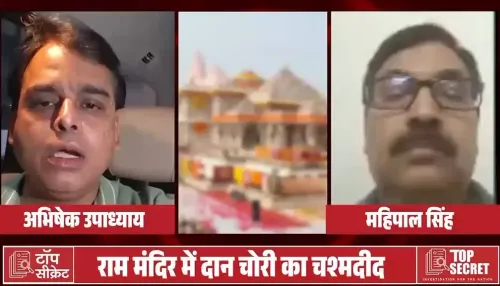
Yadav further called on every student, parent, and family member opposed to the BJP to unite against what he described as an ongoing betrayal of the country's youth. He said the BJP had 'broken its own records of brazen dishonesty,' linking exam irregularities to a pattern that he argued stretches from vote manipulation to the misappropriation of donations and offerings.
Policy Backdrop
NEET was introduced nationally in 2013 following a Supreme Court order, replacing a patchwork of state-level medical entrance tests with a single standardised examination conducted by the National Testing Agency (NTA), an autonomous body under the Ministry of Education. The test now determines undergraduate medical college admissions for hundreds of thousands of candidates each year.
Concerns over the integrity of NEET are not new. In 2024, widespread allegations of question paper leaks and irregularities in grace mark allocation triggered Supreme Court hearings and a Central Bureau of Investigation (CBI) probe into how the examination was conducted. Opposition parties, including the Samajwadi Party, have repeatedly used those episodes to argue that the NTA lacks the institutional independence and oversight mechanisms required to run high-stakes national examinations fairly.
Stakeholders and Impact
The primary stakeholders are the lakhs of medical aspirants who sit for NEET each year, along with their families, who invest years of preparation and significant financial resources in pursuit of a seat in government and private medical colleges. Any credible allegation of fraud directly undermines the merit principle that the examination was designed to uphold.
Yadav's post, using the hashtags #NEET and #NEET_REEXAM, signals a coordinated opposition push to keep examination accountability at the centre of political discourse. The demand for resignations — though directed broadly at the BJP — implicitly targets the Ministry of Education and the leadership of the NTA. Parents' groups and student organisations have previously amplified similar demands during past NEET controversies, and the hashtag suggests a re-examination demand is gathering momentum.
What's Next
Attention will now turn to whether the Supreme Court, which has previously intervened in NEET-related matters, takes cognisance of any fresh petitions arising from the June 2026 allegations. Parliamentary debates on NTA accountability and proposed examination reform legislation are also likely to intensify, with opposition benches expected to press the government for a detailed response.
If biometric irregularities at even one centre are confirmed by an independent investigation, pressure for a full re-examination — and for structural reform of the NTA's oversight framework — will be difficult for the government to resist. The political stakes are high: the fate of the NEET process has become a proxy battle over whether India's central examination infrastructure can be trusted to deliver merit-based outcomes.
Point of View
Not merely bypassed. The call for family-level mobilisation signals that the Samajwadi Party sees NEET grievances as a cross-class electoral issue, not merely a student concern. If fresh evidence of centre-level irregularities surfaces, the government will face renewed pressure to either defend the NTA's credibility or concede structural reform — both of which carry significant political cost.
NationPress
22 Jun 2026
Frequently Asked Questions
What is the NEET fraud allegation Akhilesh Yadav raised in June 2026?
Akhilesh Yadav alleged on 22 June 2026 that a 'BJP gang' impersonated candidates at NEET examination centres to solve papers on their behalf, and that biometric verification — a key anti-impersonation safeguard — was deliberately manipulated to enable the fraud.
What is NEET and who conducts it?
NEET (National Eligibility cum Entrance Test) is India's single national entrance examination for undergraduate medical admissions, conducted by the National Testing Agency (NTA) , an autonomous body under the Ministry of Education . It was introduced in 2013 following a Supreme Court order.
Has NEET faced fraud allegations before?
Yes. In 2024 , widespread allegations of question paper leaks and grace mark irregularities prompted Supreme Court hearings and a CBI probe. Opposition parties have raised concerns about NTA accountability across multiple examination cycles.
What is Akhilesh Yadav demanding over NEET?
Yadav is demanding resignations from BJP leaders and calling for a re-examination ( #NEET_REEXAM ). He is also urging students, parents, and families to unite politically against the BJP over what he describes as a systemic betrayal of India's youth.
What happens next in the NEET fraud case?
Observers are watching for Supreme Court intervention through fresh petitions, parliamentary debate on NTA reform, and any independent investigation into the biometric irregularities alleged at examination centres in June 2026 .