Akhilesh Yadav pushes voter mobilisation at Delhi event
Synopsis
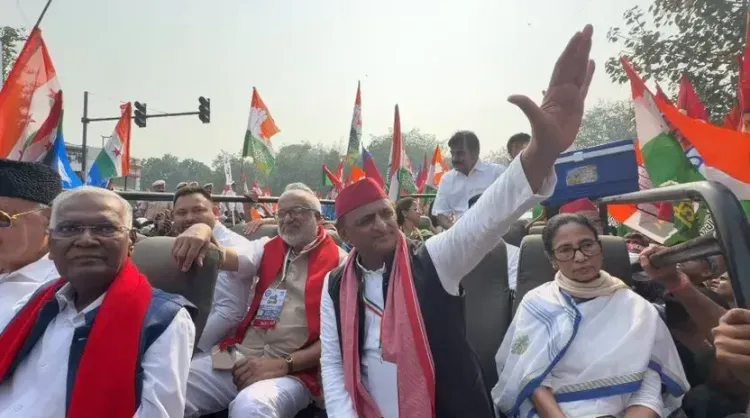
Samajwadi Party president Akhilesh Yadav marked 1 November 2026 in Delhi with a pointed voter-mobilisation post on X, urging every citizen to 'be counted' and promising 'complete and unparalleled change' under the hashtag #VoteBachaoDesBachao.
Key Takeaways
Akhilesh Yadav posted a voter-mobilisation message on 1 November 2026 tied to a Delhi event.
The Urdu-Hindi phrase 'mukammal-bemisaal badlaav' ('complete and unparalleled change') was the rhetorical centrepiece.
Twin hashtags #VoteBachaoDesBachao and #Delhi_1_November_2026 anchored the message geographically and thematically.
The post included a video, indicating planned campaign communication rather than a spontaneous statement.
The Samajwadi Party is extending its voter-mobilisation outreach beyond its UP base to the national capital.
The 'Save the Vote, Save the Nation' framing signals a perceived threat to electoral integrity, a recurring opposition theme.
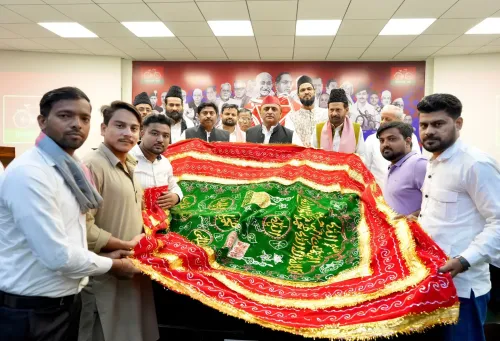
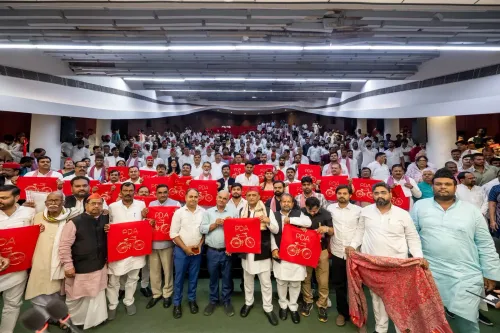
Every vote counts — and Samajwadi Party president Akhilesh Yadav made that the centrepiece of a sharp political message on Sunday, 1 November 2026, invoking Delhi as the stage for what he called a 'complete and unparalleled change.'
In a Urdu-inflected Hindi post on X, Yadav wrote: 'Behtar kal ke liye jab aaj har shakhs shumar hoga, tabhi to ek mukammal-bemisaal badlaav hoga!' — 'For a better tomorrow, only when every single person is counted today will a complete and unparalleled change come about.' The twin hashtags #VoteBachaoDesBachao ('Save the Vote, Save the Nation') and #Delhi_1_November_2026 anchored the message to a specific date and city.
The 'every person must count' frame
The phrasing is deliberate. 'Shumar hona' — to be counted, to matter — carries weight beyond electoral arithmetic. Yadav is fusing civic participation with identity: the idea that a vote withheld is an erasure, not a neutral act. It is a rhetorical move the Samajwadi Party has refined across multiple election cycles, particularly among marginalised communities in Uttar Pradesh and now, evidently, in the national capital.
The accompanying video — the post carried one video — suggests this was not a spontaneous thought but a planned piece of campaign communication, timed to land on 1 November itself.
Delhi as the new front
Delhi is not Samajwadi Party heartland. Its traditional strength runs through the Hindi belt of Uttar Pradesh. But opposition parties across India have increasingly treated Delhi — its media amplification, its symbolism as the seat of power — as a force-multiplier for messaging that needs national reach. A rally, a press conference, or even a digital mobilisation drive in the capital travels farther and faster than the same event held elsewhere.
The hashtag's geographic specificity is a signal: whatever the 1 November 2026 event in Delhi entailed, Yadav wanted it linked permanently to a call for electoral vigilance. 'Save the Vote, Save the Nation' is language that implies a perceived threat to the integrity of the franchise — a recurring theme in opposition discourse ahead of high-stakes polls.
Voter mobilisation as SP's long game
The Samajwadi Party has built its political identity on social-justice politics and the mobilisation of OBC and minority communities. Voter turnout among these groups has been directly correlated with the party's electoral performance. Yadav's framing — that 'complete change' is contingent on every person showing up — is both a moral argument and a ground-game instruction.
It also positions the party on the right side of democratic participation, a frame that is hard to argue against publicly and easy to rally supporters around privately.
The kicker is in the Urdu itself: mukammal-bemisaal — complete, without parallel. Yadav is not promising incremental improvement. He is promising transformation. Whether Delhi delivers on that promise is now the question his opponents will have to answer.
Point of View
Not merely civic duty. By planting the Samajwadi Party's flag in Delhi — symbolically and perhaps physically — Yadav is signalling ambitions that stretch beyond UP's borders. The 'Save the Vote' framing implicitly alleges that the franchise is under threat, a charge that energises base voters without requiring a named adversary. Watch whether this Delhi moment seeds a broader alliance conversation or remains a solo SP mobilisation exercise.
NationPress
1 Nov 2026
Frequently Asked Questions
What did Akhilesh Yadav post on 1 November 2026?
Akhilesh Yadav posted a voter-mobilisation message on X saying that 'complete and unparalleled change' would only come when every person is counted, using the hashtags #VoteBachaoDesBachao and #Delhi_1_November_2026.
What does #VoteBachaoDesBachao mean?
'Vote Bachao Des Bachao' translates to 'Save the Vote, Save the Nation' — a Samajwadi Party slogan linking electoral participation to national welfare.
Why is Akhilesh Yadav focusing on Delhi?
Delhi amplifies political messaging nationally; opposition parties including SP use the capital as a platform to reach audiences beyond their traditional state bases like Uttar Pradesh.
What is the Samajwadi Party's voter mobilisation strategy?
SP traditionally mobilises OBC and minority communities in Uttar Pradesh; Yadav's messaging frames voter turnout as essential to achieving social and political change, extending that strategy to Delhi.
What does 'mukammal-bemisaal badlaav' mean in Akhilesh Yadav's post?
The Urdu phrase means 'complete and unparalleled change' — Yadav used it to signal a promise of transformative, not incremental, political outcomes contingent on full voter participation.