Akhilesh Yadav Slams UP's Four-Day Monsoon Session
Synopsis
Samajwadi Party president Akhilesh Yadav on 2 August 2026 attacked the BJP government's four-day UP assembly monsoon session, alleging each day is designed to evade accountability on the Ayodhya temple theft, Prayagraj student protests, and the humiliation of a grieving mother — and declared the BJP will never return to power.
Key Takeaways
Akhilesh Yadav posted a point-by-point critique of the Uttar Pradesh assembly monsoon session on 2 August 2026 , calling it a four-day exercise in evasion.
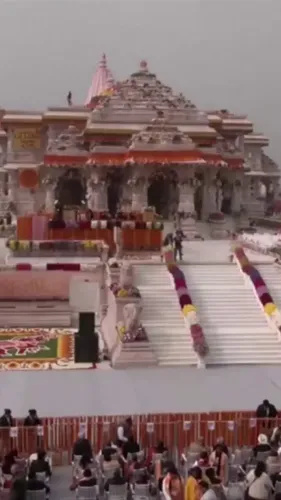
He alleged the BJP would use the session to deflect blame for a theft at the Ayodhya Ram Temple onto the central government.
Yadav cited student protests in Prayagraj and the alleged public humiliation of a grieving mother as issues the government was running from.
He declared the BJP 'knows it will never return to power' and is merely fulfilling the formality of holding a session.
The BJP has governed Uttar Pradesh since the 2017 assembly elections; the Samajwadi Party is the principal opposition.
Short legislative sessions are a recurring flashpoint between the BJP government and the SP-led opposition in UP.
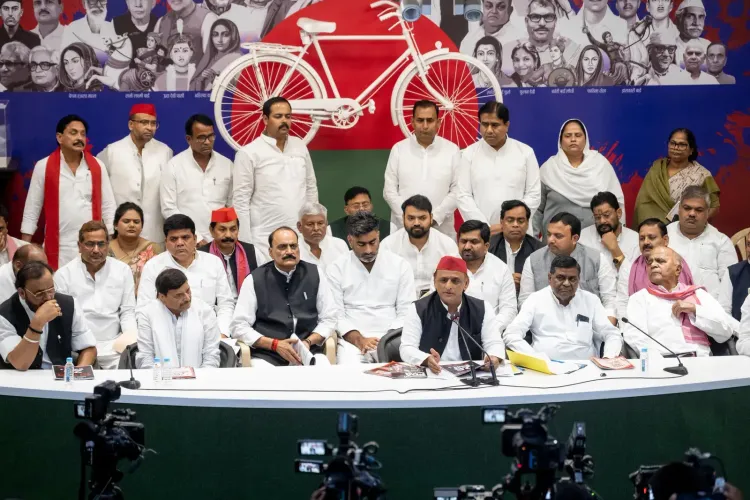
Four days for a government he says has four days left. Samajwadi Party president Akhilesh Yadav launched a point-by-point indictment of the Bharatiya Janata Party's conduct in the Uttar Pradesh Legislative Assembly monsoon session on Sunday, 2 August 2026, arguing that the session's brevity mirrors the ruling party's political twilight.
Posting in Hindi on X, Yadav mapped out what he called the BJP government's four-day escape plan — each day, in his telling, devoted not to governance but to evasion. 'चार दिन की सरकार बची है, इसीलिए उप्र विधानसभा में सत्र भी चार दिन का ही हो रहा है' ('A government with four days left is holding a session of only four days') — the opening line set the tone for everything that followed.
A Day-by-Day Charge Sheet Against the BJP
Yadav's post reads less like a political statement and more like a prosecution brief. Day one, he wrote, would be consumed by condolence tributes. Day two would see the government deflect responsibility for what he described as a 'premeditated theft' at the Ram Temple in Ayodhya onto the central government. Day three, he alleged, would be spent dodging accountability for student protests that swept Prayagraj and other parts of the state. And day four, in his framing, would end with a hasty adjournment to avoid answering for what he called the 'public humiliation of a grieving mother.' The specificity of the charge sheet is deliberate — each allegation is pinned to a session day, turning a scheduling dispute into a narrative of systematic accountability-avoidance.BJP's 'Farewell Season' and the Stakes for 2027
The sharpest line in the post is also the most politically loaded. Yadav declared that the BJP itself now knows it will never return to power, which is why it no longer treats the assembly with any seriousness — going through the motions of a session rather than the work of governance. 'भाजपा की चला-चली की बेला का मानसून सत्र भी चला-चली टाइप का सत्र है' ('The BJP's farewell-era monsoon session is itself a farewell-type session') — a rhetorical flourish that frames the entire monsoon sitting as a political obituary. The BJP has held power in Uttar Pradesh since its sweeping victory in the 2017 assembly elections, with the Samajwadi Party serving as the principal opposition throughout. Assertions of this kind — that the ruling party's days are numbered — are a recurring feature of pre-election political discourse in the state, and the next assembly election cycle makes such rhetoric increasingly pointed. Short sessions in state legislatures have long drawn criticism from opposition benches across India, with accountability advocates arguing that compressed calendars limit question hours, committee scrutiny, and floor debate. Yadav's framing plugs a local grievance into that national conversation. Whether the UP assembly session delivers the accountability the opposition is demanding — or plays out exactly as Yadav has scripted it — the BJP government will now face every procedural moment of the next four days under a pre-written opposition narrative.Point of View
Student unrest, executive insensitivity) into a single, shareable narrative. The 'farewell government' framing is a calculated attempt to shift the political psychology ahead of the next UP assembly cycle, making the BJP appear not just accountable but already defeated. In Indian state politics, controlling the narrative around legislative sessions often matters as much as the sessions themselves. If even one of the specific allegations gains traction in public discourse, the short-session critique becomes a secondary story — and Yadav knows it.
NationPress
2 Aug 2026
Frequently Asked Questions
Why is Akhilesh Yadav criticising the UP assembly monsoon session?
Akhilesh Yadav says the four-day UP assembly monsoon session is too short and alleges the BJP government has designed each day to avoid answering for specific controversies, including the Ayodhya Ram Temple theft, Prayagraj student protests, and the alleged humiliation of a grieving mother.
What happened at the Ayodhya Ram Temple that Akhilesh Yadav mentioned?
Yadav alleged that a 'premeditated theft' took place at the Ram Temple in Ayodhya and accused the BJP government of planning to shift blame for it onto the central government during the assembly session. The specific incident cannot be independently verified from available information.
What are the student protests in Prayagraj that Akhilesh Yadav referred to?
Yadav referenced student agitations in Prayagraj and across Uttar Pradesh as a controversy the BJP government intends to sidestep during the monsoon session, though the specific details of those protests are not independently verifiable from available sources.
When is the next Uttar Pradesh assembly election?
The Uttar Pradesh assembly election is due in early 2027. Yadav's claim that the BJP 'will never return to power' is widely read as pre-election political signalling ahead of that contest.
How long has the BJP been in power in Uttar Pradesh?
The BJP has governed Uttar Pradesh since winning the 2017 state assembly elections. The Samajwadi Party, led by Akhilesh Yadav, has been the principal opposition throughout that period.