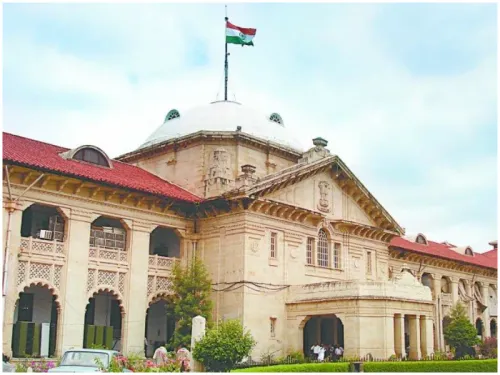
Allahabad HC flags arms licence lapses in UP, seeks data on 6,062 criminal-history holders
Synopsis
The Allahabad High Court has uncovered a deeply compromised arms licensing system in Uttar Pradesh — over 10 lakh licences issued, 6,062 granted to persons with multiple criminal cases, and police allegedly concealing details of politically influential licence holders. Justice Vinod Diwakar's order puts the entire 75-district administration on notice.
Key Takeaways
The Allahabad High Court flagged systemic non-compliance with the Arms Act, 1959 and Arms Rules, 2016 across all 75 districts of Uttar Pradesh .
Over 10 lakh arms licences have been issued in UP; more than 23,000 applications remain pending.
Licences were granted in 6,062 cases involving individuals with criminal histories of two or more cases.
Over 20,000 families hold more than one arms licence; 1,738 appeals against District Magistrate orders are pending before Commissioners.
Local police authorities allegedly concealed details of influential individuals; senior officials directed to file undertakings against suppression of facts.
Matter posted for further hearing on 26 May ; any laxity to be treated as 'intentional dereliction of duty.'
The Allahabad High Court has raised serious alarm over systemic failures in the arms licensing regime across Uttar Pradesh, observing that district administrations and police authorities in all 75 districts have been flouting government orders and statutory provisions governing the grant and renewal of firearm licences. The court's intervention came during the hearing of a writ petition filed by one Jai Shankar alias Bairistar.
Key Developments in the Case
A single-judge Bench of Justice Vinod Diwakar took on record an affidavit filed by the Joint Secretary, Home, which revealed that authorities have not been following the provisions of the Arms Act, 1959 and the Arms Rules, 2016 'in their true letter and spirit.' The judge noted that District Magistrates and Commissioners of Police/Senior Superintendents of Police across all 75 districts had failed to adhere to government orders issued from time to time.
The court directed an officer not below the rank of Secretary in the Home Department to furnish detailed information on arms licences, criminal antecedents, and security arrangements for several individuals from Noida, Meerut, Lucknow, Prayagraj, Varanasi, and Gorakhpur zones — including persons described as wielding 'substantial social and political influence.'
What the Data Reveals
The affidavit placed before the court disclosed a striking picture of the state's firearms landscape. Over 10 lakh arms licences have been issued in Uttar Pradesh, while more than 23,000 applications remain pending. Additionally, 1,738 appeals against orders of District Magistrates are pending before Commissioners, and over 20,000 families hold more than one arms licence. Most strikingly, licences have been granted in 6,062 cases involving persons with criminal histories of two or more cases.
Court's Observations on Gun Culture and Governance
'The public display of weapons may create an illusion of dominance, strength and protection, but it often disrupts social harmony and generates fear and insecurity among ordinary people,' Justice Diwakar observed. The court further noted that a society in which armed individuals assert dominance through visible force 'erodes public trust, weakens the sense of safety, and disturbs civic peace.'
On the question of equity, the court held: 'Equity is one of the foundational principles of the rule of law; therefore, in order to ensure good governance and maintain public confidence, the state must not only observe fairness and non-discrimination in policy, but such principles must also be reflected in day-to-day administration.'
Alleged Concealment by Police Authorities
The court recorded a pointed observation that local police authorities had allegedly failed to disclose complete details relating to certain influential individuals. 'It has also been pointed out that the local police authorities have failed to furnish details of certain influential individuals wielding substantial social and political influence, and that relevant particulars concerning such persons have been concealed,' the order stated.
The court also noted the state government's stated 'zero-tolerance policy' against public display and misuse of firearms, while simultaneously flagging that this policy appeared to be unevenly applied. Senior police officials have been directed to file undertakings affirming that no material information has been suppressed, with the court warning that intentional concealment would invite personal liability.
Next Steps and Compliance Directions
The Registrar, Compliance has been directed to circulate copies of the order to the Additional Chief Secretary (Home), all District Magistrates, and Commissioners of Police/Senior Superintendents of Police across every district for 'strict and effective compliance.' The court cautioned that any laxity would be treated as 'intentional dereliction of duty' and viewed seriously. The matter has been posted for further hearing on 26 May.
Point of View
062 firearms licences held by individuals with multiple criminal cases is not a clerical anomaly; it is a structural failure. What makes this order notable is the explicit allegation that police authorities concealed information about politically influential licence holders, which shifts this from an administrative lapse to a potential accountability crisis. The 10-lakh-licence figure in a state with a documented history of gun-related violence and political crime is not incidental context — it is the core problem. The court's insistence on personal liability for concealment is a significant escalation, but the real test will come on 26 May: whether the Home Department furnishes complete, unredacted data or repeats the pattern of selective disclosure the court has already flagged.
NationPress
6 Oct 2026
Frequently Asked Questions
What has the Allahabad High Court said about arms licences in Uttar Pradesh?
The Allahabad High Court has expressed serious concern that district administrations and police authorities across all 75 districts of Uttar Pradesh are not following the Arms Act, 1959 and Arms Rules, 2016. Justice Vinod Diwakar directed the state to furnish detailed data on licence holders, including those with criminal antecedents and those receiving government security.
How many arms licences have been issued in Uttar Pradesh?
According to an affidavit filed by the Joint Secretary, Home, over 10 lakh arms licences have been issued in Uttar Pradesh. Of these, licences were granted in 6,062 cases involving individuals with criminal histories of two or more cases.
Why did the court flag concealment by police authorities?
The court noted that local police authorities allegedly failed to disclose complete details about certain influential individuals wielding substantial social and political influence. Senior officials have been directed to file undertakings affirming no material information was suppressed, with personal liability warned for any intentional concealment.
What are the key compliance directions issued by the Allahabad High Court?
The court directed an officer not below the rank of Secretary in the Home Department to furnish data on arms licences, criminal antecedents, and security arrangements for named individuals across six police zones. The Registrar, Compliance has been asked to circulate the order to all District Magistrates and senior police officials for strict compliance.
When is the next hearing in this case?
The Allahabad High Court has posted the matter for further hearing on 26 May. The court has warned that any laxity in compliance will be treated as intentional dereliction of duty and viewed seriously.