Akhilesh slams UP BJP after HC rules gram pradhan move unconstitutional
Synopsis
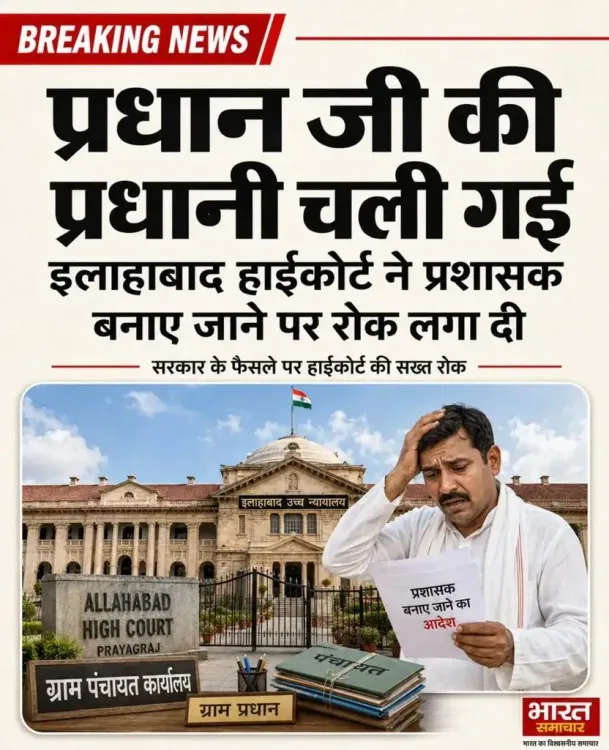
Samajwadi Party president Akhilesh Yadav attacked the UP BJP government on 26 June 2026 after the Allahabad High Court declared unconstitutional the state's move to appoint outgoing gram pradhans as administrators, warning of a financial and political crisis for village heads and BJP workers alike.
Key Takeaways
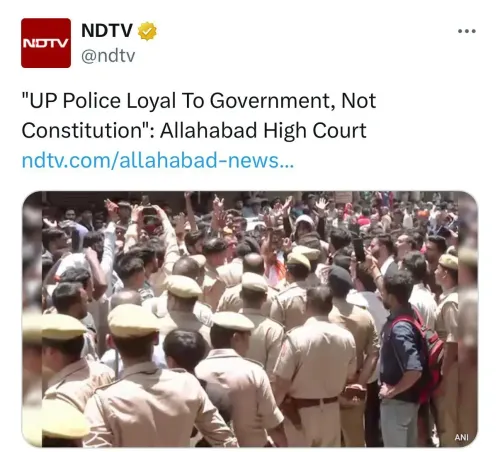
The Allahabad High Court declared the UP government's decision to appoint gram pradhans as administrators beyond their elected terms unconstitutional .
Akhilesh Yadav posted a sharp attack on the BJP government on 26 June 2026 , framing the ruling as proof of unconstitutional governance.
Gram pradhans face potential financial liability for expenditure incurred during the now-invalidated administrator period, including contractor payments.
Akhilesh warned that gram pradhans — feeling betrayed — will block BJP workers and leaders from entering villages across Uttar Pradesh .
The UP Panchayati Raj Minister was singled out as politically exposed, with Akhilesh saying the minister would struggle even to leave home.
The dispute follows a broader national pattern of judicial challenges to state governments extending local body tenures when elections are delayed.
Samajwadi Party president Akhilesh Yadav on Friday, 26 June 2026 sharply attacked the Uttar Pradesh BJP government after the Allahabad High Court declared unconstitutional the state's decision to appoint outgoing gram pradhans as administrators beyond their elected terms, warning that the ruling has trapped village heads in a legal and financial bind with no easy exit.
Context
Akhilesh Yadav, posting in Hindi on X, said the court's rebuke had 'rained on the BJP's parade' even as the state government was busy holding what he called 'jhoothi taarif ke praayojit kaaryakram' — 'sponsored programmes of false praise.' He quoted the court's finding directly: 'kaaryakaal khatam hone ke baavajood gram pradhaanon ko prashaasak banaane ka UP sarkar ka faisla asanvaidhanik hai' — 'the UP government's decision to appoint gram pradhans as administrators despite their term ending is unconstitutional.' He then posed a pointed public question: 'What is the punishment for doing unconstitutional work?'
The Allahabad High Court exercises jurisdiction over Uttar Pradesh and has the authority to examine the constitutional validity of state executive decisions, particularly those touching on elected local bodies and panchayati raj institutions.
Policy Backdrop
Uttar Pradesh panchayat elections were last held in 2021 for a standard five-year term, with those terms expiring in 2025–26. Facing an administrative vacuum in villages ahead of fresh elections, the BJP-led state government issued orders appointing the outgoing gram pradhans as administrators — a practice other Indian state governments have also used in similar situations, and which has repeatedly attracted judicial scrutiny.
Indian high courts have historically taken a dim view of such extensions when they are not backed by a clear constitutional or statutory mandate. The Allahabad High Court's ruling now places every order, expenditure, and contract executed during this extended administrator period under a legal cloud.
Stakeholders and Impact
Akhilesh argued that the ruling leaves gram pradhans caught between multiple pressures. Village residents, he said, are unlikely to understand the legal technicalities and will simply conclude that 'pradhan ji ne apna vaada poora nahin kiya' — 'the pradhan did not fulfil his promise' — and that funds were misappropriated in collusion with the 'double-engine' government. He warned that pradhans also fear a future court order demanding repayment of money spent during the now-invalidated administrator period, since expenditure during an unconstitutional tenure could itself be deemed legally void.
Contractors who were awarded work by pradhans during this period face their own uncertainty: they may press gram pradhans to clear pending bills, adding to the financial and political pressure on village heads. Akhilesh said this chain of consequences means gram pradhans will now block BJP workers and leaders from entering villages, and that the state's Panchayati Raj Minister will find it difficult even to leave home, let alone reach a village.
What's Next
The immediate question is whether the Allahabad High Court will issue further directions on the recovery of expenditures incurred during the extended administrator period — a step that would dramatically escalate the crisis for both gram pradhans and the state government. A notification for fresh gram panchayat elections in Uttar Pradesh would also be closely watched, as it would determine how long the legal vacuum in village governance persists.
The ruling adds to a pattern of judicial interventions in local body governance across Indian states, and the Samajwadi Party is likely to use the High Court's order as a campaign plank in the run-up to any future panchayat or state assembly polls in Uttar Pradesh.
Point of View
Akhilesh Yadav is attempting to peel away a layer of local leaders who had cooperated with the BJP's administrative arrangement. The spectre of expenditure recovery orders, even if not yet issued, is a potent political tool in rural Uttar Pradesh where financial liability at the village level carries deep social stigma. This episode fits a broader national pattern in which delayed local body elections create constitutional grey zones that opposition parties exploit to undermine incumbent state governments ahead of larger electoral contests.
NationPress
25 Sept 2026
Frequently Asked Questions
What did the Allahabad High Court say about gram pradhans being made administrators in UP?
The Allahabad High Court ruled that the Uttar Pradesh government's decision to appoint gram pradhans as administrators after their elected terms ended is unconstitutional. The court held that continuing them in office beyond their five-year mandate lacked constitutional backing.
Why did the UP government appoint gram pradhans as administrators?
The UP government appointed outgoing gram pradhans as administrators to prevent an administrative vacuum in villages while fresh panchayat elections were pending. Uttar Pradesh panchayat elections were last held in 2021, with terms expiring in 2025–26.
What happens to money spent by gram pradhans during the unconstitutional administrator period?
Legal experts and opposition leaders have raised the concern that expenditure incurred during a period now declared unconstitutional could itself be deemed legally invalid, potentially exposing gram pradhans to recovery orders. No such recovery order has been issued yet.
What is Akhilesh Yadav's reaction to the Allahabad High Court ruling on gram pradhans?
Akhilesh Yadav welcomed the ruling as an indictment of the BJP government's unconstitutional conduct, arguing it has left gram pradhans politically isolated, financially exposed, and angry enough to block BJP workers from entering villages.
When are the next UP gram panchayat elections?
A fresh election schedule for Uttar Pradesh gram panchayats has not been officially announced. The Allahabad High Court ruling on the unconstitutional administrator appointments is expected to increase pressure on the state government to notify elections promptly.