Almora Woman Turns SHG Link into Candle-Making Enterprise
Synopsis
Amrita Kohli of Paithana village, Almora, used her Aajeevika self-help group membership to launch a candle-making enterprise, now employing other women — a micro-level example of DAY-NRLM's graduation model at work in Uttarakhand's hill districts.
Key Takeaways
Amrita Kohli of Paithana village, Almora started a candle-making self-employment venture after joining an Aajeevika livelihood group.
Her enterprise has created employment for other women in her village, demonstrating a multiplier effect.
The initiative is part of the Deendayal Antyodaya Yojana-National Rural Livelihoods Mission (DAY-NRLM) , launched in 2011 to build rural women's livelihoods through self-help groups.
Candle-making is a promoted low-capital entry trade under NRLM collectives, especially suited to hill districts with limited formal employment.
Almora's rural economy relies heavily on such micro-enterprises to counter outmigration and generate supplementary household income.
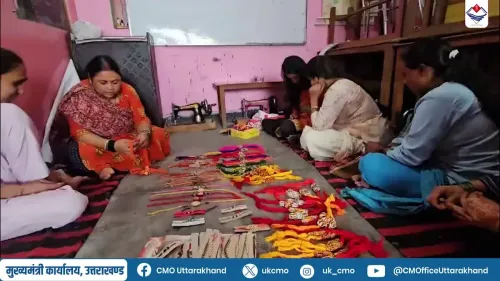
A village in the Kumaon hills is lighting up — one candle at a time. Amrita Kohli of Paithana village in Almora district, Uttarakhand, joined a local Aajeevika self-help group and launched a candle-making unit that now provides employment to other women in her community, the Chief Minister's Office of Uttarakhand announced on 5 November 2026.
The post, shared in Hindi, reads: 'Janpad Almora ke Paithana gaon ki Amrita Kohli ne Aajeevika samuh se judkar shuru kiya mombatti nirman ka swaarojgar. Anya mahilaon ko bhi mila rozgar.' — 'Amrita Kohli of Paithana village, Almora district, joined an Aajeevika group and started a candle-making self-employment venture. Other women have also found employment.'
From SHG membership to a micro-enterprise with ripple effect
Kohli's story follows a well-worn but meaningful path carved by the Deendayal Antyodaya Yojana-National Rural Livelihoods Mission (DAY-NRLM), launched nationwide in 2011 to organise rural women into self-help groups and generate sustainable livelihoods. The mission's Aajeevika platform pools small savings, extends micro-credit, and connects members to market linkages — turning a village woman's idea into a bankable micro-enterprise.
Candle-making is one of the most promoted entry-point trades under these collectives precisely because it demands low capital, uses easily sourced raw materials, and can scale from a home workshop to a small production unit. In hill districts like Almora, where terrain limits large-scale agriculture and formal jobs remain scarce, such micro-enterprises function as economic anchors for entire households.
Why Almora, and why it matters beyond one village
Almora sits in Uttarakhand's Kumaon division — predominantly rural, heavily dependent on subsistence farming, and historically prone to outmigration among working-age men. Women-led self-employment models directly address that structural gap. When Kohli moved from group member to employer, she created what policymakers call a 'graduation effect' — the moment an SHG member stops being a beneficiary and becomes an opportunity creator for others.
Uttarakhand's state government has consistently used NRLM platforms to push low-investment home-based manufacturing across hill districts. The highlight of Kohli's case is not just personal success; it is the multiplier — other women in Paithana now have an income source they did not have before.
The question now is whether district-level Aajeevika networks can document, replicate, and scale models like Kohli's — turning individual sparks into a sustained flame across Almora's hundreds of villages.
Point of View
Crucially, from entrepreneur to employer. Uttarakhand's hill geography makes this especially significant: outmigration hollows out rural labour pools, and women-led home enterprises are one of the few levers available to stabilise village economies. The CMO's decision to amplify this story signals a deliberate push to normalise SHG-led entrepreneurship as a credible livelihood pathway, not a welfare afterthought. Whether the state follows up with district-level scale-up funding will determine if stories like Kohli's remain outliers or become a pattern.
NationPress
5 Nov 2026
Frequently Asked Questions
What is the Aajeevika self-help group scheme in Uttarakhand?
Aajeevika is the state-level implementation of the Deendayal Antyodaya Yojana-National Rural Livelihoods Mission (DAY-NRLM), which organises rural women into self-help groups to access micro-credit, training, and market linkages for sustainable livelihoods.
What did Amrita Kohli from Almora start through the Aajeevika group?
Amrita Kohli of Paithana village, Almora, started a candle-making self-employment unit after joining an Aajeevika livelihood group, and her venture has also provided employment to other women in her community.
What is DAY-NRLM and when was it launched?
DAY-NRLM, or Deendayal Antyodaya Yojana-National Rural Livelihoods Mission, was launched in 2011 to scale up self-help groups across rural India and promote sustainable livelihoods, especially for women.
Why is candle-making popular under self-help group schemes in Uttarakhand?
Candle-making requires low start-up capital, uses easily available raw materials, and can be run from home — making it an accessible entry-point trade for women's collectives in hill districts where formal employment is limited.
How does self-employment through SHGs help hill districts like Almora?
In rural hill districts like Almora, where terrain limits large-scale agriculture and outmigration reduces the working-age male population, women-led micro-enterprises through SHGs provide supplementary household income and help stabilise local economies.