Amarnath Yatra 2026: 3 lakh pilgrims complete yatra in record 12 days

Synopsis
Just 12 days into SANJY-2026, the Amarnath Yatra has already crossed 3 lakh pilgrims — a historic first. With helicopter services suspended this year due to a no-fly zone and over six weeks still to go, the record-breaking pace signals both surging devotion and a significant logistical test for the Shrine Board and J&K administration.
Key Takeaways
Over 3 lakh pilgrims completed the Amarnath Yatra in just 12 days — a new historic record for SANJY-2026 .
The yatra began on 3 July 2026 and is scheduled to conclude on 28 August 2026 , spanning 57 days .
J&K LG Manoj Sinha , chairman of the SASB , confirmed the milestone on X and commended officials and volunteers.
No helicopter services are available this year as areas beyond base camps have been declared a 'No-fly zone' for security reasons.
Pilgrims travel via the Pahalgam (3-day) or Baltal (same-day return) routes to the cave shrine at 3,880 metres above sea level.
Free Langars (community kitchens) and transit camps at Mir Bazaar , Saidipora , and Manigam support pilgrims along the route.
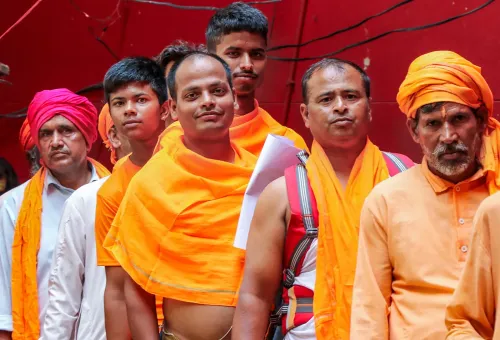
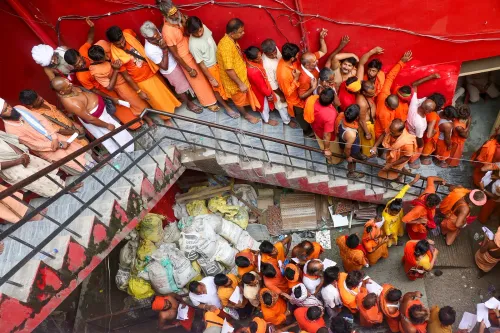
The Shri Amarnath Ji Yatra (SANJY-2026) set a historic milestone on Tuesday, 14 July 2026, as over 3 lakh pilgrims completed the pilgrimage in just 12 days since the yatra commenced on 3 July — the fastest the landmark has ever been reached in the shrine's recorded history. The feat marks a new benchmark for the annual high-altitude pilgrimage managed by the Shri Amarnath Ji Shrine Board (SASB).
Record Milestone and Official Response
Jammu and Kashmir Lieutenant Governor Manoj Sinha, who also serves as chairman of the SASB, acknowledged the achievement in a post on X, calling it a 'historic new record.' He commended officials, service providers, and volunteers, stating that their dedication had made the pilgrimage 'smooth and memorable for every devotee of Baba Barfani.'
Two Routes to the Cave Shrine
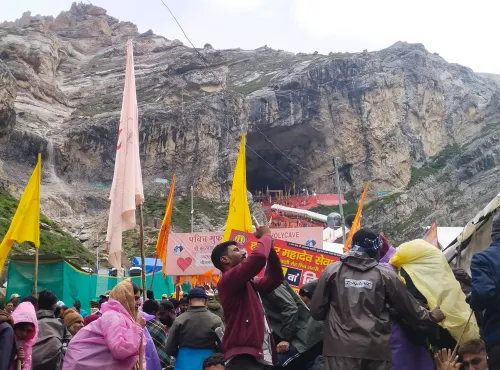
Pilgrims travel to the cave shrine — situated at 3,880 metres above sea level in the Kashmir Himalayas — via two routes. The traditional Pahalgam route is longer and takes approximately three days to reach the shrine, while the shorter Baltal route allows devotees to complete the darshan and return to the base camp on the same day. Base camps are located at Nunwan (Pahalgam) and Baltal, with additional transit camps established at Mir Bazaar in Kulgam district, and Saidipora and Manigam in Ganderbal district.
Security Measures and Logistics
Authorities have declared areas beyond the two base camps a 'No-fly zone' for security reasons, meaning no helicopter services are available to pilgrims this year — a notable change from previous editions. Two escorted convoys depart daily from Bhagwati Nagar Yatri Niwas in Jammu, carrying separate batches of yatris toward Nunwan and Baltal. Free community kitchens, known as Langars, have been set up along the entire yatra route to provide safe and healthy food to pilgrims throughout their journey.
Significance of the Cave Shrine
The cave shrine is home to a naturally occurring ice stalagmite structure that waxes and wanes in accordance with the lunar cycle. Devotees regard the formation as a symbol of the mythical powers of Lord Shiva, making it one of Hinduism's most revered pilgrimage sites. The high-altitude terrain and unpredictable mountain weather make the logistics of managing such footfall a considerable administrative achievement.
What Comes Next
The 57-day-long SANJY-2026 is scheduled to conclude on 28 August 2026, coinciding with the festivals of Shravan Purnima and Raksha Bandhan. With over six weeks still remaining, authorities and the SASB are expected to continue managing the surge in pilgrims while maintaining safety and logistical standards set during the record-breaking opening fortnight.
Point of View
Citing security, pushes the entire footfall onto ground routes, raising the stakes for crowd management at high altitude. The SASB and J&K administration deserve credit for the logistics, but the no-fly restriction also removes a critical emergency evacuation option for a pilgrimage where weather can turn lethal without warning. As numbers climb through August, the real measure of this record will be whether it is matched by a zero-casualty outcome.
NationPress
13 Oct 2026
Frequently Asked Questions
What is the new record set during Amarnath Yatra 2026?
Over 3 lakh pilgrims completed the Amarnath Yatra in just 12 days since it began on 3 July 2026 — the fastest this milestone has been reached in the pilgrimage's recorded history. The achievement was confirmed by J&K Lieutenant Governor Manoj Sinha, who is also the chairman of the Shri Amarnath Ji Shrine Board.
When does the Amarnath Yatra 2026 end?
The 57-day SANJY-2026 is scheduled to conclude on 28 August 2026, coinciding with Shravan Purnima and the festival of Raksha Bandhan.
Why are helicopter services not available during Amarnath Yatra 2026?
Areas beyond the two base camps of Nunwan (Pahalgam) and Baltal have been declared a 'No-fly zone' for security reasons, making helicopter services unavailable to pilgrims this year. All travel to the cave shrine must be completed on foot via the Pahalgam or Baltal routes.
What are the two routes to the Amarnath cave shrine?
Pilgrims can reach the cave shrine via the traditional Pahalgam route, which takes approximately three days, or the shorter Baltal route, which allows devotees to complete darshan and return to base camp on the same day. The shrine is located at 3,880 metres above sea level in the Kashmir Himalayas.
What facilities are available for Amarnath Yatra pilgrims in 2026?
Free Langars (community kitchens) providing safe and healthy food have been set up along the entire yatra route. Transit camps have been established at Mir Bazaar in Kulgam district and at Saidipora and Manigam in Ganderbal district, in addition to the main base camps at Nunwan and Baltal.