Amit Shah: 526 kg Drugs Seized, 5 Pakistanis Held in Arabian Sea Op
Synopsis
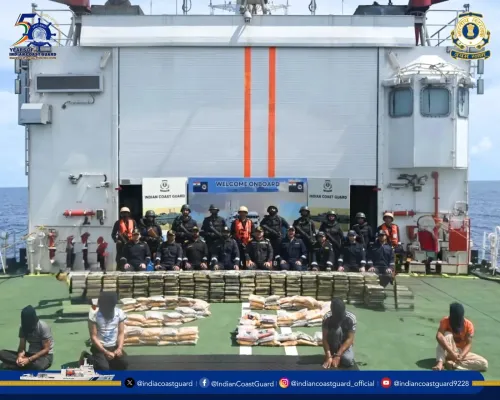
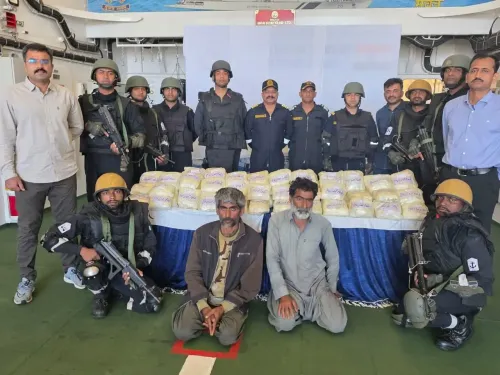
Gujarat ATS, Indian Coast Guard and Central agencies intercepted 526 kg of Methamphetamine and Heroin from an Iranian boat in India's EEZ during a 16-day operation. Five Pakistani nationals were arrested. Union Home Minister Amit Shah announced the bust, linking it to the government's anti-drug mission for Indian youth.
Key Takeaways
526 kg of Methamphetamine and Heroin seized from an Iranian boat inside India's Exclusive Economic Zone .
The interception point was 160 nautical miles northwest of Lakshadweep and 490 nautical miles southwest of Mumbai .
The joint operation involved Gujarat ATS , the Indian Coast Guard , and Central intelligence agencies over 16 days .
Five Pakistani nationals have been arrested; investigation into the wider distribution network is ongoing.
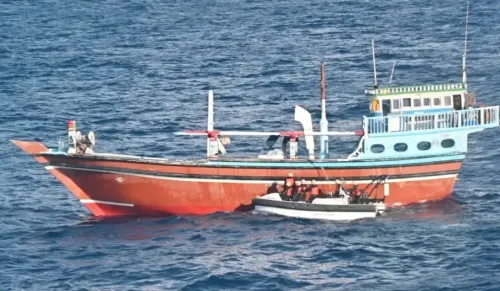
The Iranian boat used for smuggling was also seized as part of the operation.
The seizure fits a documented pattern of Golden Crescent narcotics moving through the Arabian Sea toward India.
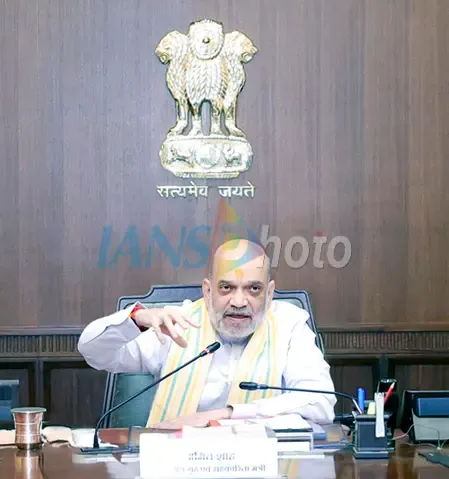
A 526-kilogram haul of Methamphetamine and Heroin, five arrested Pakistani nationals, and a seized Iranian boat — the numbers from a 16-day joint maritime operation announced on Wednesday, September 30, 2026 tell a story of a smuggling network that nearly slipped through one of the world's most watched sea lanes. Union Home Minister Amit Shah shared details of the operation on X, framing it as a direct strike against drug trafficking threatening India's youth.
526 kg and a seized Iranian boat: what the operation netted
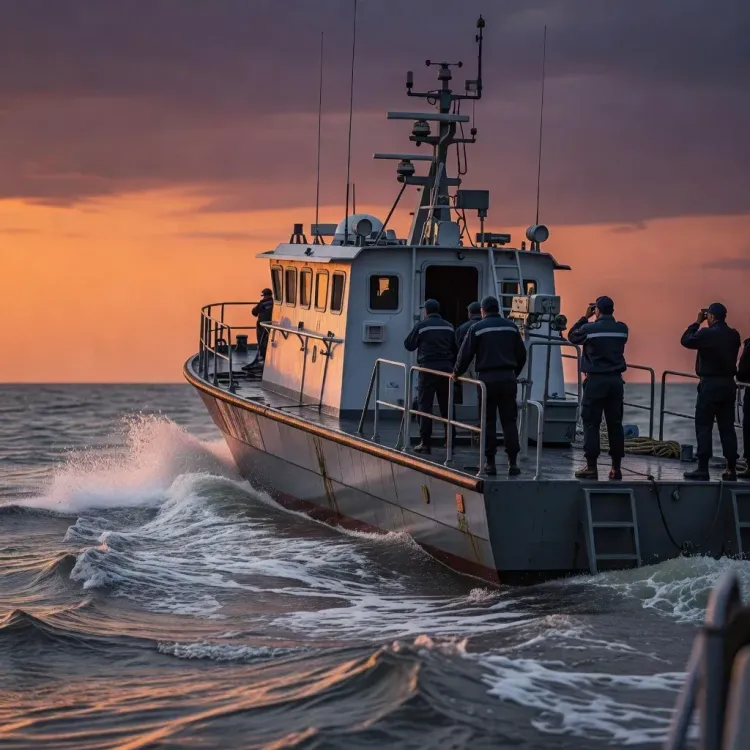
The contraband — a combination of Methamphetamine and Heroin — was intercepted aboard an Iranian boat operating inside India's Exclusive Economic Zone (EEZ), located 160 nautical miles northwest of Lakshadweep and 490 nautical miles southwest of Mumbai. The seizure was the product of a coordinated sweep by the Gujarat Anti-Terrorism Squad (ATS), the Indian Coast Guard, and Central intelligence agencies — a three-pillar collaboration that kept the operation running for over a fortnight before the interception. The boat itself was also seized as part of the action.
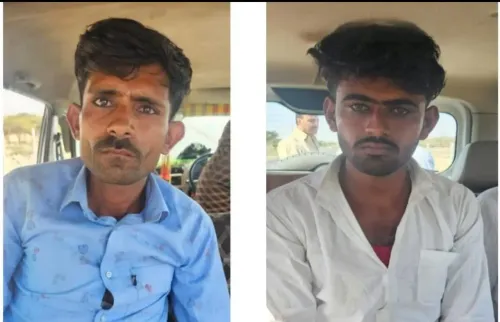
Five Pakistani nationals found on the vessel have been arrested, and authorities say investigation is underway to map the 'wider network and its intended receivers' — the downstream distribution chain inside India that would have absorbed the consignment.
The Golden Crescent corridor and why the Arabian Sea matters
The geography here is not incidental. The Arabian Sea serves as a primary transit corridor for narcotics originating from the Golden Crescent — the Afghanistan-Iran-Pakistan triangle that produces the bulk of the world's heroin and a growing share of synthetic drugs. Consignments move by sea to avoid land-border scrutiny, often using vessels flagged to or operated from countries along the route. The presence of Pakistani nationals on an Iranian-registered boat in Indian waters fits a pattern that Indian maritime security agencies have flagged repeatedly over recent years.
The Indian Coast Guard, operating under the Ministry of Defence, is the first line of enforcement inside the EEZ — the zone extending 200 nautical miles from India's baseline where India holds sovereign rights over resources and jurisdiction over activities. Coordinating with the Gujarat ATS, a unit built around countering terrorism and organised crime, and Central intelligence inputs adds both investigative depth and legal muscle to such interdictions.
Nasha Mukt Bharat and the narco-terrorism link
Home Minister Shah's post opens with an explicit frame: 'Modi govt. is determined to shield its youth from the scourge of drugs.' That framing connects the maritime seizure directly to the Nasha Mukt Bharat Abhiyaan, the demand-reduction campaign launched in August 2020, and to the broader counter-narcotics architecture anchored by the Narcotics Control Bureau (NCB), which has coordinated inter-agency drug enforcement since 1986.
Arrests of foreign nationals in Arabian Sea interdictions routinely open a second investigation track — identifying the landing agents, couriers, and financiers inside India who were waiting for the shipment. Investigators will now attempt to trace those links, and the NCB or state ATS units could announce follow-up arrests as the network unravels.
For a government that has made maritime security and anti-narcotics messaging central to its internal-security posture, a 526-kg seizure with five foreign arrests is not a footnote — it is a headline the Home Minister chose to deliver himself. Whether the downstream network is dismantled will be the real measure of the operation's success.
Point of View
Which has increasingly blurred the line between drug enforcement and national security. By personally announcing the bust, Home Minister Shah reinforces the political messaging of the Nasha Mukt Bharat framework — positioning drug interdiction as a youth-protection imperative rather than a routine law-enforcement outcome. The arrests of Pakistani nationals in Indian waters carry a built-in geopolitical charge that will intensify pressure on investigators to surface the onward network. The real test is whether this 16-day operation translates into prosecutable cases against the inland distribution chain — that outcome will define whether it is a landmark seizure or a headline without a conviction.
NationPress
30 Sept 2026
Frequently Asked Questions
Where exactly was the drug seizure made in the Arabian Sea?
The seizure was made inside India's Exclusive Economic Zone, 160 nautical miles northwest of Lakshadweep and 490 nautical miles southwest of Mumbai , from an Iranian boat.
How much drugs were seized in the Gujarat ATS and Coast Guard operation?
A total of 526 kg of Methamphetamine and Heroin were seized in the joint operation announced on September 30, 2026 .
Who were arrested in the Arabian Sea drug bust?
Five Pakistani nationals found aboard the Iranian boat were arrested; investigation is continuing to identify the wider network and intended recipients of the consignment.
Which agencies conducted the 16-day maritime drug operation?
The operation was a joint effort by the Gujarat Anti-Terrorism Squad (ATS) , the Indian Coast Guard , and Central intelligence agencies .
What is India's Nasha Mukt Bharat Abhiyaan?
Launched in August 2020 , Nasha Mukt Bharat Abhiyaan is the government's nationwide campaign to reduce drug demand through awareness drives, community mobilisation, and treatment support, coordinated alongside enforcement actions by agencies like the NCB and state ATS units.