CM Sukhu: Kishau Dam win secures 211 MW free power for HP
Synopsis
Himachal Pradesh CM Sukhvinder Singh Sukhu claims the state has secured 211 MW of free electricity and projected annual revenue of ₹1,200–1,500 crore from the Kishau Dam project, while warning that Revenue Deficit Grant closures are damaging the mountain state's already constrained economy.
Key Takeaways
CM Sukhvinder Singh Sukhu says Himachal Pradesh fought for three and a half years to secure its rightful share in the Kishau Dam project .
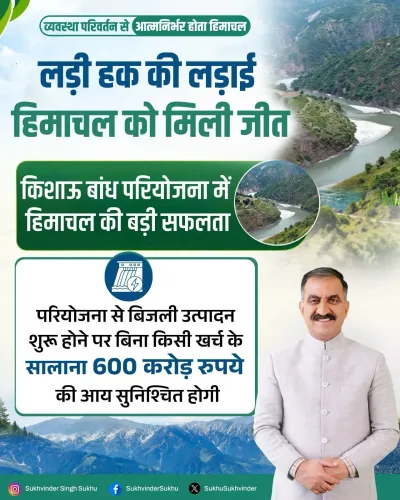
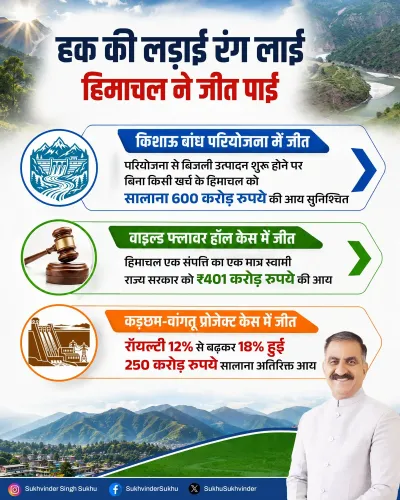
Himachal stands to receive 211 megawatts of free electricity from the Kishau Dam once it is operational.
The project is expected to generate ₹1,200 to ₹1,500 crore in annual revenue for Himachal Pradesh after completion.
Delhi and Haryana , among other northern states, will receive drinking and irrigation water from the Kishau Dam.
CM Sukhu has flagged the closure of Revenue Deficit Grants (RDG) as harmful to Himachal's 90% hilly terrain -dependent economy.
The Kishau Dam is rooted in the 1994 Yamuna water-sharing MoU among basin states; project clearances and funding timelines remain pending.
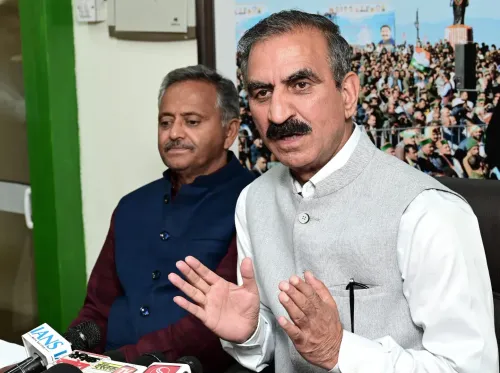
A hill state that covers 90% mountainous terrain and runs on hydropower revenues and central grants has been fighting, in the words of its Chief Minister, for 'three and a half years' just to claim what it is owed. Himachal Pradesh Chief Minister Sukhvinder Singh Sukhu on Wednesday, 30 September 2026, laid out the terms of that fight — and the prize secured — around the long-pending Kishau Dam project on the Yamuna river, while also sounding the alarm over the closure of Revenue Deficit Grants (RDG) to the state.
What Himachal gains from the Kishau Dam deal
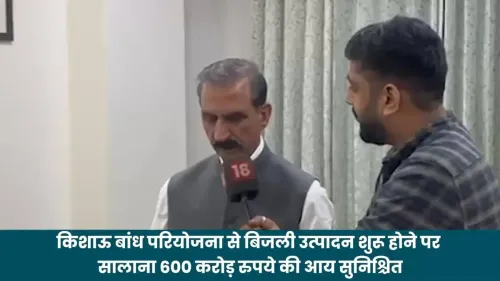
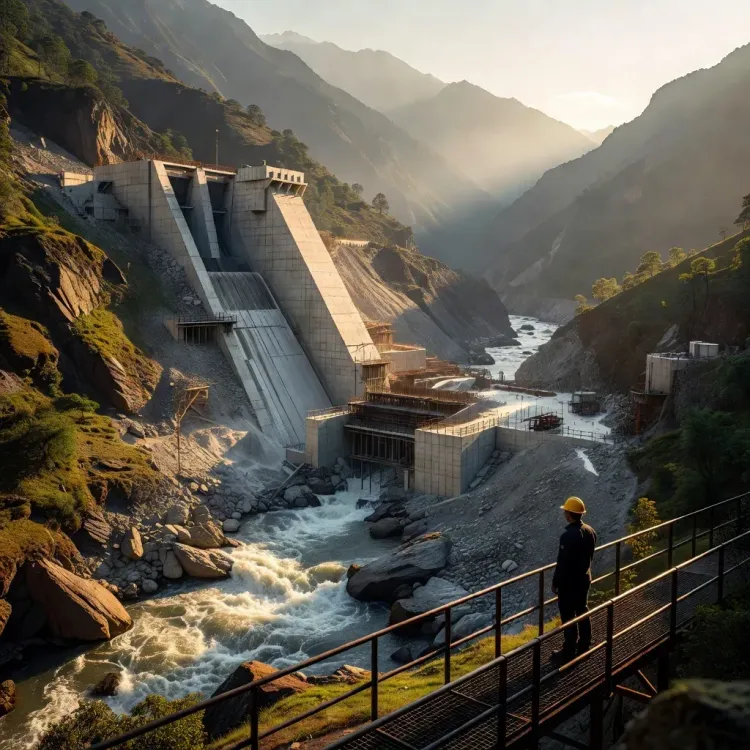
Speaking directly in Hindi, CM Sukhu said the government had 'strongly advocated Himachal's interests in the Kishau Dam project and secured its rightful share.' The project, a multipurpose dam proposed on the Yamuna, will supply water to Delhi, Haryana, and other northern states — downstream beneficiaries who have historically had far greater political leverage in negotiations.
In return, Himachal Pradesh stands to receive 211 megawatts of free electricity from the project. Once construction is complete, Sukhu projected annual revenues of ₹1,200 to ₹1,500 crore flowing into the state every year from the dam. For a state whose limited revenue base is structurally constrained by its terrain, that figure — if realised — would represent a meaningful fiscal cushion.
Kishau's long road: decades of upstream-downstream tension
The Kishau project has been in planning for decades, with its roots in the 1994 Yamuna water-sharing MoU among basin states including Himachal Pradesh, Haryana, Delhi, Uttar Pradesh and Rajasthan. That agreement set the framework under which an upper riparian state like Himachal — which contributes headwaters but historically captured little financial benefit — would receive compensation through free power shares and revenue entitlements.
Successive governments in Shimla have negotiated hydropower royalty and free-power clauses from Yamuna and Sutlej basin projects since the 1980s. What Sukhu is now claiming is that his administration has finally converted that framework into concrete, committed numbers on the Kishau file. The project's clearances and central funding timelines remain closely watched by all basin states.
The RDG gap: Himachal's other fiscal wound
Sukhu's statement did not stop at the hydropower win. He pointed directly to the suspension of Revenue Deficit Grants (RDG) — central fiscal transfers recommended under Article 275 of the Constitution by successive Finance Commissions to states unable to balance their revenue accounts — as a live wound on Himachal's economy.
'Shutting down RDG is harmful for a state like Himachal, which has 90% hilly terrain,' Sukhu stated, adding that the impact on the state's economy was already visible. The 15th Finance Commission had recommended RDG for Himachal and other hill states through the 2021–26 period. With the 16th Finance Commission now determining the architecture for the next cycle, Sukhu's public pressure on this front appears deliberately timed.
Hill and special-category states have long argued that their cost structures — steeper terrain, sparse populations, higher delivery costs for services — make RDG not a subsidy but a structural necessity. Himachal's case, as Sukhu frames it, is that removing such grants while simultaneously delaying project revenues leaves a mountain state stranded between two revenue cliffs.
A federalism argument dressed in fiscal numbers
Taken together, the Kishau win and the RDG grievance form a coherent political argument: that Himachal Pradesh subsidises downstream states through water and ecological services, and is simultaneously being squeezed out of the central transfer system that compensates it. Whether the Kishau revenues materialise on schedule — and whether the 16th Finance Commission restores RDG in a form the state can live with — will determine if this week's announcement translates from a political claim into a budget line.
For the moment, CM Sukhu has drawn the map clearly: Himachal gives water south, and it expects power and money back in return.
Point of View
Timed when the 16th Finance Commission is shaping the next grant cycle. By quantifying Himachal's ecological and water contribution in megawatts and crores, Sukhu is reframing a perennial hill-state grievance in the language of fiscal entitlement rather than charity. The political subtext is equally clear: presenting Congress-led Himachal as an assertive negotiator with New Delhi rather than a supplicant, a posture that plays well domestically ahead of any future electoral cycle. Whether these gains survive the full project pipeline — clearances, funding, construction — will ultimately determine whether this is a governance milestone or a well-timed headline.
NationPress
30 Sept 2026
Frequently Asked Questions
What is the Kishau Dam project and which states benefit from it?
The Kishau Dam is a proposed multipurpose project on the Yamuna river involving several northern Indian states. It will supply water to Delhi , Haryana , and other downstream states, while Himachal Pradesh , as an upper riparian state, is to receive free electricity and annual revenues in return.
How much free power will Himachal Pradesh get from Kishau Dam?
According to CM Sukhu, Himachal Pradesh will receive 211 megawatts of free electricity from the Kishau Dam project as compensation for its water contribution and role as an upper riparian state.
What are Revenue Deficit Grants (RDG) and why does Himachal Pradesh depend on them?
Revenue Deficit Grants (RDG) are central fiscal transfers recommended under Article 275 of the Constitution by Finance Commissions for states that cannot balance their revenue accounts. For Himachal Pradesh , which has over 90% hilly terrain , high service-delivery costs and a limited tax base make these grants a structural necessity rather than discretionary support.
Why has CM Sukhu raised the RDG closure issue now?
The timing aligns with the 16th Finance Commission currently deliberating on fiscal transfer structures for the next period. By publicly flagging the economic damage from RDG suspension, Sukhu is applying political pressure to ensure hill states are not excluded from the next grant cycle.
What revenue does Himachal Pradesh expect from Kishau Dam annually?
CM Sukhu has projected that once the Kishau Dam is complete, Himachal Pradesh will earn approximately ₹1,200 to ₹1,500 crore per year from the project, providing a significant boost to the state's revenue base.