Centre to Provide All Facilities for Women Border Guards by 2030: CMO Rajasthan
Synopsis
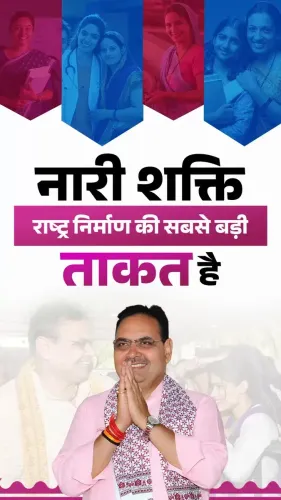
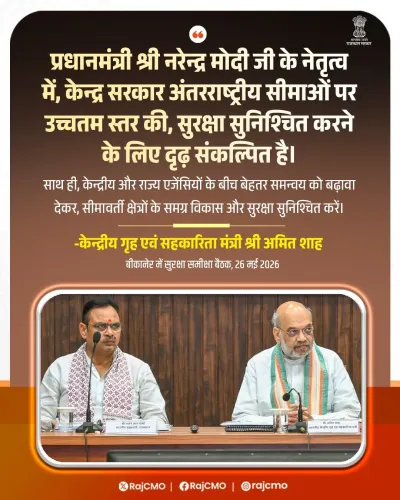
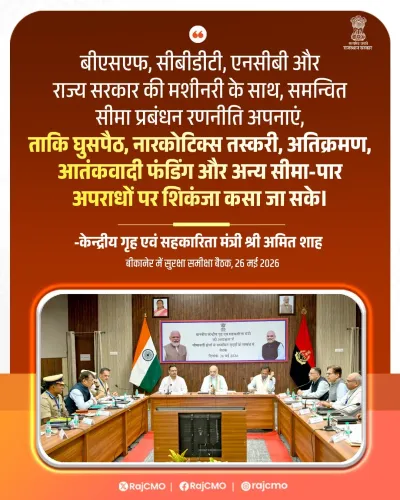
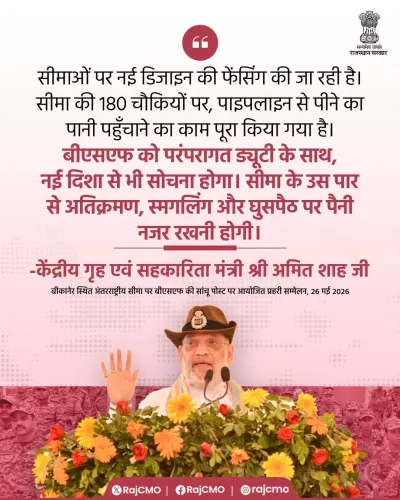
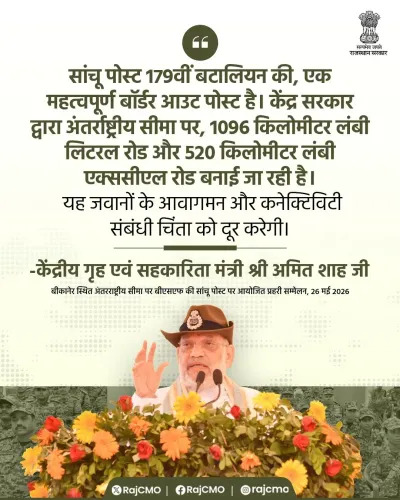
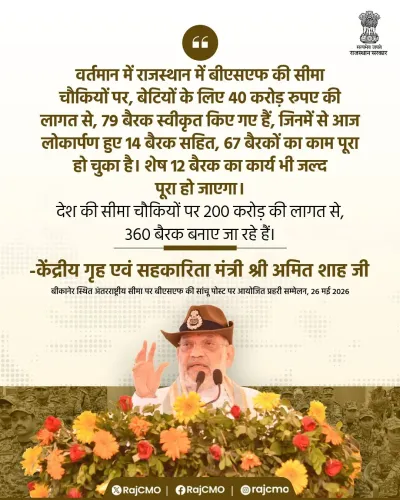
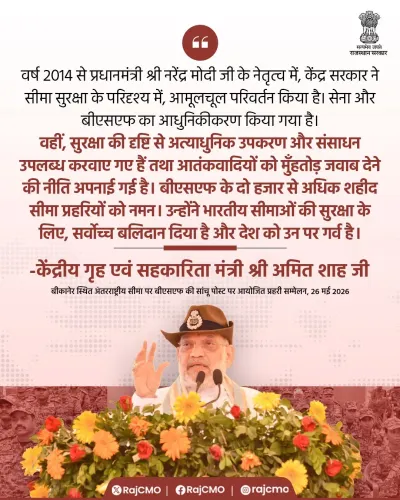
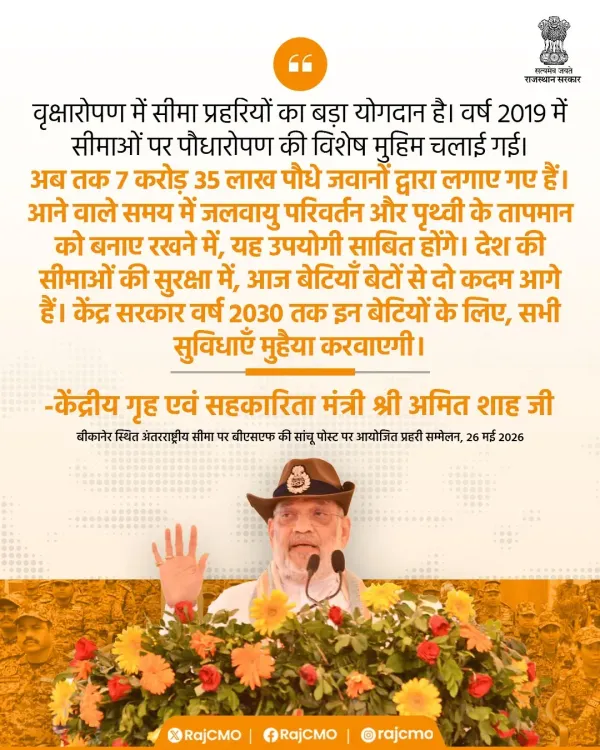
The Chief Minister's Office of Rajasthan has shared Home Minister Amit Shah's pledge that the Central government will ensure all facilities for women serving in India's border security forces by 2030, affirming their growing frontline role.
Key Takeaways
The CMO Rajasthan quoted Union Home Minister Amit Shah on 26 May 2026 stating that women are 'two steps ahead of sons' in border protection.
The Central government has committed to providing all facilities for women border guards by 2030 .
The policy builds on the 2019 decision to open permanent commission and combat roles for women in the armed forces and paramilitary organisations.
Forces under the Ministry of Home Affairs — including the BSF , CRPF , and Assam Rifles — have been progressively increasing their authorised strength of women personnel.
Rajasthan , sharing a significant border with Pakistan , is a key operational context for this announcement.
Detailed benchmarks and budget allocations for the 2030 infrastructure target are yet to be made public.
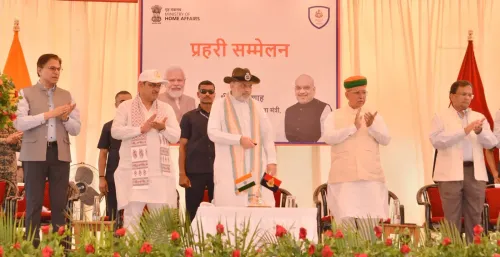
The Chief Minister's Office of Rajasthan on Tuesday, 26 May 2026 shared a statement attributed to Union Home Minister Amit Shah, asserting that daughters of the country are now two steps ahead of sons in guarding India's borders, and that the Central government will provide all necessary facilities for these women by 2030.
Context
The post, shared under the hashtag #आपणो_अग्रणी_राजस्थान ('Our Leading Rajasthan'), quotes Home Minister Amit Shah as saying: 'Today, daughters are two steps ahead of sons in protecting the nation's borders. The Central government will provide all facilities for these daughters by the year 2030.' The statement underscores the growing role of women in India's border security apparatus, particularly relevant for Rajasthan, which shares a long international border with Pakistan.
Policy Backdrop
The declaration builds on a sustained policy push that gained significant momentum in 2019, when the Union government opened permanent commission and combat roles for women officers across the armed forces and paramilitary organisations. Since then, successive central governments have steadily raised the authorised percentage of women personnel in forces such as the Border Security Force (BSF), the Central Reserve Police Force (CRPF), and the Assam Rifles. The policy direction has consistently emphasised both operational deployment of women personnel and the creation of gender-specific infrastructure — including barracks, training facilities, and equipment — at forward and border outposts.
The Ministry of Home Affairs, which Amit Shah heads, oversees these border guarding forces and has been the primary driver of expanded women's induction. The 2030 target for ensuring 'all facilities' represents a concrete timeline, though the detailed scope and benchmarks are yet to be elaborated in public documents.
Stakeholders and Impact
The most direct beneficiaries of this commitment are women currently serving in paramilitary and border guarding units, as well as future recruits who would join these forces before and after 2030. Adequate infrastructure — separate accommodation, sanitation, medical facilities, and specialised training — has long been cited by serving women personnel as a prerequisite for effective and dignified deployment at remote border outposts.
Residents of border areas in Rajasthan and other frontier states also stand to benefit from a more operationally capable and gender-inclusive border security force. The statement signals political will at the highest level of the Union government to back women's expanded role with budgetary and logistical support.
What's Next
Observers and stakeholders will closely watch upcoming Ministry of Home Affairs recruitment notifications and Union Budget allocations for any specific line items funding women-centric barracks, training centres, and equipment procurement at border outposts. The 2030 deadline gives planners roughly four years to complete infrastructure rollouts across multiple forces and geographies. Whether the commitment translates into measurable annual milestones will be a key indicator of implementation seriousness — and a political benchmark for the ruling dispensation heading into future electoral cycles.
Point of View
2030, to the infrastructure pledge, Home Minister Shah raises the stakes for delivery accountability. The choice to route this message through the Rajasthan CMO's handle is notable given the state's long Pakistan-facing border and its strategic importance to the BSF's western command. This fits a broader pattern in which the ruling dispensation uses border security optics to consolidate both nationalist and women-empowerment narratives simultaneously.
NationPress
14 Sept 2026
Frequently Asked Questions
What did Amit Shah say about women in border security forces?
Home Minister Amit Shah stated that daughters are now two steps ahead of sons in guarding India's borders, and that the Central government will provide all necessary facilities for women border guards by 2030.
Which forces will benefit from the 2030 women's facilities pledge?
The pledge covers women serving in border guarding and paramilitary forces under the Ministry of Home Affairs, including the BSF, CRPF, and Assam Rifles, which have been progressively inducting more women personnel.
When did India open combat roles for women in paramilitary forces?
In 2019, the Union government opened permanent commission and combat roles for women officers across the armed forces and paramilitary organisations, marking a significant policy shift.
Why is Rajasthan significant in the context of women border guards?
Rajasthan shares a long international border with Pakistan, making it a key operational theatre for the BSF and other border security forces, and giving the state a direct stake in policies affecting women personnel deployed there.
What facilities are being promised for women in border security by 2030?
The statement refers broadly to 'all facilities', which in the policy context typically includes gender-specific barracks, sanitation, medical infrastructure, and specialised training at forward and border outposts. Detailed specifications have not yet been made public.