Rajasthan CMO Calls for Coordinated Border Strategy with BSF, NCB, CBDT
Synopsis
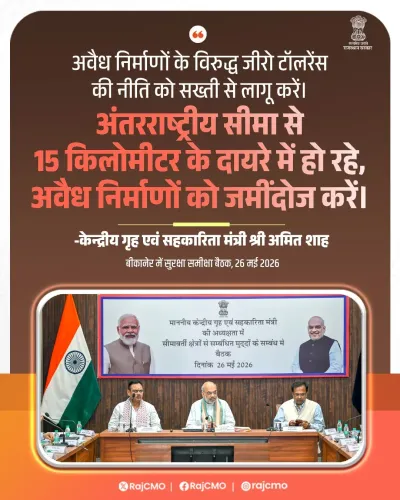
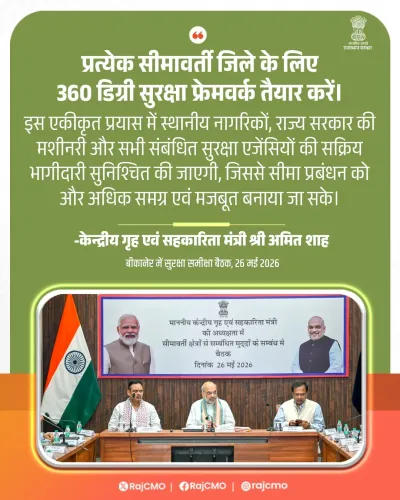
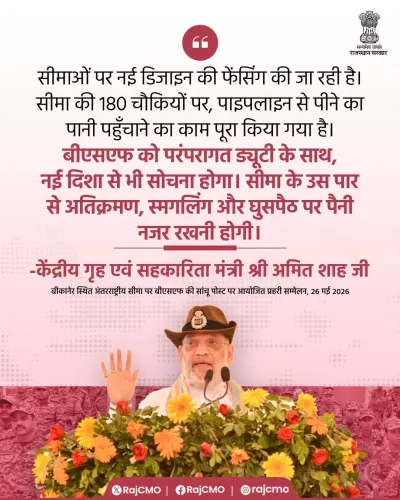
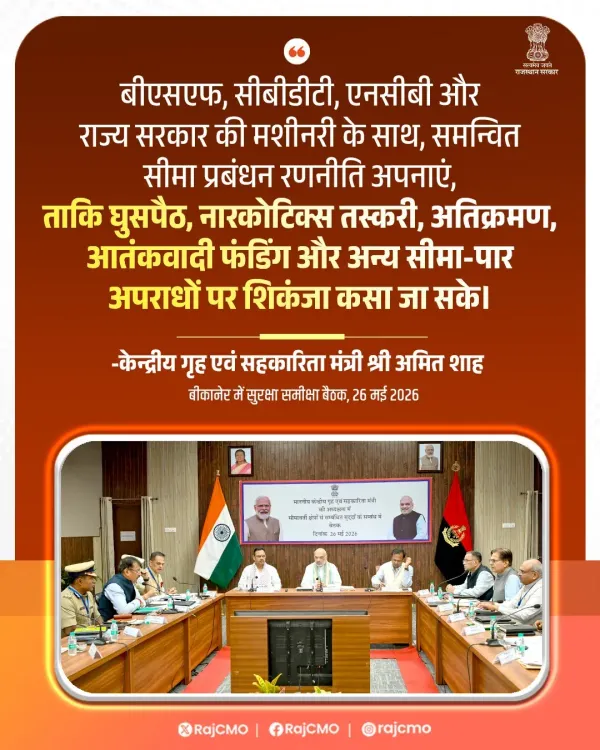
The Rajasthan Chief Minister's Office has called for a coordinated border management strategy bringing together BSF, NCB, CBDT and state machinery, tagging Union Home Minister Amit Shah. The appeal underscores the strategic importance of Rajasthan's 1,070-km Pakistan border and the state's push for tighter central-state security integration.
Key Takeaways
The Rajasthan CMO on 28 May 2026 publicly called for a unified border management strategy.
The strategy is to involve BSF, CBDT, NCB and state government machinery working in coordination.
Union Home Minister Amit Shah was directly tagged, signalling an escalation to the central security establishment.
Rajasthan shares a 1,070-km border with Pakistan , a longstanding focus of cross-border security concerns.
The call aligns with post-2014 Ministry of Home Affairs efforts to integrate multi-agency border operations.
Possible follow-ups include joint coordination meetings or revised inter-agency standard operating procedures.
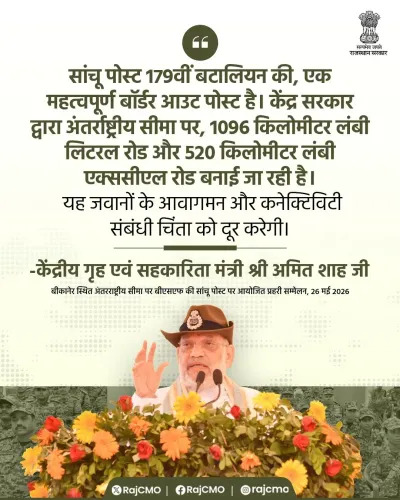
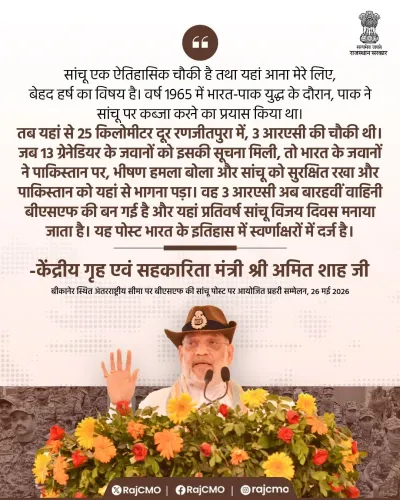
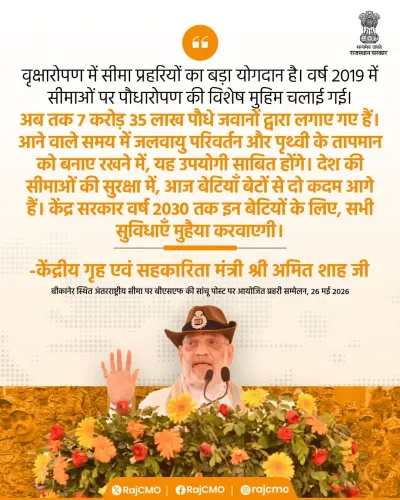
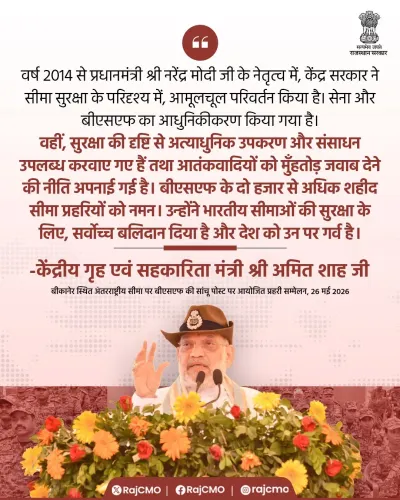
The Chief Minister's Office of Rajasthan on Thursday, 28 May 2026 called for a coordinated border management strategy involving the Border Security Force (BSF), the Central Board of Direct Taxes (CBDT), the Narcotics Control Bureau (NCB), and state government machinery, tagging Union Home Minister Amit Shah in the post under the hashtag #आपणो_अग्रणी_राजस्थान ('Our Leading Rajasthan').
Context
The post, shared from the official Rajasthan CMO handle, urges that a 'coordinated border management strategy be adopted with BSF, CBDT, NCB and state government machinery.' The direct tagging of Home Minister Amit Shah signals the state government's intent to escalate the issue to the central security establishment. Rajasthan shares a 1,070-kilometre border with Pakistan, making it one of India's most strategically sensitive frontier states.
Policy Backdrop
Multi-agency coordination along the western border has been a recurring priority for the Ministry of Home Affairs since 2014, with successive initiatives seeking to integrate BSF field operations with NCB drug-intelligence inputs and CBDT financial investigations targeting smuggling networks. In 2021, the central government approved additional smart-fencing and surveillance projects specifically for the Rajasthan-Pakistan border corridor. The CMO's appeal fits squarely within this established pattern of pushing for unified command structures rather than isolated, agency-by-agency responses.
Stakeholders and Impact
The agencies named each bring a distinct mandate to the table: BSF holds primary responsibility for physical border guarding; NCB, functioning under the Ministry of Home Affairs, leads narcotics enforcement; and CBDT contributes financial intelligence to disrupt the money trails behind smuggling operations. Border district residents and state police stand to be the most directly affected by any revised coordination framework, as improved inter-agency communication typically translates into faster ground-level responses to infiltration or contraband movement.
What's Next
The tagging of Amit Shah raises the prospect of follow-up joint coordination meetings or revised standard operating procedures between the named agencies. Observers will watch whether the Home Ministry convenes a formal review with Rajasthan's security apparatus in the near term. A concrete outcome could include updated protocols governing information-sharing between BSF field units, NCB regional offices, and CBDT intelligence wings operating in border districts.
Point of View
NCB and CBDT together, the state is signalling that the challenge on the Pakistan border is simultaneously a security, narcotics and financial crime problem — one that no single agency can address alone. This fits a broader arc in which state governments use high-visibility social media posts to both pressure and align with the Union Home Ministry on border security, particularly in election-sensitive border districts. The hashtag 'Our Leading Rajasthan' also frames the demand within a development and governance narrative, suggesting the state sees border stability as integral to its growth agenda.
NationPress
11 Oct 2026
Frequently Asked Questions
Why is the Rajasthan CMO calling for BSF, NCB and CBDT coordination?
The Rajasthan CMO is calling for coordinated border management because the state's 1,070-km Pakistan border faces overlapping threats — infiltration, narcotics smuggling and related financial crime — that require BSF, NCB and CBDT to work together rather than independently.
What is the role of CBDT in border security?
CBDT, the Central Board of Direct Taxes, contributes financial intelligence to border security by tracking money trails linked to smuggling networks, complementing the ground operations of BSF and the drug-enforcement mandate of NCB.
How long is the Rajasthan-Pakistan border?
Rajasthan shares approximately 1,070 kilometres of border with Pakistan, making it one of India's longest and most strategically sensitive frontier stretches.
Who is Amit Shah and why was he tagged in the Rajasthan CMO post?
Amit Shah is India's Union Home Minister, overseeing internal security agencies including BSF and NCB since 2019. He was tagged because the coordination being sought involves central government agencies that fall under his ministry.
What could happen after the Rajasthan CMO's border coordination appeal?
Possible follow-ups include joint coordination meetings between BSF, NCB, CBDT and Rajasthan state police, or the framing of revised standard operating procedures for information-sharing along the border.