Rajasthan CMO Orders Demolition of Illegal Structures Near Border
Synopsis
The Chief Minister's Office of Rajasthan has ordered demolition of illegal constructions within 15 km of the international border, tagging Union Home Minister Amit Shah. The directive targets frontier districts like Barmer and Jaisalmer and reflects renewed state-centre alignment on border-security enforcement.
Key Takeaways
The Chief Minister's Office of Rajasthan on 28 May 2026 ordered demolition of all illegal constructions within 15 kilometres of the international border.
The post tagged Union Home Minister Amit Shah , signalling centre-state coordination on the enforcement action.
Rajasthan shares a 1,070-km border with Pakistan; frontier districts include Barmer , Jaisalmer , Bikaner , and Sri Ganganagar .
Restrictions on construction near the western border trace back to post-war notifications issued after the 1965 and 1971 conflicts.
The Border Security Force (BSF) provides security inputs to district administrations that underpin such enforcement drives.
Affected border residents may file legal petitions or seek compensation, making due process a key variable in the drive's execution.
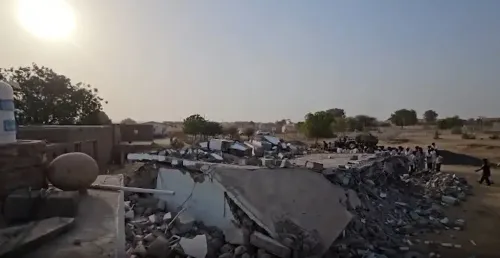
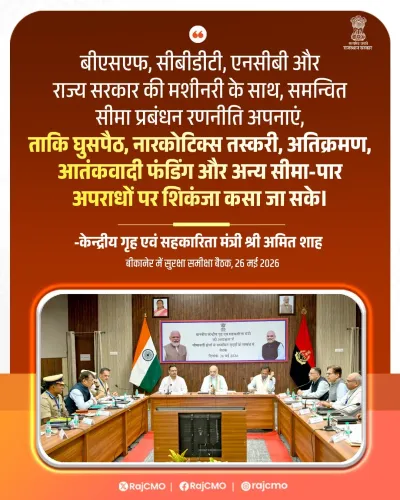
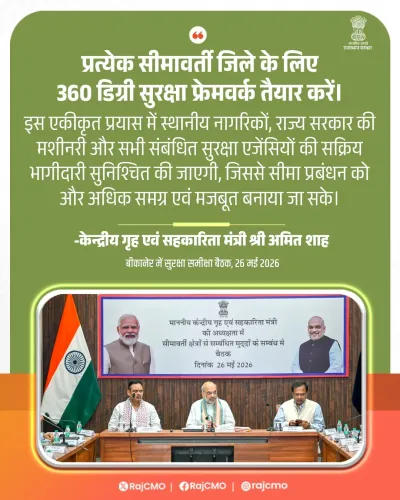
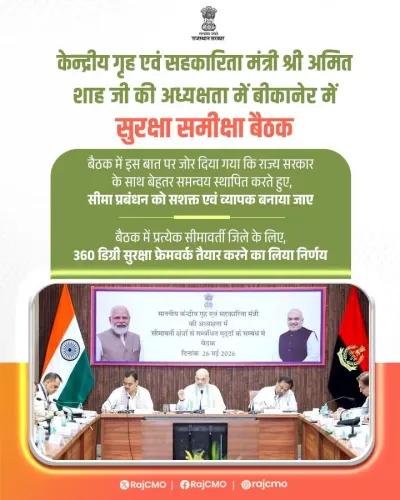
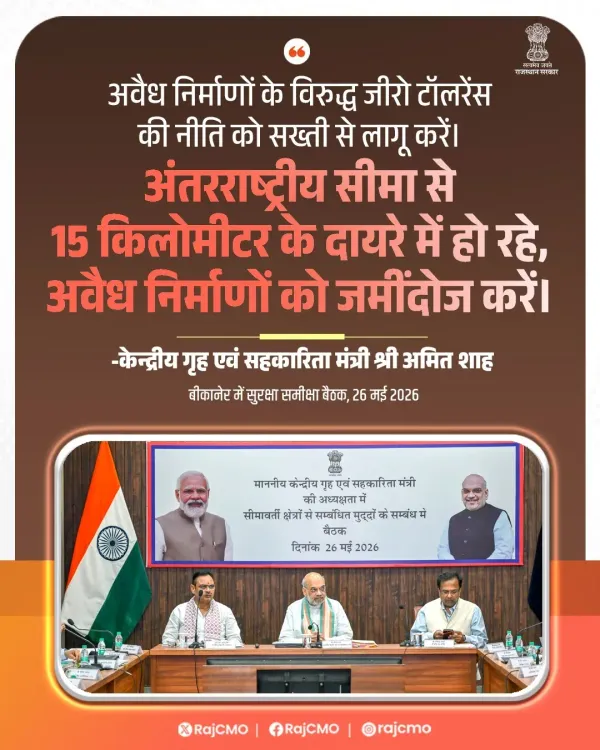
The Chief Minister's Office of Rajasthan on Thursday, 28 May 2026 directed authorities to demolish all illegal constructions within a 15-kilometre radius of the international border, tagging Union Home Minister Amit Shah in the post under the hashtag #आपणो_अग्रणी_राजस्थान ('Our Pioneering Rajasthan'). The directive signals a sharp enforcement push in Rajasthan's sensitive frontier belt, which stretches along a 1,070-kilometre boundary with Pakistan.
Context
The post, in Hindi, reads: 'Antrarashtreey seema se 15 kilometre ke dayre mein ho rahe avaidh nirmaanon ko zamindoz karen' — 'Demolish the illegal constructions being carried out within a 15-kilometre radius of the international border.' By tagging Amit Shah, the state government publicly signalled alignment with the Union Home Ministry on border-security enforcement, placing the action within a broader centre-state coordination framework.
Rajasthan's western frontier districts — Barmer, Jaisalmer, Bikaner, and Sri Ganganagar — have long been subject to special land-use restrictions. Unauthorised construction in these zones is considered a security risk because such structures can obstruct surveillance lines, provide cover for infiltration, and complicate the movement of border-security personnel.
Policy Backdrop
Restrictions on construction and land use near India's western border date to the aftermath of the 1965 and 1971 wars, when successive central governments notified buffer zones to reduce infiltration and smuggling risks. These rules have been enforced with varying degrees of rigour, but recent years have seen renewed emphasis on clearing encroachments as part of a wider internal-security doctrine that pairs physical fencing and surveillance with the removal of unauthorised structures.
The Border Security Force (BSF), which guards the India-Pakistan frontier, routinely provides district administrations with inputs on security-sensitive zones. State revenue departments are responsible for acting on those inputs, making the demolition directive a direct extension of centre-state coordination that has been a feature of frontier governance across Rajasthan, Punjab, and Gujarat.
Stakeholders and Impact
The order is most immediately felt by residents of border villages in districts such as Barmer, Jaisalmer, and Sri Ganganagar, where informal construction on agricultural and residential plots is common. District collectors and sub-divisional magistrates are the operational nodes through whom any demolition drive would be executed, requiring coordination with local police and revenue officials.
Civil-society groups working in border communities have historically flagged concerns about due process when structures belonging to long-settled residents are targeted. Any large-scale demolition drive is likely to prompt legal petitions and, in some cases, demands for compensation or rehabilitation from affected families.
What's Next
The immediate focus will be on whether district administrations in Barmer, Jaisalmer, Bikaner, and Sri Ganganagar issue formal notices and begin ground-level surveys to identify structures falling within the 15-km belt. The tagging of Union Home Minister Amit Shah suggests the state may be seeking central backing — or signalling it already has it — for an accelerated enforcement timeline. Legal challenges and compensation claims from affected residents will be the key variables shaping how the drive unfolds.
Point of View
Not merely an administrative communication — it frames the demolition drive as a centre-backed security imperative rather than a routine revenue action. This fits a broader pattern in which BJP-governed states have used high-visibility enforcement in frontier zones to project a 'zero-tolerance' security posture ahead of or during periods of heightened India-Pakistan tensions. The 15-km buffer echoes longstanding but inconsistently enforced post-war restrictions, suggesting the state is now seeking to operationalise rules that have often remained on paper. How district administrations balance speed of demolition against due-process obligations for long-settled residents will be the real test of whether this is a durable policy shift or a short-term signalling exercise.
NationPress
11 Oct 2026
Frequently Asked Questions
Why is Rajasthan demolishing constructions near the international border?
The Rajasthan CMO has ordered demolition of illegal constructions within 15 km of the international border on security grounds, as unauthorised structures in frontier zones can obstruct surveillance and complicate the movement of border-security forces.
Which districts in Rajasthan are affected by the 15-km border demolition order?
The order affects frontier districts including Barmer, Jaisalmer, Bikaner, and Sri Ganganagar, which lie along Rajasthan's 1,070-km border with Pakistan.
Why did the Rajasthan CMO tag Amit Shah in the border demolition post?
By tagging Union Home Minister Amit Shah, the Rajasthan CMO publicly signalled alignment with the Union Home Ministry, indicating that the enforcement drive has centre-state backing on border security.
What are the rules on construction near India's western border?
Restrictions on construction near India's western border date to post-war notifications after the 1965 and 1971 wars; these rules designate buffer zones where land use and construction are regulated to reduce security risks.
What happens to residents whose homes are demolished in the border zone?
Affected residents can challenge demolition orders in court and may seek compensation or rehabilitation; due process and legal petitions are expected to be key issues as any large-scale drive proceeds.