Amit Shah Chairs Security Review in Bikaner for Border Districts
Synopsis
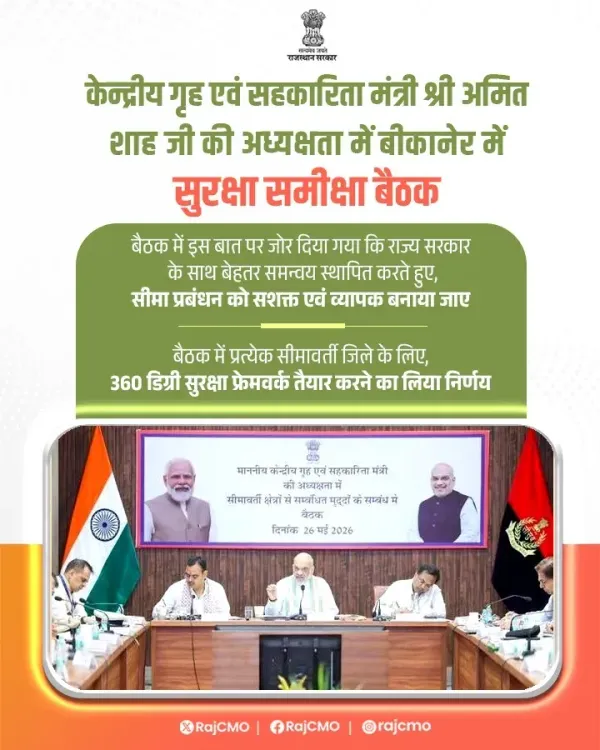
Union Home Minister Amit Shah chaired a high-level security review in Bikaner on 28 May 2026, with Chief Minister Bhajanlal Sharma and district officials from five India-Pakistan border districts. A 360-degree security framework for each border district was decided, integrating local civilians, state machinery, and central agencies.
Key Takeaways
Union Home Minister Amit Shah chaired a security review meeting in Bikaner on 28 May 2026 .
The meeting covered security issues in five India-Pakistan border districts : Bikaner, Jaisalmer, Barmer, Sriganganagar, and Phalodi.
Chief Minister Bhajanlal Sharma and senior Rajasthan government officials participated alongside District Magistrates and SPs of the five districts.
A 360-degree security framework is to be prepared for each border district.
The framework will integrate local citizens , state government machinery, and all relevant central security agencies.
The meeting stressed strengthening central-state coordination for comprehensive border management.
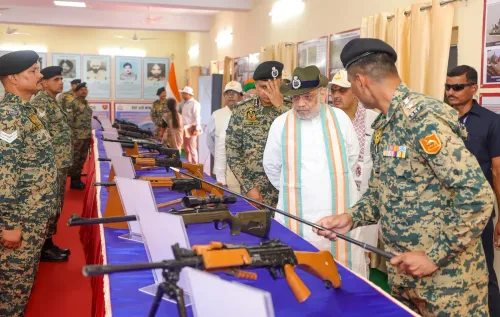
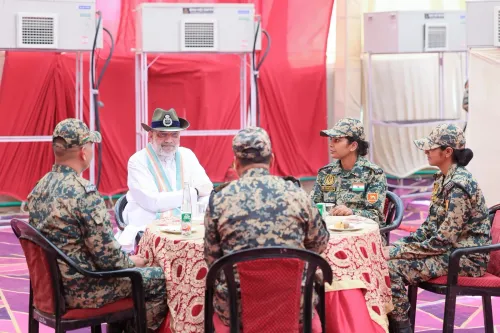
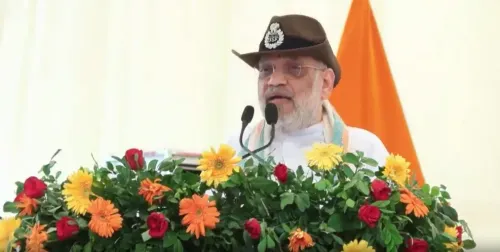
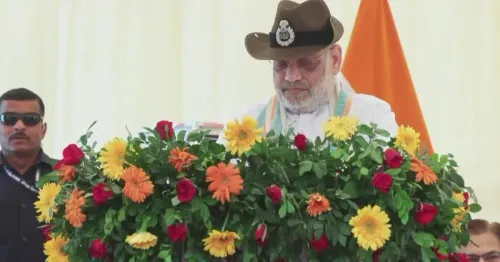
Union Home and Cooperation Minister Amit Shah chaired a high-level security review meeting in Bikaner on Thursday, 28 May 2026, focused on districts bordering Pakistan in Rajasthan. The meeting, convened by the Chief Minister's Office of Rajasthan, brought together senior state officials and district-level administrators to conduct a detailed assessment of security conditions along the western frontier.
Context
The post from the Chief Minister's Office of Rajasthan states that the meeting reviewed security-related issues pertaining to districts adjoining the India-Pakistan border. Chief Minister Bhajanlal Sharma, senior officials of the Rajasthan government, and the District Magistrates and Superintendents of Police of Bikaner, Jaisalmer, Barmer, Sriganganagar, and Phalodi participated in the deliberations. The gathering signals a focused effort by the central government to tighten coordination with the state on border management.
Policy Backdrop
Rajasthan shares one of the longest stretches of India's international border with Pakistan, making its western districts a perennial focus of security planning. The Border Security Force (BSF), raised in 1965, has historically been the primary agency guarding this frontier, operating alongside state police and local administration. The central government has periodically held state-level security review meetings since at least 2014 to strengthen coordination between the Ministry of Home Affairs and border-state administrations, and this meeting continues that pattern.
The concept of a 360 degree suraksha framework (360-degree security framework) builds on earlier multi-agency coordination mechanisms developed in response to infiltration, smuggling, and cross-border crime along the western frontier. Such frameworks are designed to integrate surveillance grids, infrastructure, and human intelligence at the district level.
Key Decisions and Stakeholder Impact
The meeting resolved to prepare a 360-degree security framework for each border district, emphasising stronger coordination between the state government and central security agencies. The post notes that the integrated effort will ensure 'active participation of local citizens, state government machinery, and all relevant security agencies' to make border management 'more comprehensive and robust.' This directly affects residents of the five border districts — Bikaner, Jaisalmer, Barmer, Sriganganagar, and Phalodi — as well as state police forces and central agencies deployed along the frontier. The emphasis on local civilian participation marks a notable feature of the proposed framework, extending the security net beyond uniformed personnel to community-level engagement.
What's Next
The key deliverable from the meeting is the rollout of district-specific 360-degree security frameworks across all five border districts. Follow-up joint review meetings between the Ministry of Home Affairs and the Rajasthan government, as well as potential infrastructure and surveillance announcements, are the markers to watch. The outcome of this meeting is likely to shape the operational security posture along Rajasthan's western border in the months ahead, particularly given the broader national emphasis on integrated border management.
Point of View
Rather than in Jaipur or New Delhi, is a deliberate signal: the central government is taking the operational ground-level realities of Rajasthan's western frontier seriously. The decision to build district-specific 360-degree frameworks — explicitly incorporating local civilians — marks an evolution from purely force-centric border management toward a whole-of-society model. For Chief Minister Bhajanlal Sharma, the meeting is an opportunity to demonstrate that the BJP-led state government is a capable and willing partner in national security architecture. The broader arc here is one of centralised oversight combined with localised execution, a model the Ministry of Home Affairs has been refining along multiple sensitive borders.
NationPress
11 Oct 2026
Frequently Asked Questions
Why did Amit Shah visit Bikaner in May 2026?
Amit Shah visited Bikaner on 28 May 2026 to chair a high-level security review meeting focused on districts along the India-Pakistan border in Rajasthan.
Which districts were covered in the Bikaner security meeting?
The meeting covered five border districts: Bikaner, Jaisalmer, Barmer, Sriganganagar, and Phalodi, all of which share the international boundary with Pakistan.
What is the 360-degree security framework for Rajasthan border districts?
The 360-degree security framework is a district-specific integrated plan decided at the Bikaner meeting, designed to involve local citizens, state government machinery, and all central security agencies to make border management more comprehensive.
Who attended the Bikaner security review meeting with Amit Shah?
Chief Minister Bhajanlal Sharma, senior Rajasthan government officials, and the District Magistrates and Superintendents of Police of Bikaner, Jaisalmer, Barmer, Sriganganagar, and Phalodi attended the meeting.
What is India's approach to managing the Rajasthan-Pakistan border?
India employs an integrated border management approach along the Rajasthan-Pakistan frontier, involving the Border Security Force, state police, local administration, and surveillance infrastructure, with periodic central-state review meetings to strengthen coordination.