Amit Shah: Bharat Beej Cooperative to Be Largest Seed Firm in 3 Years
Synopsis
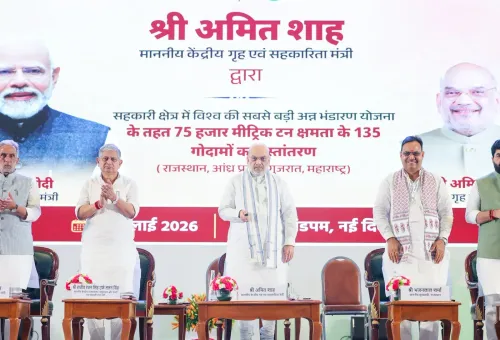
Union Home Minister Amit Shah announced on 6 July 2026 that Bharat Beej Sahakari Samiti will become India's largest seed production company within three years, with state-level units set to deliver pure and improved seeds directly to farmers through the cooperative network.
Key Takeaways
Bharat Beej Sahakari Samiti is targeted to become India's largest seed production company within 3 years .
New seed processing units will be set up in every state to improve last-mile delivery to farmers.
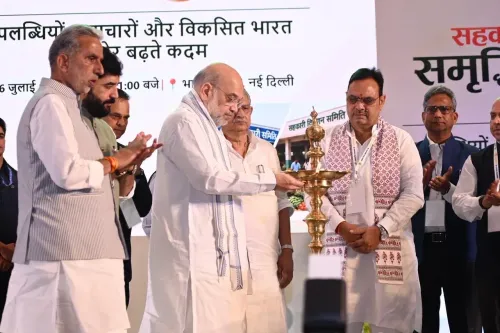
The announcement was made under the #SahkarSeSamriddhiKe5Saal campaign, marking five years of the Sahkar Se Samriddhi programme.
The Ministry of Cooperation , formed in July 2021 , provides the policy framework driving this expansion.
Amendments to the Multi-State Cooperative Societies Act, 2002 (notified 2023 ) underpin the cooperative's ability to operate nationally.
The initiative aims to reduce farmer dependence on private seed companies as part of the Atmanirbhar Bharat agenda.
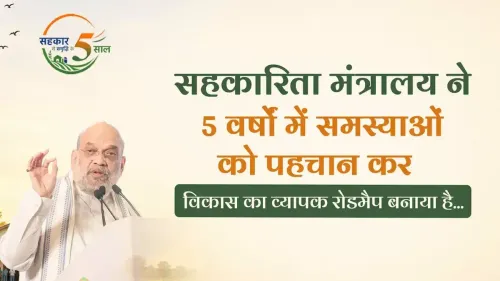
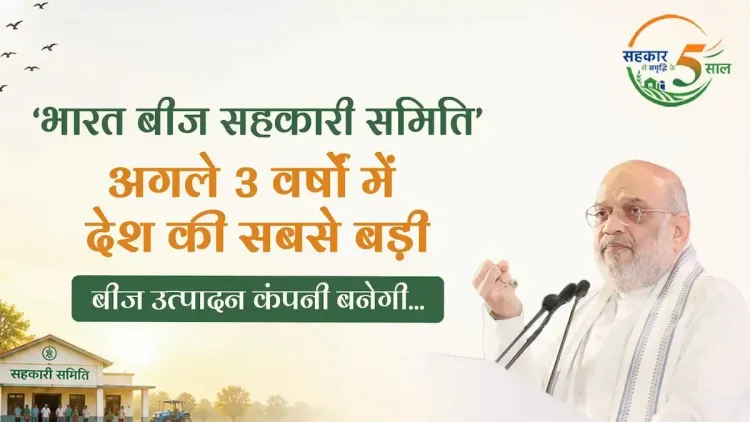
Union Home Minister and Minister of Cooperation Amit Shah declared on Monday, 6 July 2026 that the Bharat Beej Sahakari Samiti will become the country's largest seed production company within the next three years, with new processing units to be established in every state to supply farmers with pure and improved seeds.
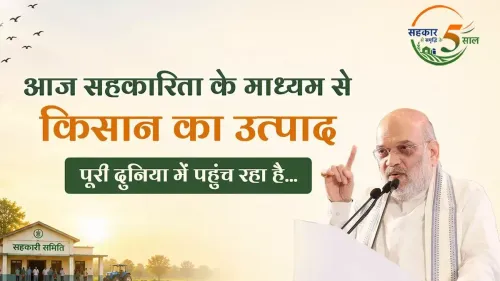
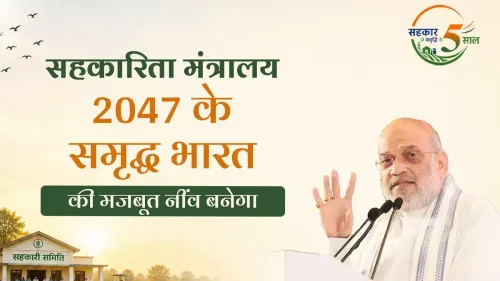
Posting on X under the hashtag #SahkarSeSamriddhiKe5Saal (Five Years of Prosperity Through Cooperation), Shah wrote: 'Bharat Beej Sahakari Samiti' agne 3 varshon mein desh ki sabse badi beej utpadan company banegi — 'The Bharat Beej Sahakari Samiti will become the country's largest seed production company in the next 3 years, and new units in every state will provide farmers with pure and improved seeds.'
Context
The announcement marks a milestone in the government's Sahkar Se Samriddhi (Prosperity Through Cooperation) programme, which completed five years of implementation at the time of the post. The Ministry of Cooperation, established in July 2021, was created specifically to give focused policy attention to India's vast cooperative sector — the first such dedicated central ministry in the country's history.
The Bharat Beej Sahakari Samiti is a multi-state cooperative society set up to produce and supply quality seeds through a nationwide network of units, positioning the cooperative model as a direct alternative to private seed companies in the agricultural inputs market.
Policy Backdrop
The seed cooperative push sits within a broader legislative and policy framework. Amendments to the Multi-State Cooperative Societies Act, 2002, notified in 2023, were designed to improve governance standards and ease of doing business for cooperatives operating across state boundaries — a prerequisite for a body like Bharat Beej Sahakari Samiti to scale nationally.
The government has pursued a parallel expansion of the cooperative model across agricultural inputs, including fertilisers, dairy, and rural credit, as part of its Atmanirbhar Bharat self-reliance agenda. The seed sector represents a strategic link in that chain, given farmers' dependence on private players for certified planting material.
Stakeholders and Impact
The primary beneficiaries of the proposed expansion are India's farming communities, who are expected to gain access to certified, affordable seeds through cooperative channels rather than commercial markets. Cooperative societies at the state and district level are also stakeholders, as new processing units would be embedded within the existing cooperative network.
By establishing units in every state, the plan aims to address last-mile delivery gaps — a persistent challenge in ensuring that quality seeds reach small and marginal farmers in remote areas. Reduced dependence on private seed companies could also exert downward pressure on seed prices in competitive markets.
What's Next
The three-year timeline set by Shah puts the target completion around 2029, aligning with the broader cooperative sector goals the Ministry of Cooperation has outlined. Observers will track the state-wise rollout of new seed processing units and annual production targets as the key indicators of progress.
The success of the initiative will depend heavily on coordination between the central cooperative body and state governments, procurement logistics, and the ability to certify seed quality at scale — factors that will come into sharper focus as unit-by-unit commissioning begins.
Point of View
Fertilisers, dairy, and credit. The five-year hashtag signals a deliberate effort to build a political narrative around cooperative governance as a BJP-led policy achievement ahead of the electoral cycle. The seed sector is particularly significant because certified seed access has long been a pain point for small farmers, making it fertile ground for a cooperative alternative with visible, measurable outcomes. Whether the three-year production target translates into genuine market share gains will be the real test of this policy ambition.
NationPress
6 Jul 2026
Frequently Asked Questions
What is Bharat Beej Sahakari Samiti?
Bharat Beej Sahakari Samiti is a multi-state cooperative society established to produce and supply quality seeds to farmers across India through a network of state-level processing units.
What did Amit Shah announce about Bharat Beej Sahakari Samiti?
On 6 July 2026, Amit Shah announced that Bharat Beej Sahakari Samiti will become India's largest seed production company within three years, with new units in every state supplying pure and improved seeds to farmers.
What is Sahkar Se Samriddhi?
Sahkar Se Samriddhi, meaning 'Prosperity Through Cooperation', is the central government's programme to strengthen India's cooperative sector, driven by the Ministry of Cooperation formed in July 2021.
How will Bharat Beej Sahakari Samiti help farmers?
The cooperative plans to set up seed processing units in every state, aiming to give farmers direct access to certified, pure, and improved seeds through cooperative channels rather than private markets.
What law governs multi-state cooperatives like Bharat Beej Sahakari Samiti?
Multi-state cooperatives are governed by the Multi-State Cooperative Societies Act, 2002, which was amended in 2023 to improve governance and ease of doing business for such bodies.