Amit Shah hails Amma's followers for disaster relief service
Synopsis
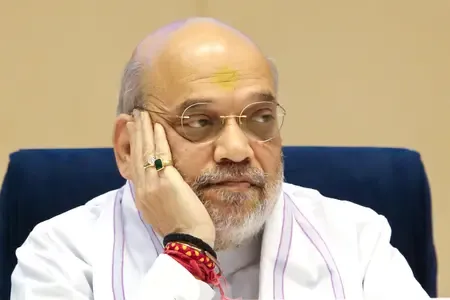
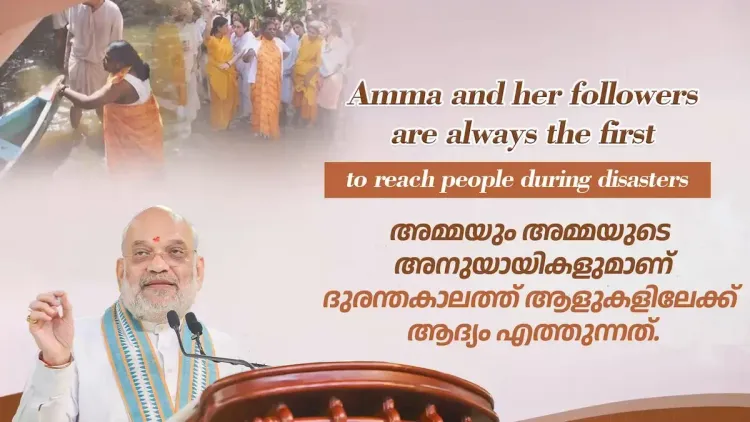
Union Home Minister Amit Shah praised Mata Amritanandamayi and her followers on 26 September 2026 for outstanding humanitarian service across the Gujarat earthquake, Uttarakhand floods, Wayanad landslide, and the COVID-19 pandemic, posting in both English and Malayalam.
Key Takeaways
Union Home Minister Amit Shah posted a bilingual tribute — in English and Malayalam — praising Mata Amritanandamayi (Amma) and her followers on 26 September 2026 .
Shah named five specific crises: the Gujarat earthquake , the tsunami , Uttarakhand floods , the Wayanad landslide , and the COVID-19 pandemic .
Mata Amritanandamayi Math , headquartered in Amritapuri, Kerala , holds UN special consultative status and runs hospitals, universities, and a global humanitarian arm.
The tribute comes from the minister who oversees the National Disaster Management Authority , giving the acknowledgment institutional significance.
Shah's post reflects a broader pattern of Indian political leaders formally recognising civil-society roles in national disaster response alongside government machinery.
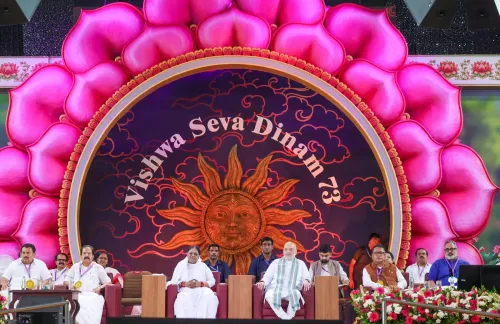
From the rubble of Bhuj to the rain-swept slopes of Wayanad, one constant thread has run through India's worst disasters — the quiet, rapid mobilisation of volunteers from Mata Amritanandamayi Math. Union Home Minister Amit Shah acknowledged that legacy on Saturday, 26 September 2026, crediting Amma and her followers with setting 'excellent examples in service' across every major calamity the country has faced in recent decades.
Five disasters, one thread of service
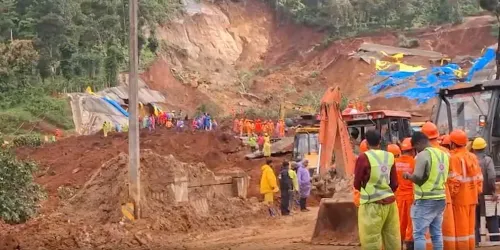
Shah's tribute spans a quarter-century of catastrophe. The 2001 Gujarat earthquake, centred in Bhuj, killed over 20,000 people and remains one of independent India's deadliest seismic events — relief workers from Amma's Math were among the earliest non-governmental responders on the ground. The 2013 Uttarakhand floods, often called the 'Himalayan tsunami', submerged entire valleys and cut off hundreds of villages; the Math's volunteers again reached communities where official machinery struggled to penetrate. The Wayanad landslide in Kerala — the state that is home to Amma's headquarters at Amritapuri — drew a particularly personal response from her organisation.
The COVID-19 pandemic rounds out Shah's catalogue. During lockdowns, Mata Amritanandamayi Math distributed food, medicines, and essentials to marginalised communities across multiple states, supplementing the government's own welfare machinery at a moment when civil-society capacity mattered enormously.
Who is Amma, and why does this tribute carry weight?
Mata Amritanandamayi, born Sudhamani Idamannel in Kollam district, Kerala, leads one of India's most internationally recognised spiritual-humanitarian organisations. Her Math runs hospitals, universities, and a disaster-relief arm that operates under the umbrella of Embracing the World. The organisation holds special consultative status with the United Nations. A tribute from a senior Union Cabinet minister — especially one who holds the Home portfolio, which oversees the National Disaster Management Authority — carries institutional as well as personal resonance.
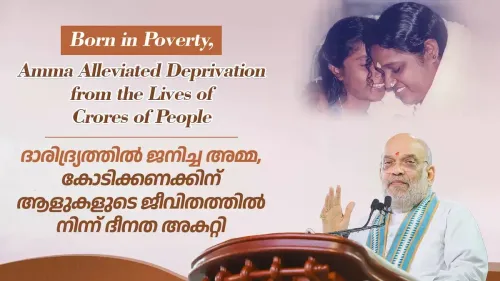
Shah posted in both English and Malayalam — 'അമ്മയും അമ്മയുടെ അനുയായികളും സേവനരംഗത്ത് ഉത്തമ മാതൃകകൾ കാട്ടിത്തന്നിട്ടുണ്ട്' ('Amma and her followers have set excellent examples in the field of service') — a deliberate bilingual choice that speaks directly to Amma's Kerala-rooted base while addressing a national audience.
Political leaders and civil society: a recurring recognition
Shah's post fits a broader pattern in Indian political discourse: leaders across the spectrum have periodically acknowledged the role of spiritual and non-governmental organisations in bridging gaps during state-level disaster response. What distinguishes this tribute is its specificity — five named crises, not a generic platitude — and its source. As the minister who oversees national disaster architecture, Shah's words implicitly validate the Math's place alongside official first-responder systems in India's emergency ecosystem.
For a country whose coastlines, river valleys, and mountain ranges make it one of the world's most disaster-prone nations, that validation matters. Civil-society speed and state-level coordination are not rivals — they are, as Shah's post reminds, complementary forces.
Point of View
Not merely a charitable actor. Coming from the minister who holds the Home portfolio and oversees the NDMA, this is more than ceremony; it is institutional recognition. The bilingual post also signals an outreach to Kerala's electorate and Amma's massive global follower base. In a political landscape where spiritual organisations wield considerable soft power, such explicit, high-level acknowledgment reinforces the BJP's effort to cultivate goodwill across India's diverse civil-society networks.
NationPress
27 Sept 2026
Frequently Asked Questions
What did Amit Shah say about Amma and her followers?
Amit Shah praised Mata Amritanandamayi (Amma) and her followers for setting 'excellent examples in service' across five major disasters and crises: the Gujarat earthquake, the tsunami, the Uttarakhand floods, the Wayanad landslide, and the COVID-19 pandemic.
Who is Amma (Mata Amritanandamayi)?
Mata Amritanandamayi, known as Amma, is a Kerala-born spiritual leader who heads Mata Amritanandamayi Math, an organisation that runs hospitals, universities, and a humanitarian relief network with UN special consultative status.
What relief work has Mata Amritanandamayi Math done in India?
The Math has been active in disaster relief during the 2001 Gujarat earthquake, the 2013 Uttarakhand floods, the Wayanad landslide in Kerala, and the COVID-19 pandemic, mobilising volunteers and resources alongside official government agencies.
Why did Amit Shah post in Malayalam?
Shah posted in both English and Malayalam — a bilingual choice that directly addresses Amma's Kerala-rooted base while also reaching a national audience, reflecting deliberate outreach to the state's population.
What is the significance of a Home Minister praising a spiritual organisation's relief work?
The Home Minister oversees the National Disaster Management Authority, so explicit praise from this office effectively positions the Math as a recognised partner in India's national disaster-response ecosystem, not merely a voluntary charity.