Amit Shah lauds BSF's G-7, G-13 border posts as engineering marvels

Synopsis
Union Home Minister Amit Shah on 29 May 2026 hailed BSF's G-7 and G-13 border outposts as outstanding feats of engineering, saying the force has built a strong security framework in difficult, inaccessible terrain. The remarks spotlight India's ongoing push to modernise forward border infrastructure.
Key Takeaways
Union Home Minister Amit Shah publicly praised the BSF for constructing the G-7 and G-13 border outposts on 29 May 2026 .
Shah described the outposts as an 'wonderful example of engineering' built in inaccessible terrain.
The BSF operates under the Ministry of Home Affairs and guards India's western and eastern international borders.
India has pursued phased modernisation of BSF outposts since the early 2000s, with accelerated focus on technology-integrated infrastructure since 2014 .
Upgraded outposts improve operational readiness for BSF personnel and enhance security for border area residents .
The remarks are expected to be followed by further parliamentary and policy updates on BSF border construction projects.
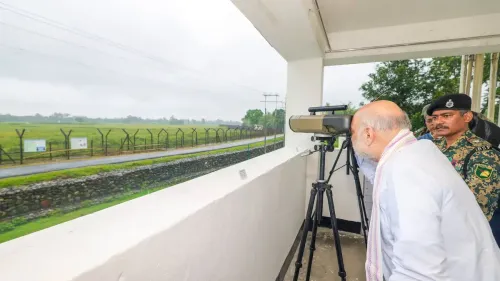
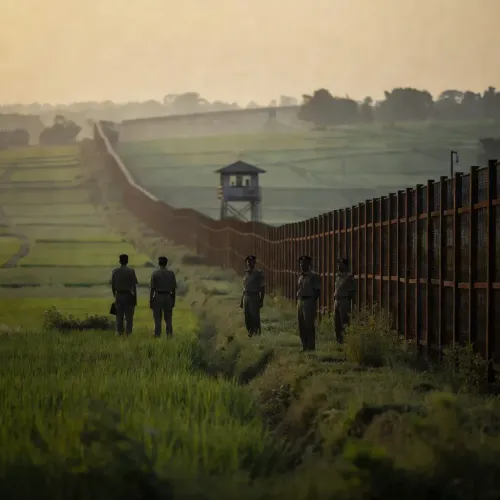
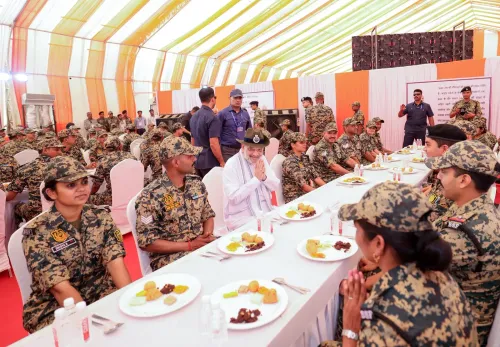
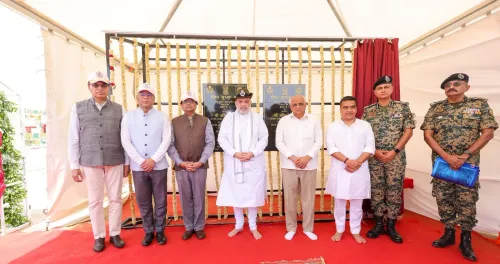
Union Home Minister Amit Shah on Friday, 29 May 2026, praised the Border Security Force (BSF) for constructing what he called remarkable feats of engineering at the G-7 and G-13 border outposts, saying the force had built a strong security framework in difficult, inaccessible terrain.
In a post on X, Shah wrote: 'इंजीनियरिंग का अद्भुत नमूना हैं G-7 और G-13 सीमा चौकियाँ, BSF ने दुर्गम क्षेत्र में मजबूत सुरक्षा ढाँचा खड़ा किया।' — translated: 'The G-7 and G-13 border outposts are a wonderful example of engineering; the BSF has erected a strong security framework in an inaccessible area.' The post was accompanied by a video, underscoring the visual scale of the infrastructure.
Context
The BSF operates under the Ministry of Home Affairs (MHA) and is India's primary force guarding the western border with Pakistan and the eastern border with Bangladesh. Building and maintaining outposts in remote, difficult terrain — from desert stretches to riverine deltas — is a persistent operational challenge for the force. The Home Minister's public acknowledgement of specific outposts by name signals a deliberate effort to highlight on-ground achievements of the BSF.
Policy Backdrop
Successive Indian governments have prioritised physical border infrastructure to curb infiltration and improve operational mobility in challenging geography. The MHA has pursued phased modernisation of BSF outposts and fencing along the western border since the early 2000s, with funding accelerated under multiple Finance Commission cycles. Since 2014, the emphasis has shifted further towards technology-integrated outposts that combine physical construction with surveillance systems, making remote postings more operationally effective and safer for personnel.
The construction of outposts in 'durgam kshetra' — durgam kshetra (inaccessible areas) — requires specialised logistics, often involving air-lifting of materials and deployment of engineering units under extreme conditions. Such projects are typically executed by BSF's own engineering wing in coordination with the Central Public Works Department (CPWD) and other agencies.
Stakeholders and Impact
BSF personnel posted at forward outposts are the most direct beneficiaries of upgraded infrastructure, which improves living conditions, operational readiness, and safety. Better-equipped outposts also reduce response times to border incidents, directly affecting the security calculus along sensitive stretches. For border area residents, a more robust BSF presence can translate into reduced cross-border criminal activity and greater confidence in the state's protective capacity.
The Home Minister's public recognition of specific outposts also serves as a morale boost for the force, acknowledging the unglamorous but critical work of border construction teams operating far from public view.
What's Next
The MHA's annual report on border infrastructure and parliamentary updates on BSF construction projects in western and northern sectors will be key indicators of how the G-7 and G-13 outpost upgrades fit into the broader modernisation roadmap. With the government continuing to expand the Comprehensive Integrated Border Management System (CIBMS), physical outpost upgrades are expected to be paired with sensor grids and command-and-control technology in the coming phases. Analysts will watch whether this public highlight of specific outposts is followed by a formal policy announcement or a broader review of border infrastructure spending.
Point of View
On-ground security deliverables ahead of what is likely continued political messaging around border management. For a Home Minister who has consistently foregrounded internal security as a governance benchmark, spotlighting engineering achievements in inaccessible terrain fits a broader narrative of state capacity and resolve. The post also implicitly reinforces the MHA's claim that border infrastructure modernisation, a policy with bipartisan roots, has accelerated meaningfully under the current dispensation. Whether specific construction milestones or budget allocations follow this public acknowledgement will determine whether this is a policy signal or a morale-building gesture.
NationPress
14 Oct 2026
Frequently Asked Questions
What are the G-7 and G-13 border outposts praised by Amit Shah?
The G-7 and G-13 are Border Security Force outposts that Union Home Minister Amit Shah described on 29 May 2026 as outstanding examples of engineering, built by the BSF in difficult, inaccessible terrain to strengthen India's border security framework.
Which ministry controls the Border Security Force (BSF)?
The Border Security Force (BSF) operates under the Ministry of Home Affairs (MHA) , headed by Union Home Minister Amit Shah . The BSF is India's primary force guarding the international borders with Pakistan and Bangladesh.
What is India's policy on BSF border outpost modernisation?
India has pursued phased modernisation of BSF border outposts and fencing since the early 2000s. Since 2014 , the focus has shifted towards technology-integrated outposts combining physical construction with surveillance systems under the Comprehensive Integrated Border Management System ( CIBMS ).
Why is building BSF outposts in inaccessible areas difficult?
Constructing outposts in remote border terrain requires specialised logistics, including air-lifting of materials and deployment of engineering units under extreme conditions, often in deserts, riverine zones, or high-altitude areas with no road access.
How do upgraded BSF outposts benefit border area residents?
Better-equipped BSF outposts reduce response times to border incidents and help curb cross-border criminal activity, giving border area residents greater security and confidence in the state's protective presence.