Amit Shah in Arunachal for President's Colour, NDRF Campus Inauguration

Synopsis
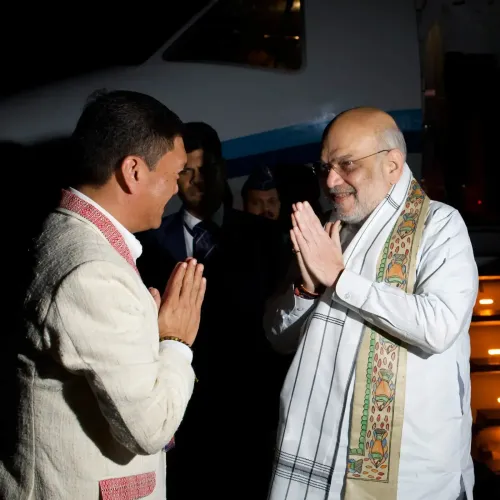
Union Home Minister Amit Shah has arrived in Arunachal Pradesh for a three-day visit. The agenda includes the President's Colour award to the state police, a Cooperative Conference address, and inauguration of a new NDRF campus — reinforcing the Centre's security, disaster preparedness, and cooperative outreach in the border state.
Key Takeaways
Union Home Minister Amit Shah arrived in Arunachal Pradesh on November 20, 2026 for a three-day visit.
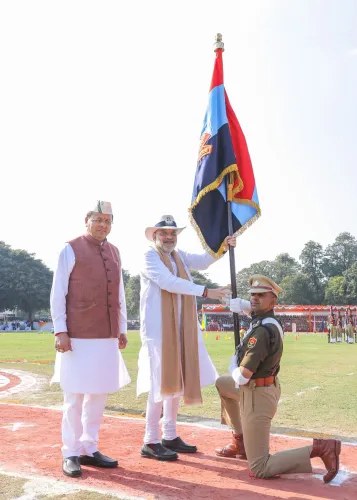
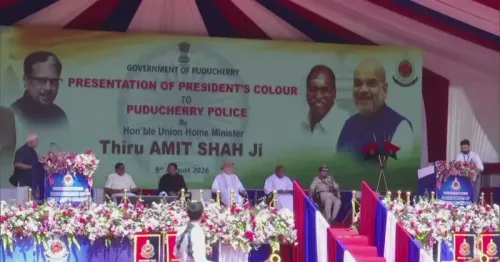
The Arunachal Pradesh Police will be conferred the President's Colour — India's highest honour for a police or paramilitary unit — in recognition of its service.
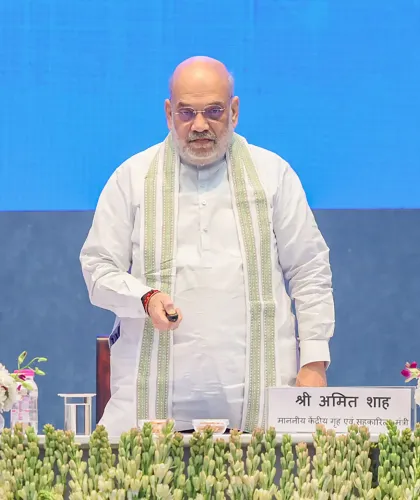
Shah will address a Cooperative Conference in the state, extending the mandate of the Ministry of Cooperation (est.
July 2021) to the Northeast.
A new NDRF campus will be inaugurated, boosting disaster-response capacity in a seismically active, flood-prone border region.
Arunachal Pradesh borders China , Myanmar , and Bhutan , giving the visit strategic significance beyond routine governance.
Itanagar, Arunachal Pradesh — November 20, 2026: A three-day visit to India's strategic northeastern frontier begins tonight for Union Home Minister Amit Shah, with a schedule that packs together one of policing's highest honours, a cooperative sector conclave, and the inauguration of a new National Disaster Response Force campus — all in a state that shares borders with China, Myanmar, and Bhutan.
President's Colour for Arunachal Pradesh Police
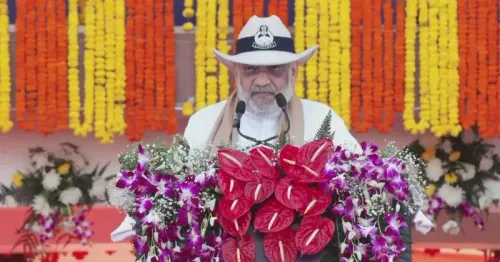
The centrepiece of day one is the conferral of the President's Colour on the Arunachal Pradesh Police — the highest institutional honour a police or paramilitary unit can receive from the state. Awarded by the President of India, the distinction recognises distinguished service and sustained operational excellence, and has been conferred on select state forces since the early 2000s. For a force that patrols some of the country's most challenging high-altitude terrain, the recognition carries particular weight.
Shah described it as 'a big day for the state,' and in the context of a border state whose internal security demands are unlike most of mainland India's, that framing is hard to dispute. The honour arrives as the Ministry of Home Affairs has pushed a broader police modernisation agenda across northeastern and border states.
Cooperative Conference and the Post-2021 Northeast Push
On the second day, Shah will address a Cooperative Conference in the state — an event that connects directly to the Ministry of Cooperation, which was carved out as a separate ministry in July 2021 with Shah at its helm alongside the Home portfolio. The ministry's core mandate has been to energise credit societies, marketing cooperatives, and rural finance networks in underserved regions, with the Northeast identified as a priority zone. A ministerial-level conference in Arunachal Pradesh signals that the cooperative outreach is moving beyond policy papers into on-ground engagement in the region's least-penetrated districts.
New NDRF Campus: Disaster Readiness at the Border
The same day brings the inauguration of a new NDRF campus — a significant addition to the disaster-response architecture in one of India's most seismically active and flood-prone regions. The National Disaster Response Force, formed in 2006 and operating under the Ministry of Home Affairs, has steadily expanded its footprint into border and disaster-prone states. A dedicated campus in Arunachal Pradesh shortens response times to flash floods, landslides, and earthquakes that routinely affect the state's river valleys and mountain communities.
Taken together, the three-day itinerary follows a pattern that has defined central government visits to the Northeast: security recognition, infrastructure commissioning, and economic institution-building in a single sweep — a signal of sustained administrative attention to a region the government has consistently called a development and security priority.
When a Home Minister lands in a border state with a programme this dense, the message to both residents and neighbours is deliberate. Arunachal Pradesh is watching — and so is everyone on the other side of the ridge.
Point of View
Expand disaster-response infrastructure, and deepen economic institution-building in a single visit. The President's Colour conferral rewards a force operating in genuinely difficult conditions, while the NDRF campus addresses a long-standing gap in first-response capacity for a region battered by floods and earthquakes. The Cooperative Conference fits neatly into the post-2021 effort to build a parallel rural-economy architecture through the new ministry. Cumulatively, the visit is as much a geopolitical statement — consistent administrative presence in a contested border state — as it is a governance exercise.
NationPress
20 Nov 2026
Frequently Asked Questions
What is the President's Colour award for police?
The President's Colour is the highest honour the President of India confers on a police or paramilitary unit, recognising distinguished service and sustained operational excellence. It has been awarded to select state forces since the early 2000s.
Why is Amit Shah visiting Arunachal Pradesh in November 2026?
Union Home Minister Amit Shah is on a three-day visit to attend the President's Colour ceremony for the Arunachal Pradesh Police, address a Cooperative Conference, and inaugurate a new NDRF campus in the state.
What does the NDRF do and why does Arunachal Pradesh need a new campus?
The National Disaster Response Force, formed in 2006 under the Ministry of Home Affairs, conducts rescue and relief operations during disasters. Arunachal Pradesh is highly prone to floods, landslides, and earthquakes, making a dedicated campus critical for faster response times.
What is the Ministry of Cooperation and when was it formed?
The Ministry of Cooperation was created in July 2021 as a standalone ministry to strengthen cooperative societies — credit, marketing, and rural finance networks — across India, with a focus on less-developed and northeastern regions. Amit Shah holds this portfolio alongside the Home Ministry.
What is the strategic significance of Arunachal Pradesh?
Arunachal Pradesh shares international borders with China, Myanmar, and Bhutan, making it one of India's most strategically sensitive states. Central government visits combining security and infrastructure events are seen as signals of sustained administrative attention to the region.