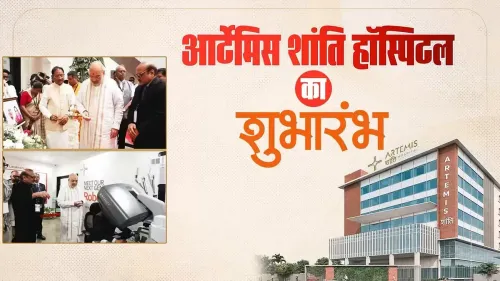
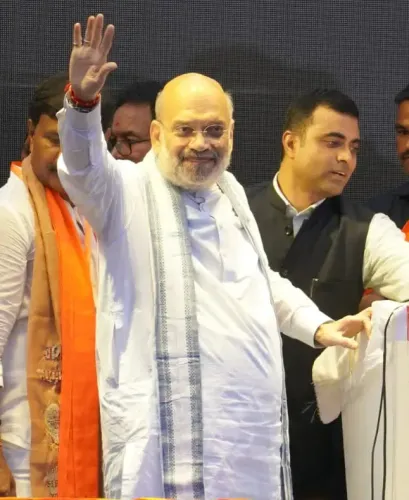
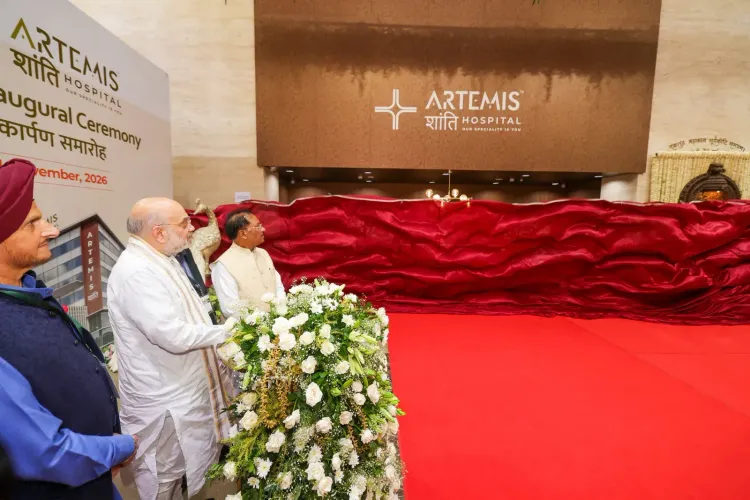
Amit Shah inaugurates ₹400 cr Artemis Shanti Hospital in Raipur
Synopsis
Union Home Minister Amit Shah inaugurated the ₹400 crore Artemis Shanti Hospital in Raipur on 3 November 2026 — a 350-bed super-specialty facility with 11 Centres of Excellence and robotic surgery — framing it as proof of Chhattisgarh's transformation from a Naxal conflict zone into a development success story.
Key Takeaways
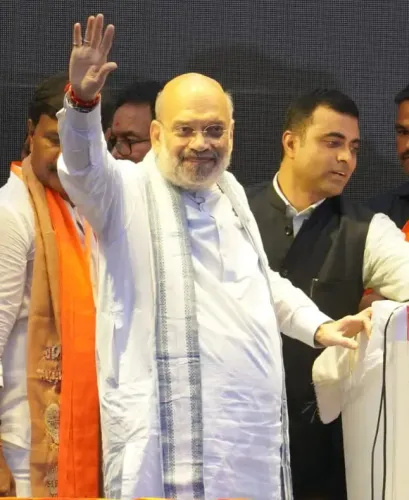
Artemis Shanti Hospital in Raipur was inaugurated by Union Home Minister Amit Shah on 3 November 2026 .
The facility cost ₹400 crore to construct and offers 350 beds and 11 Centres of Excellence .
Shah also launched advanced robotic surgery services at the hospital during the event.
The hospital is positioned to deliver tertiary-level healthcare to patients across central India .
Shah explicitly linked the inauguration to Chhattisgarh's security transformation , calling the state now free of Naxalite violence.
The event reflects the central government's strategy of pairing counter-insurgency gains with high-visibility development investments .
A state once synonymous with Naxalite bloodshed now has a ₹400 crore super-specialty hospital at its heart — and Union Home Minister Amit Shah made that contrast the centrepiece of his message when he inaugurated Artemis Shanti Hospital in Raipur, Chhattisgarh, on Tuesday, 3 November 2026. The facility, he said, is both a medical milestone and a symbol of the state's transformation.
Shah wrote: 'जो छत्तीसगढ़ कभी नक्सली हिंसा के लिए जाना जाता था, आज वह नक्सलमुक्त होकर तेजी से आगे बढ़ रहा है' — 'The Chhattisgarh that was once known for Naxalite violence is today, free of Naxalism, moving rapidly forward.' The inauguration of the hospital was framed explicitly as proof of that progress.
What Artemis Shanti Hospital brings to central India
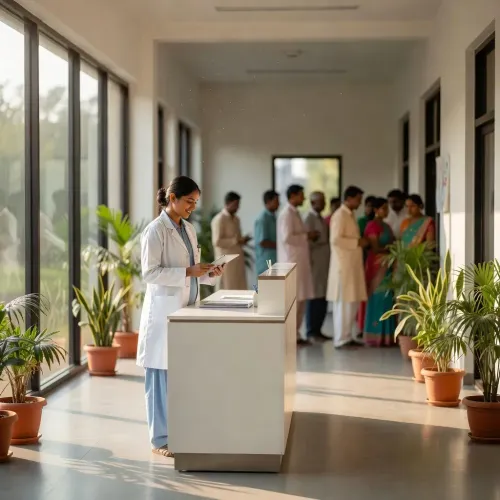
The facility is a 350-bed super-specialty hospital equipped with 11 Centres of Excellence, designed to deliver tertiary-level care — the most complex, specialised tier of medicine — to patients across the central India region. The scale matters: tertiary care has historically required patients from interior Chhattisgarh and neighbouring states to travel to distant metros like Hyderabad, Nagpur, or Delhi, adding cost, delay, and risk to already critical cases.
Shah also launched advanced robotic surgery services at the hospital during the event — a capability that places Raipur among a small number of Indian cities outside the metro tier with robot-assisted surgical infrastructure. Modern technology integration, he noted, is woven into the facility's design from the ground up.
Security gains recast as a development dividend
The Home Minister's framing was deliberate and consistent with a well-established political playbook. Since 2014, the central government's approach to left-wing extremism has combined intensified security operations with visible infrastructure investment in cleared districts — roads, schools, banking, and now flagship healthcare. The argument is that normalised governance, not just force, is what permanently ends insurgency.
Chhattisgarh was for decades India's most lethal theatre of Naxalite conflict, with hundreds of security personnel and civilians killed in periodic attacks. Presenting Raipur — the state capital — as the site of a ₹400 crore, robotics-enabled hospital is a pointed counter-image to that legacy. Whether the state's Naxal-free claim holds across all affected districts is a question security analysts will continue to track, but the political signal from Tuesday's event is unmistakable.
Central India's tertiary healthcare gap
The hospital's stated mission — serving 'all of central India' at the tertiary level — points to a real and documented gap. States like Chhattisgarh, Madhya Pradesh, and parts of Odisha and Jharkhand have among India's lower rates of specialist healthcare access per capita. A 350-bed facility anchored in Raipur, with its road and rail connectivity to surrounding districts, could reduce the referral burden on state government hospitals while also generating medical-tourism flows from smaller towns.
Shah's presence at a private-sector hospital inauguration also signals the government's comfort with public-private complementarity in health infrastructure — a model that has accelerated in post-pandemic India as the state struggles to close the specialist-care deficit through public spending alone.
A region once defined by conflict now has a centre where surgeons operate by robotic arm. That is the image Amit Shah came to Raipur to plant — and on Tuesday, it landed.
Point of View
Roads, banking access — to consolidate the narrative of governance normalisation in former conflict zones. Linking a ₹400 crore private-sector hospital to Naxal pacification is smart political geometry: it converts a security statistic into a lived, visible benefit. The robotic surgery launch is particularly notable as a signal that the government's ambition for the region extends beyond basic care to cutting-edge infrastructure, challenging the long-held perception of central India as a healthcare backwater. Whether the 'Naxal-free' framing survives scrutiny of remaining affected pockets will be the test of how durable Tuesday's symbolism proves.
NationPress
3 Nov 2026
Frequently Asked Questions
What is Artemis Shanti Hospital in Raipur?
Artemis Shanti Hospital is a newly inaugurated super-specialty hospital in Raipur, Chhattisgarh, built at a cost of ₹400 crore . It has 350 beds , 11 Centres of Excellence , and offers advanced robotic surgery, aimed at providing tertiary-level healthcare to central India.
Who inaugurated Artemis Shanti Hospital?
Union Home Minister Amit Shah inaugurated Artemis Shanti Hospital in Raipur on 3 November 2026 . He also formally launched the hospital's advanced robotic surgery facility at the same event.
What is tertiary-level healthcare and why does it matter for Chhattisgarh?
Tertiary healthcare refers to the most specialised tier of medical care, including complex surgeries, oncology, and neurology. Chhattisgarh and surrounding central Indian states have historically had limited tertiary care access, forcing patients to travel to distant metros. A facility like Artemis Shanti Hospital addresses that gap locally.
Is Chhattisgarh really free of Naxalite violence?
Amit Shah described Chhattisgarh as 'Naxal-free' during the inauguration. The central government has pointed to significantly reduced violence in the state following sustained security operations. However, official security assessments continue to monitor remaining affected pockets, and independent analysts note the situation across all districts should be verified against the latest government data.
What is robotic surgery and which hospitals in India offer it?
Robotic surgery uses computer-assisted robotic arms to perform minimally invasive procedures with greater precision. It has been available in major metros like Delhi, Mumbai, and Bengaluru, but the launch at Artemis Shanti Hospital places Raipur among a small number of non-metro Indian cities offering this technology.