Amit Shah inaugurates Ahmedabad's new 6-lane elevated corridor

Synopsis
Union Home Minister Amit Shah, Chief Minister Bhupendra Patel, and Urban Development Minister Darshanaben Vaghela inaugurated a new 6-lane elevated corridor from ISKCON Junction to Sanand Flyover in Ahmedabad, promising smoother traffic flow, fuel savings, and safer travel for the city's commuters.
Key Takeaways
Union Home Minister Amit Shah formally inaugurated the corridor, joined by CM Bhupendra Patel and Urban Development Minister Darshanaben Vaghela .
The new 6-lane elevated corridor runs from ISKCON Junction to Sanand Flyover in Ahmedabad.
The project is expected to ease traffic flow, reduce fuel consumption, and improve road safety for Ahmedabad commuters.
The corridor opened just before the new year, described as a pre-new-year gift to the city.
The inauguration follows Gujarat's recurring strategy of building elevated corridors to manage urban congestion in Ahmedabad.
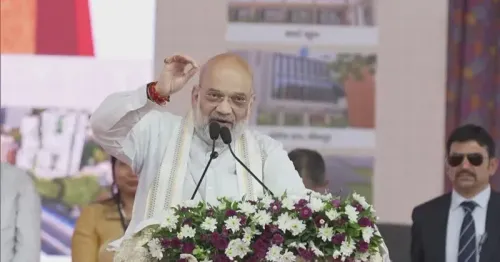
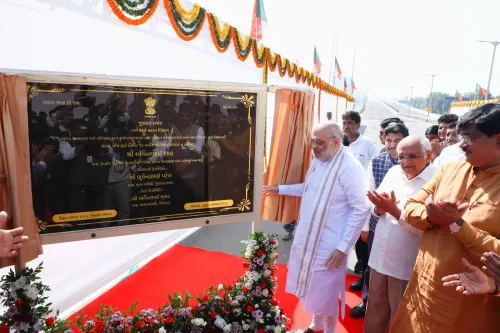
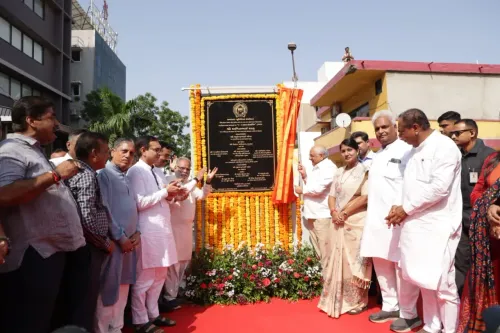
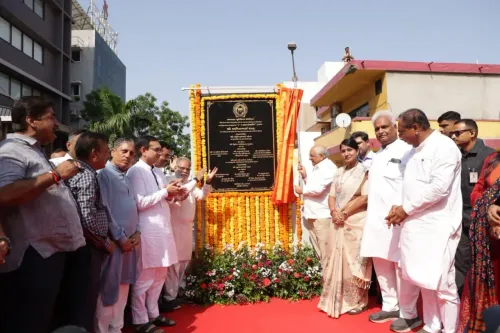
A new elevated artery slicing through one of India's fastest-growing cities opened its lanes just before the new year — and the man cutting the ribbon was none other than Union Home Minister Amit Shah. The Chief Minister's Office of Gujarat announced on 9 November 2026 that the newly constructed 6-lane elevated corridor from ISKCON Junction to Sanand Flyover in Ahmedabad was formally inaugurated in a ceremony attended by senior central and state leaders.
Who was on stage at ISKCON Junction
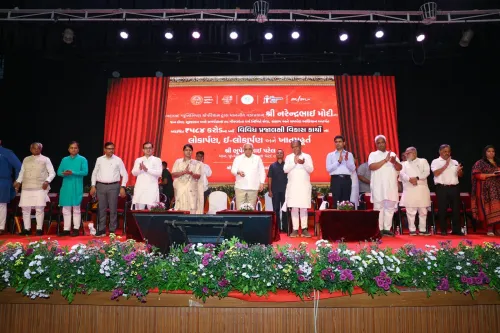
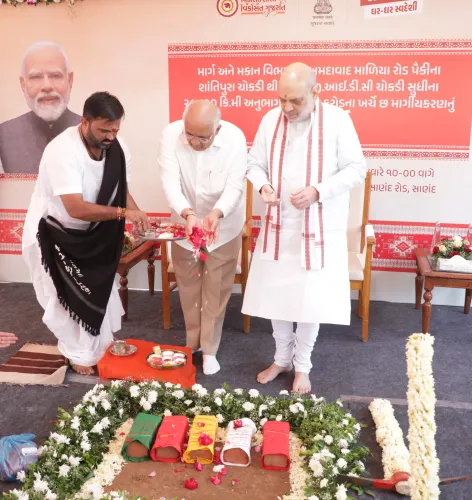
The inauguration brought together a high-profile dais. Union Minister of Home Affairs and Cooperation Amit Shah performed the formal opening. Alongside him stood Chief Minister Bhupendra Patel and State Minister for Urban Development Darshanaben Vaghela, along with other dignitaries. The CMO's post described the event in Gujarati, noting that the corridor was being opened 'nootan varshana aarambh poorve' — before the start of the new year — framing it as a gift to the city's commuters.
The presence of a Union Cabinet minister at a city-level infrastructure ribbon-cutting underlines how seriously both the Centre and the state treat Ahmedabad's urban mobility challenge. The city's road network has been under sustained pressure as its population and vehicle density have grown steadily over the past decade.
What the corridor promises for Ahmedabad's commuters
The CMO's announcement spells out three direct benefits for residents: smoother traffic flow, significant fuel savings, and safer travel. The 6-lane elevated design separates through-traffic from at-grade intersections, eliminating the signal-stops and weaving that choke surface roads during peak hours. For anyone who has sat in the crawl near the ISKCON Junction interchange on a weekday morning, the promise of uninterrupted movement carries real weight.
Fuel savings are a secondary but tangible gain — stop-and-go driving burns measurably more fuel per kilometre than steady elevated movement, so even modest reductions in idling time translate to lower costs and emissions across thousands of daily vehicle trips. Safety improvements follow the same logic: grade-separated corridors remove the conflict points where most urban accidents occur.
Ahmedabad's elevated-corridor playbook
This inauguration fits a well-established pattern in Gujarat's infrastructure strategy. The state government has repeatedly turned to flyovers and elevated corridors as the instrument of choice for managing Ahmedabad's congestion, alongside its Bus Rapid Transit System and the expanding metro network. Each new elevated stretch tends to anchor a broader conversation about how the city's various transit layers — metro, BRTS, surface roads, and elevated corridors — can eventually work as an integrated system rather than parallel tracks.
How quickly the new corridor fills to capacity, and whether traffic-time data bears out the official projections, will be the real test. Any announcement of additional phases extending the corridor's reach — or connections to metro interchange points — will tell observers whether this is a standalone ribbon-cut or the first link in a longer chain.
Ahmedabad's commuters now have a new lane in the sky. Whether the city's planners can stitch it seamlessly into everything running below is the question that will define its long-term worth.
Point of View
However, will come from independent traffic and commute-time data, which will reveal whether the corridor genuinely shifts behaviour or simply redistributes congestion to adjacent junctions.
NationPress
9 Nov 2026
Frequently Asked Questions
Where is the new elevated corridor in Ahmedabad?
The corridor runs from ISKCON Junction to Sanand Flyover in Ahmedabad, Gujarat.
Who inaugurated the ISKCON Junction elevated corridor?
Union Home Minister Amit Shah performed the inauguration, alongside Gujarat Chief Minister Bhupendra Patel and Urban Development Minister Darshanaben Vaghela .
How many lanes does the new Ahmedabad elevated corridor have?
The newly opened elevated corridor is a 6-lane structure, designed to handle high traffic volumes and reduce congestion.
What are the benefits of the Ahmedabad elevated corridor?
The corridor is expected to improve traffic flow, deliver significant fuel savings for vehicle owners, and make travel safer by separating through-traffic from surface-level intersections.
When was the ISKCON Junction to Sanand Flyover corridor opened?
The corridor was inaugurated on 9 November 2026 , just before the new year, as announced by the Chief Minister's Office of Gujarat.