Amit Shah: Lashkar's last active local terrorist neutralised in Kulgam
Synopsis
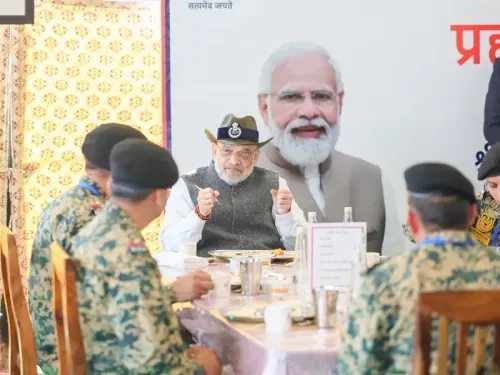
Union Home Minister Amit Shah announced that Lashkar-e-Taiba's last known active local terrorist in Kashmir, Lateef Bhat, was neutralised in a pre-dawn joint operation in Kulgam on 18 November 2026. His associate Umar Nisar had been killed a day earlier. Shah praised the high synergy between JKP, Army, CRPF and intelligence agencies.
Key Takeaways
Lateef Bhat , described as Lashkar-e-Taiba's last known active local terrorist in the Kashmir valley, was neutralised in Kulgam on 18 November 2026 .
His associate Umar Nisar was killed in a separate encounter in Kulgam on 17 November 2026 .
The operation involved four agencies: Jammu and Kashmir Police , the Indian Army , the CRPF , and central intelligence agencies.
Union Home Minister Amit Shah specifically cited 'a very high level of synergy' as central to the operation's success.
The elimination of Bhat marks a significant milestone in efforts to dismantle Lashkar's locally-rooted network in the valley following the post-Article 370 security overhaul.
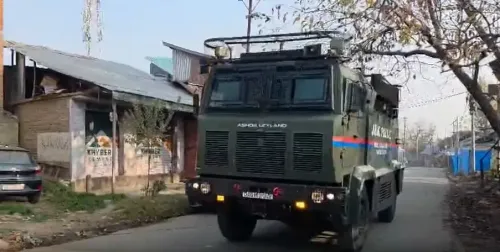
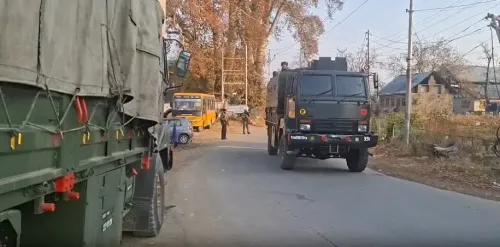
Two militants are dead in Kulgam, South Kashmir — and Union Home Minister Amit Shah says one of them was Lashkar-e-Taiba's last known active local terrorist in the entire Kashmir valley. The coordinated pre-dawn operation on Wednesday, 18 November 2026 marks what security forces are calling a significant milestone in the decade-long effort to dismantle the Lashkar network's local infrastructure.
Lateef Bhat and Umar Nisar: Who was eliminated in Kulgam
Lateef Bhat, described by the Home Minister as Lashkar's last known active local terrorist in the valley, was killed in the early-morning operation on Wednesday. His associate, Umar Nisar, had already been neutralised in a separate encounter in Kulgam the day before — Tuesday, 17 November 2026. Together, the two eliminations effectively close out what officials characterise as the last locally-rooted Lashkar cell still operating inside the valley.
Shah specifically credited the operation's success to 'a very high level of synergy' — a phrase that points to real-time intelligence sharing between multiple agencies working from a single command picture. That kind of integration, rare and difficult to execute, is precisely what has historically allowed militants to slip between the cracks of competing jurisdictions.
Four agencies, one operation: JKP, Army, CRPF and intelligence
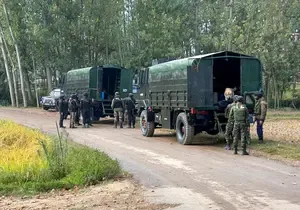
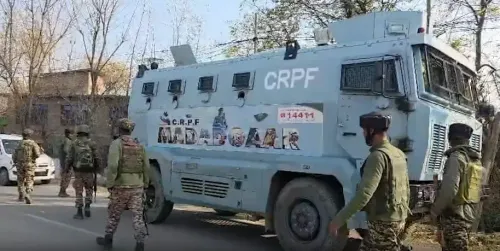
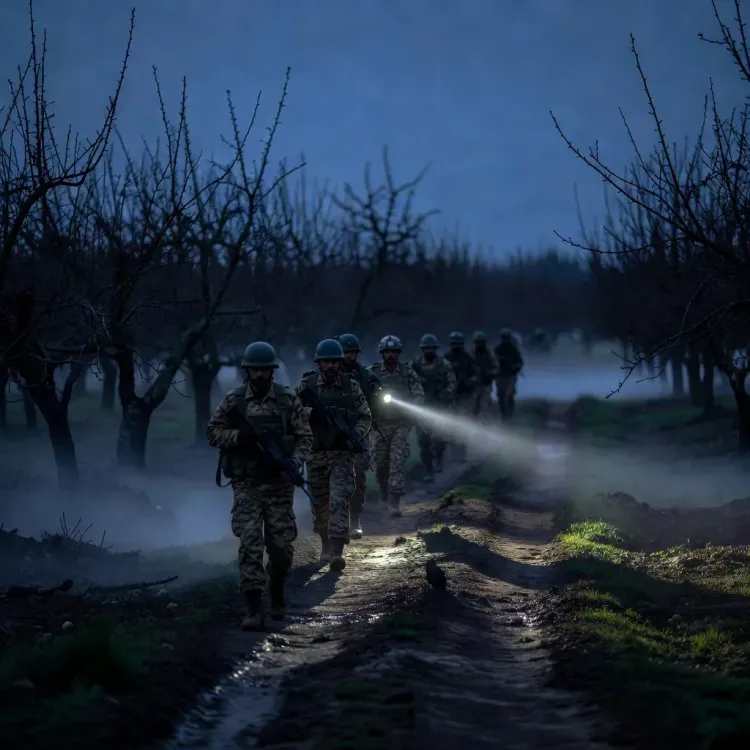
The Jammu and Kashmir Police (JKP), the Indian Army, the Central Reserve Police Force (CRPF) and central intelligence agencies all had a hand in the Kulgam operation. The JKP provides ground-level human intelligence and local knowledge; the Army contributes cordon-and-search capability and air mobility; the CRPF holds territory and prevents escape corridors; and the intelligence agencies stitch the picture together upstream. When all four move together — as they did here — the result is an operation with few seams for a target to exploit.
Kulgam district, tucked in South Kashmir's dense orchards and farmland, has been one of the valley's most persistent hotspots for militant activity since long before 2019. It was in precisely this terrain that Lashkar's local cadres found cover, community cover, and logistical support for years.
Post-370 security architecture and the shrinking local militant pool
The abrogation of Article 370 in August 2019 and the reorganisation of Jammu and Kashmir into a Union Territory brought direct central oversight to law-enforcement and counter-terrorism operations. In the years since, the stated policy has been zero tolerance — joint operations, granular intelligence, and the systematic elimination of local militant infrastructure rather than just targeting individual operatives.
The significance of Lateef Bhat's neutralisation is precisely that qualifier: last known active local terrorist. Local recruits are the connective tissue of any insurgency — they know the terrain, they know the people, they can move without arousing suspicion. Eliminating that final layer does not end the threat from across the border, but it fundamentally changes the operational calculus for any external militant trying to establish a foothold.
Shah closed his post with a salute to the 'brave Jawans of JKP, Army and CRPF and intelligence agencies' — a signal from India's most senior home-affairs official that this operation carries institutional, not just tactical, weight.
The question now is whether the valley's security picture holds — and what the next benchmark looks like when the last known local link in a major terror network's chain has been cut.
Point of View
Explicitly labelling Lateef Bhat the 'last known active local terrorist' of Lashkar in the valley. That framing is a deliberate political and security communication, reinforcing the government's post-Article 370 narrative of decisive progress. The emphasis on inter-agency synergy also signals a maturing of India's counter-terrorism architecture in J&K, where historically turf conflicts between JKP, Army and CAPFs complicated operations. Whether this translates into a durable security dividend or whether Lashkar reconstitutes local networks over time will be the real measure of the moment.
NationPress
18 Nov 2026
Frequently Asked Questions
Who was Lateef Bhat?
Lateef Bhat was described by Union Home Minister Amit Shah as Lashkar-e-Taiba's last known active local terrorist in the Kashmir valley, neutralised in Kulgam on 18 November 2026.
What happened in Kulgam on 18 November 2026?
A coordinated pre-dawn operation by JKP, the Indian Army, CRPF and intelligence agencies neutralised Lashkar operative Lateef Bhat in Kulgam, South Kashmir.
What is Lashkar-e-Taiba's presence in Kashmir?
Lashkar-e-Taiba is a Pakistan-based terrorist organisation that has been active in the Jammu and Kashmir insurgency for decades. The November 2026 operation is described as eliminating the group's last known locally-active member in the valley.
What was the significance of the Article 370 abrogation for Kashmir security?
The abrogation of Article 370 in August 2019 brought Jammu and Kashmir under direct central oversight, enabling more integrated counter-terrorism operations involving the Army, CRPF, JKP and intelligence agencies with a stated zero-tolerance policy toward militancy.