Jal Shakti Minister Paatil Hails Kulgam Anti-Terror Op

Synopsis
Union Jal Shakti Minister C. R. Paatil on 18 November 2026 hailed a successful anti-terror operation in Kulgam, J&K, crediting J&K Police, the Indian Army, CRPF, and intelligence agencies for their joint resolve and coordination.
Key Takeaways
Union Jal Shakti Minister C.
Paatil posted a tribute on 18 November 2026 saluting a successful counter-terrorism operation in Kulgam, Jammu and Kashmir .
He credited the joint efforts of J&K Police , the Indian Army , CRPF , and intelligence agencies for the operation's success.
Paatil described the success as reflecting 'indomitable courage, unwavering resolve and excellent coordination' of security forces.
The tribute is consistent with a whole-of-government messaging pattern among BJP ministers since J&K's reorganisation as a Union Territory in August 2019 following abrogation of Article 370 .
Kulgam district in south Kashmir has been a persistent flashpoint in ongoing counter-insurgency operations.
Courage, coordination, and an unyielding resolve — that is how Union Jal Shakti Minister C. R. Paatil framed a successful counter-terrorism operation in Kulgam, Jammu and Kashmir, saluting the joint forces behind it in a post on Wednesday, 18 November 2026.
Paatil's tribute, written in Hindi, described the operation as a demonstration of 'indomitable courage, unwavering resolve and excellent coordination' by India's security apparatus. He specifically named Jammu and Kashmir Police, the Indian Army, the Central Reserve Police Force (CRPF), and intelligence agencies as equal partners in the success — a pointed emphasis on the multi-agency architecture that has defined counter-terrorism strategy in the Union Territory since the reorganisation of August 2019.
A Four-Agency Grid That Defines J&K Operations
The joint structure Paatil highlighted is no accident of phrasing. Since the abrogation of Article 370 and J&K's conversion to a Union Territory, New Delhi has pressed for tighter operational integration between state police, the Army, paramilitary forces, and central intelligence. The goal: eliminate the jurisdictional gaps that militants historically exploited. Tributes that name all four pillars — as Paatil did — are deliberate signals of that unified command.
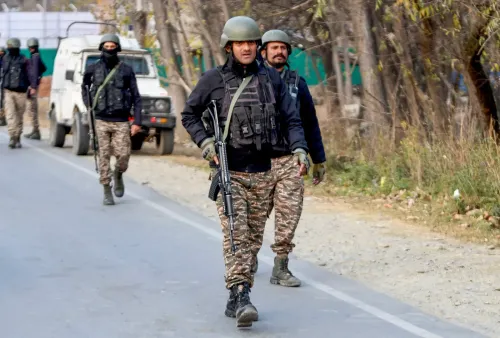
Kulgam district in south Kashmir has been a persistent flashpoint, regularly featuring in Army and police operational reports. While the specific details of the November 2026 operation lie beyond independently verifiable records, the pattern of southern Kashmir counter-terror activity — swift cordon-and-search operations drawing on real-time intelligence — has been consistent since the post-2019 security push.
Non-Defence Ministers, Whole-of-Government Messaging
Paatil helms the Ministry of Jal Shakti, not defence or home affairs. His public statement is part of a broader BJP government practice: ministers across portfolios amplify security victories, reinforcing the narrative that national unity is a shared responsibility — not the exclusive domain of khaki and olive-green. It is messaging that travels well beyond the security community.
Closing with 'Koti-koti naman' — a salute to the soldiers, literally 'millions of salutations' — and 'Jai Hind', Paatil anchored his statement in the register of national pride rather than political point-scoring. The Indian tricolour emoji punctuated that tone.
As long as militant networks remain active in the Kashmir valley, every successful operation will be claimed as proof of a strategy working. The soldiers on the ground, however, make it real — one mission at a time.
Point of View
Making tributes like this politically resonant beyond ceremonial intent. Watch for corroborating statements from the Home Ministry that may sharpen the operational detail Paatil left broad.
NationPress
18 Nov 2026
Frequently Asked Questions
What happened in Kulgam that C. R. Paatil was referring to?
Union Jal Shakti Minister C. R. Paatil referred to a successful counter-terrorism operation carried out in Kulgam district of Jammu and Kashmir, crediting J&K Police, the Indian Army, CRPF, and intelligence agencies for the joint success. Specific operational details of the November 2026 mission are yet to be officially detailed by the Ministry of Home Affairs.
Who is C. R. Paatil?
C. R. Paatil is the Union Minister of Jal Shakti in the Government of India and a senior BJP leader. He is a former president of the BJP's Gujarat state unit and has been a prominent figure in the party for years.
Why does a Jal Shakti minister comment on a security operation?
Since the abrogation of Article 370 in August 2019, BJP ministers across portfolios have regularly issued statements on security successes in Jammu and Kashmir, reflecting a whole-of-government messaging approach on national unity and anti-terrorism resolve.
What is the role of CRPF in Jammu and Kashmir?
The Central Reserve Police Force (CRPF) is a central paramilitary organisation extensively deployed in Jammu and Kashmir for internal security and anti-terror duties, often working in coordination with the Indian Army and state police during counter-terrorism operations.
How has Article 370 abrogation changed security operations in J&K?
The abrogation of Article 370 in August 2019 and J&K's reorganisation as a Union Territory enabled tighter integration between state police, the Indian Army, CRPF, and central intelligence agencies, reducing jurisdictional gaps that militants had historically exploited.