Textiles Minister Giriraj Singh hails NIT Jalandhar's Thar desert fibre innovation
Synopsis
NIT Jalandhar students won first place at Sanrachna 2026 by developing eco-friendly fabric from the Thar Desert's Kheemp plant. Union Textiles Minister Giriraj Singh praised 'Team Khheempra,' highlighting potential for environmental conservation and rural employment in Rajasthan.
Key Takeaways
Team Khheempra from NIT Jalandhar won first place at the Sanrachna 2026 national innovation competition.
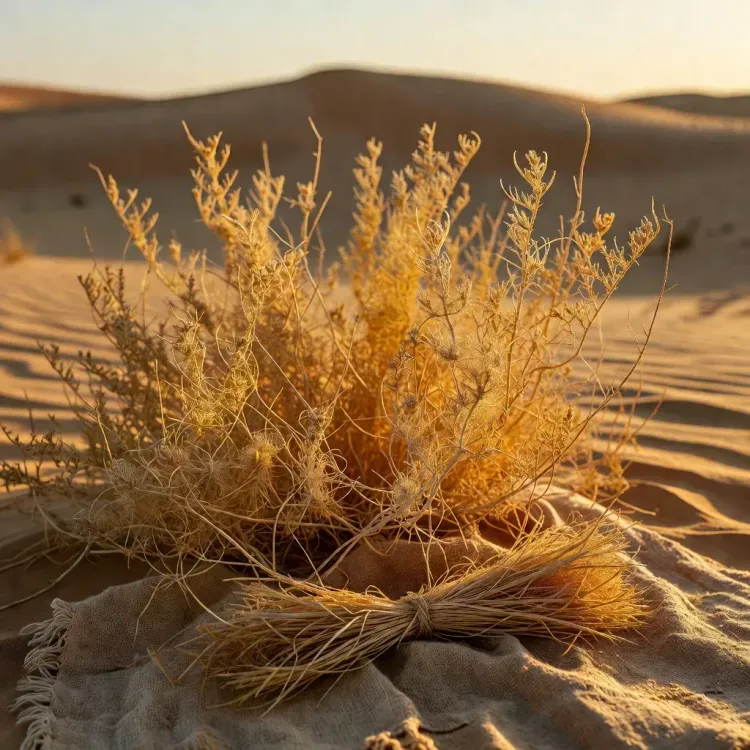
The team developed a technique to produce eco-friendly textile fabric from the Kheemp plant , a drought-resistant shrub native to the Thar Desert, Rajasthan .
Union Textiles Minister Giriraj Singh publicly praised the innovation on November 18, 2026 , calling it a commendable initiative.
The minister specifically highlighted the potential to create new employment opportunities in rural Rajasthan alongside environmental benefits.
The innovation aligns with the Textiles Ministry's broader push toward non-cotton natural fibres and reduced environmental impact across the textile value chain.
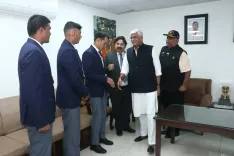
A humble desert shrub from the Thar may be about to change how India thinks about sustainable textiles. Students at NIT Jalandhar have developed a technique to convert the Kheemp plant — a hardy, drought-resistant species native to the Thar Desert in Rajasthan — into eco-friendly fabric, earning first place at the national innovation competition 'Sanrachna 2026'. Union Textiles Minister Giriraj Singh praised the achievement on Wednesday, November 18, calling the student team 'Khheempra' a shining example of innovation and talent.
From desert scrub to competition gold: what Team Khheempra built
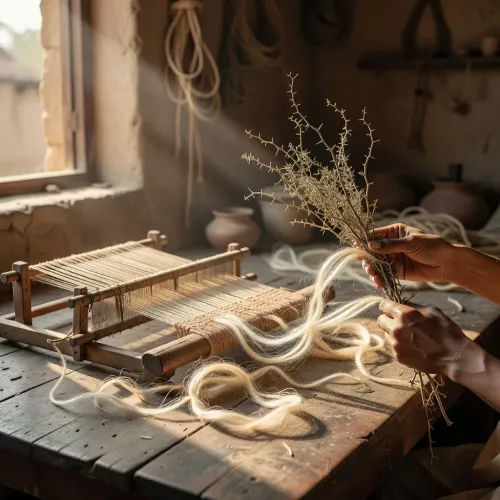
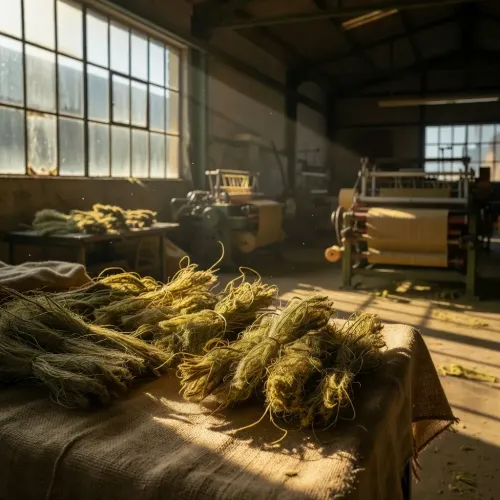
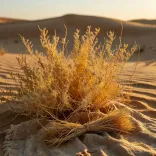
The Kheemp plant (Leptadenia pyrotechnica) has long been part of Rajasthan's arid ecology but rarely figured in industrial textile thinking. The NIT Jalandhar team's breakthrough lies in developing a process — the specifics of which are still emerging — that extracts usable fibre from the plant and converts it into wearable, environmentally compatible fabric. Winning first place at Sanrachna 2026 puts the innovation squarely on the national radar.
Minister Singh, in his post, underlined that the achievement goes beyond the podium. He noted it represents 'ek sarahniya pehel' — a commendable initiative — not only for environmental conservation but for generating new employment opportunities in rural Rajasthan, one of India's most economically challenged desert regions.
Why Kheemp fibre matters for India's textile future
India's textile sector has long been dominated by cotton, a water-intensive crop that places enormous strain on arid and semi-arid farming communities. Indian technical institutes have increasingly turned their research attention to local desert flora — plants that require no irrigation, no pesticides, and grow on land that cotton would never reach. Kheemp fits that profile precisely.
The Textiles Ministry under Giriraj Singh has signalled a broader push toward non-cotton natural fibres and reduced environmental footprints across the value chain. A student-led Kheemp fibre process, if it reaches pilot scale, would align directly with that policy direction — and could give artisan communities in districts like Barmer, Jaisalmer, and Bikaner a new raw-material economy where little existed before.
The road from campus to Rajasthan's villages
The critical question now is whether the innovation travels beyond the competition stage. Technology transfer from an academic prototype to a cluster-level rural livelihood programme involves piloting, quality standardisation, and procurement linkages — none of them simple. But the Textiles Ministry's existing frameworks for artisan clusters and natural-fibre promotion provide a ready institutional channel if the government chooses to accelerate it.
What NIT Jalandhar's team has demonstrated is that the raw material exists, the technical imagination exists, and the institutional recognition — in the form of a minister's public endorsement — now exists too. The desert, it turns out, was never empty.
Point of View
Particularly in ecologically marginal zones. By framing a student competition win as a rural livelihood intervention, the ministry is quietly road-testing a narrative that links academic R&D to on-ground economic outcomes in BJP-governed Rajasthan. If the technology receives institutional follow-through — cluster linkages, pilot funding, procurement support — it could become a template for desert-state textile policy. The minister's post sets political expectations; delivery will be the harder test.
NationPress
18 Nov 2026
Frequently Asked Questions
What is the Kheemp plant and where does it grow?
Kheemp ( Leptadenia pyrotechnica ) is a drought-resistant shrub native to the Thar Desert in Rajasthan, known for thriving in arid conditions with minimal water.
What did the NIT Jalandhar students achieve at Sanrachna 2026?
Team Khheempra from NIT Jalandhar won first place at Sanrachna 2026 for developing a technique to produce eco-friendly textile fabric from the Kheemp plant.
Why did Textiles Minister Giriraj Singh praise the Kheemp fabric innovation?
Minister Singh highlighted the project's dual potential: advancing environmental conservation through sustainable fabric and creating new livelihood opportunities for rural communities in Rajasthan.
How does Kheemp-based fabric help Rajasthan's rural economy?
The Kheemp plant grows wild in Thar Desert districts and requires no irrigation, so a commercial fibre process could give rural communities a new raw-material income source in areas with limited agricultural options.
Does the Textiles Ministry support non-cotton natural fibre research in India?
Yes, the Ministry of Textiles under Giriraj Singh has emphasised reducing cotton dependence by promoting non-cotton natural fibres and eco-friendly materials, making innovations like Kheemp fabric directly relevant to national policy goals.