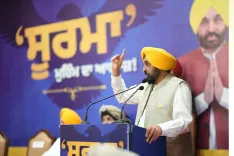
Amit Shah launches India's first cooperative taxi service in Gujarat

Synopsis
Union Home Minister Amit Shah joined the launch of Bharat Taxi in Gandhinagar on 27 June 2026 — India's first cooperative-based taxi service. The initiative extends the government's post-2021 cooperative expansion drive from agriculture into urban mobility, offering drivers a member-owned alternative to private ride-hailing platforms.
Key Takeaways
Bharat Taxi was launched in Gandhinagar, Gujarat on 27 June 2026 as India's first cooperative-based taxi service.
Union Home Minister Amit Shah , who also holds the Cooperation portfolio, attended and broadcast the launch live.
The initiative is rooted in the Ministry of Cooperation , established in July 2021 to expand India's cooperative sector.
Gujarat was chosen as the launch state owing to its established cooperative ecosystem in dairy and agriculture.
The model aims to make taxi drivers member-owners , distinguishing it from corporate ride-hailing platforms.
A possible national rollout and Multi-State Cooperative Societies Act amendments are being watched as next steps.
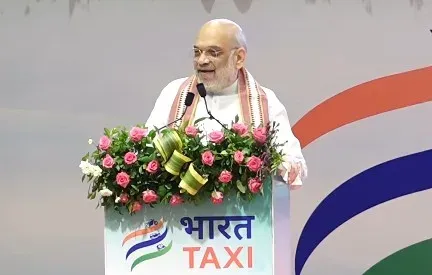
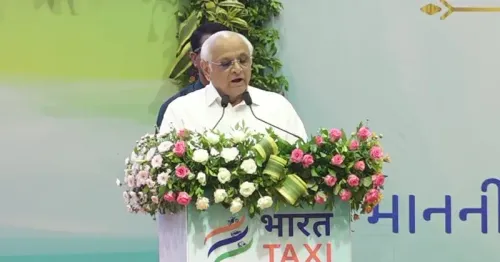
Union Home Minister Amit Shah on Saturday, 27 June 2026, attended the launch event of Bharat Taxi — described as India's first cooperative-based taxi service — in Gandhinagar, Gujarat, joining the proceedings live from the state capital.
Sharing the occasion on X, Shah wrote in Hindi and Gujarati: 'Gandhinagar se desh ki pehli sahkarita aadharit taxi seva Bharat Taxi ke Gujarat mein shubharambh karyakram se live…' ('Live from Gandhinagar at the launch event of India's first cooperative-based taxi service, Bharat Taxi, in Gujarat…'). The post was accompanied by a broadcast link, indicating the event was streamed publicly.
Context
Bharat Taxi is positioned as a member-owned alternative to large private ride-hailing platforms, operating under the cooperative framework rather than a corporate ownership structure. The launch in Gujarat is significant given the state's long-standing cooperative tradition, most visibly exemplified by its dairy and agricultural cooperative networks. Gandhinagar, Gujarat's capital, served as the venue for the inauguration.
Policy Backdrop
The launch is a direct outcome of the Ministry of Cooperation, which the central government established in July 2021 to provide dedicated policy focus to India's cooperative sector — the first such standalone ministry in the country's history. Amit Shah holds the portfolio of Minister of Cooperation in addition to his role as Union Home Minister, making him the political driving force behind this expansion.
The constitutional foundation for cooperative promotion was laid by the 97th Constitutional Amendment of 2011, which inserted Article 43B and Part IXB into the Constitution, mandating the state to promote voluntary formation and democratic functioning of cooperatives. The Bharat Taxi initiative represents a deliberate policy move to extend the cooperative model beyond its traditional strongholds in agriculture and credit into urban mobility services.
Stakeholders and Impact
The primary beneficiaries of a cooperative taxi model are taxi drivers themselves, who would function as member-owners rather than gig workers dependent on a platform's pricing and commission structure. Urban commuters in Gujarat stand to gain a new mobility option, while existing cooperative societies gain a template for diversification into service-sector businesses.
The initiative also carries implications for the broader gig economy debate in India, where platform workers have long sought greater income security and ownership stakes. A cooperative structure, if scaled, could offer a replicable model for driver-owned mobility networks across Indian cities.
What's Next
Observers will watch whether Bharat Taxi expands beyond Gujarat to other states, and whether the government introduces amendments to the Multi-State Cooperative Societies Act to facilitate such cross-state cooperative mobility ventures. The Gujarat launch could serve as a pilot whose operational outcomes shape national cooperative mobility policy in the months ahead.
Point of View
Who personally steered the creation of the cooperation ministry, this is also a political statement: that the BJP's cooperative vision is not nostalgic but forward-looking, targeting urban workers and commuters as a new constituency. The durability of the model will depend on whether cooperative governance can match the operational efficiency of well-funded private platforms.
NationPress
27 Jun 2026
Frequently Asked Questions
What is Bharat Taxi and how is it different from Ola or Uber?
Bharat Taxi is India's first cooperative-based taxi service, launched in Gujarat on 27 June 2026. Unlike Ola or Uber, which are privately owned platforms, Bharat Taxi operates under a cooperative structure where drivers are member-owners, giving them a direct stake in the service's governance and earnings.
Who launched Bharat Taxi in India?
Union Home Minister and Minister of Cooperation Amit Shah attended the launch event of Bharat Taxi in Gandhinagar, Gujarat on 27 June 2026, making it the inaugural rollout of the cooperative taxi service in the country.
Why was Gujarat chosen for the Bharat Taxi launch?
Gujarat has a long and successful history with the cooperative movement, particularly in dairy and agriculture. This established cooperative ecosystem made it the natural choice for piloting India's first cooperative-based taxi service.
What is India's Ministry of Cooperation and when was it set up?
The Ministry of Cooperation is a central government ministry established in July 2021 to provide dedicated policy focus to India's cooperative sector. Amit Shah holds this portfolio in addition to his role as Union Home Minister.
Will Bharat Taxi expand to other states beyond Gujarat?
As of the launch on 27 June 2026, Bharat Taxi has been introduced only in Gujarat. A national rollout and possible amendments to the Multi-State Cooperative Societies Act are being closely watched as potential next steps.