CM Majhi calls for HIV-free Odisha on Testing Day
Synopsis
On National HIV Testing Day, Odisha Chief Minister Mohan Charan Majhi called for widespread testing, stigma elimination, and accessible healthcare, reaffirming his government's commitment to building an HIV-free Odisha by 2030.
Key Takeaways
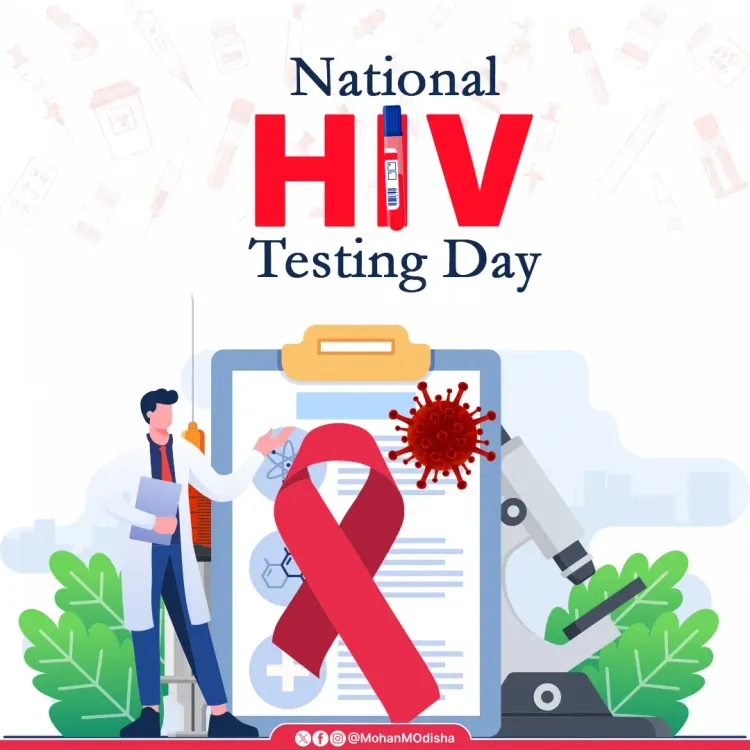
CM Mohan Charan Majhi marked National HIV Testing Day on 27 June 2026 with a public call for regular HIV testing across Odisha.
He urged citizens to eliminate stigma around HIV, describing it as a barrier to timely diagnosis and treatment.
The Odisha government reiterated its commitment to 'accessible, affordable, and inclusive' healthcare services for all residents.
India's National AIDS Control Programme has been operational since 1992 ; the HIV and AIDS (Prevention and Control) Act, 2017 provides legal protections for people living with HIV.
Odisha implements HIV counselling, testing, and anti-retroviral services through the National Health Mission and the Odisha State AIDS Control Society .
India's national target is to end AIDS as a public health threat by 2030 , guided by the National Strategic Plan on HIV/AIDS .
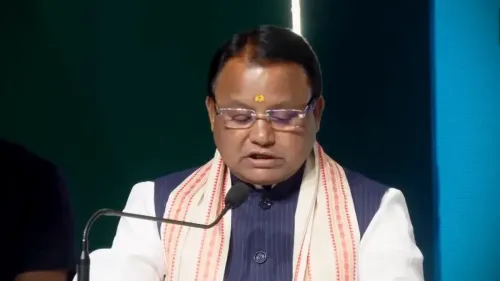
Odisha Chief Minister Mohan Charan Majhi on Saturday, 27 June 2026, marked National HIV Testing Day by calling on citizens to embrace regular testing, reject stigma, and work collectively toward an HIV-free Odisha. The Chief Minister used the occasion to reaffirm his government's commitment to accessible and inclusive healthcare for all residents of the state.
Context
National HIV Testing Day, observed every year on 27 June, is a global and national call to action encouraging people to know their HIV status through voluntary testing. The day underscores the principle that early detection is the single most effective gateway to timely anti-retroviral treatment and reduced onward transmission. CM Majhi's post echoed these themes directly, stating: 'Regular testing is the first step towards timely treatment, better health, and preventing further transmission.'
The Chief Minister also highlighted the social dimension of the epidemic, urging citizens to work on 'eliminating the stigma associated with HIV' — a persistent barrier that health workers say discourages many from seeking tests or disclosing their status.
Policy Backdrop
India's response to HIV/AIDS has evolved over three decades. The National AIDS Control Programme, launched in 1992 under the Ministry of Health and Family Welfare, laid the foundation for a coordinated national response covering prevention, care, and treatment. The programme is administered nationally by the National AIDS Control Organisation (NACO), with state-level implementation handled by State AIDS Control Societies — in Odisha's case, the Odisha State AIDS Control Society.
A landmark legal step came in 2017 when Parliament enacted the HIV and AIDS (Prevention and Control) Act, which formally safeguarded the rights of people living with HIV against discrimination in employment, healthcare, and education. Under the National Health Mission, states including Odisha have integrated HIV counselling, testing, and anti-retroviral services into primary health infrastructure, making services available closer to rural and underserved communities.
India's overarching goal, aligned with the UNAIDS 90-90-90 framework and subsequent targets, is to end AIDS as a public health threat by 2030. Successive phases of the National Strategic Plan on HIV/AIDS guide how states allocate resources and prioritise populations.
Stakeholders and Impact
The most immediate beneficiaries of strengthened testing and treatment infrastructure are people living with HIV across Odisha, particularly those in districts with historically limited healthcare access. Public health workers — including counsellors at Integrated Counselling and Testing Centres — are central to translating political commitments into on-the-ground outcomes.
Stigma reduction, which CM Majhi specifically highlighted, has direct public health consequences. When communities treat HIV status with compassion rather than discrimination, more people come forward for testing, treatment uptake improves, and transmission chains are broken. The Chief Minister's framing of the issue as a matter of building 'an informed, compassionate' society signals an intent to pair clinical services with community awareness.
What's Next
Health advocates will watch whether the Majhi government follows the 27 June message with concrete programme announcements — such as expanded mobile testing camps, targeted outreach in high-prevalence districts, or fresh budgetary allocations for the Odisha State AIDS Control Society. The next major milestone on the public health calendar is World AIDS Day on 1 December, which typically prompts state-level campaign roll-outs and progress reviews. How Odisha translates today's political commitment into measurable testing and treatment numbers will be a key indicator of the state's trajectory toward the 2030 goal.
Point of View
Majhi frames the issue as a social and moral imperative — not just a clinical one — which broadens the appeal beyond health departments to community leaders and civil society. The statement fits a wider pattern of state governments using health observances to reinforce welfare credentials, particularly in a state where rural healthcare access remains uneven. The real test will be whether this commitment translates into measurable programme investment ahead of the 2030 AIDS-free target.
NationPress
26 Sept 2026
Frequently Asked Questions
What is National HIV Testing Day and when is it observed?
National HIV Testing Day is observed on 27 June each year to encourage people to know their HIV status through voluntary testing and to promote awareness about prevention and treatment.
What did Odisha CM Mohan Majhi say on HIV Testing Day 2026?
CM Mohan Charan Majhi called for regular HIV testing, early detection, stigma elimination, and reaffirmed his government's commitment to accessible and affordable healthcare, with the goal of building an HIV-free Odisha.
What is India's law protecting people living with HIV?
The HIV and AIDS (Prevention and Control) Act, 2017 protects people living with HIV from discrimination in healthcare, employment, and education and was enacted by the Indian Parliament.
How does Odisha implement HIV testing and treatment services?
Odisha delivers HIV counselling, testing, and anti-retroviral services through the Odisha State AIDS Control Society under the broader framework of the National Health Mission and the national AIDS control programme.
What is India's HIV/AIDS target for 2030?
India aims to end AIDS as a public health threat by 2030 , in line with global UNAIDS targets, guided by successive phases of the National Strategic Plan on HIV/AIDS .