CM Majhi calls for hepatitis-free Odisha on World Hepatitis Day
Synopsis
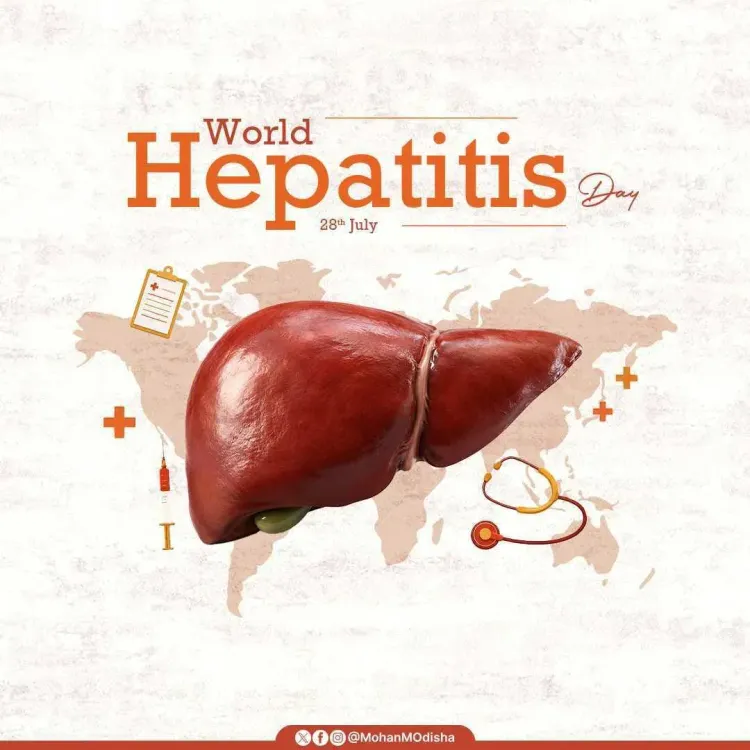
Odisha Chief Minister Mohan Charan Majhi on World Hepatitis Day 2026 called for early testing, timely treatment, vaccination, and stigma-breaking to build a hepatitis-free Odisha, aligning with India's National Viral Hepatitis Control Programme and WHO's 2030 elimination targets.
Key Takeaways
World Hepatitis Day falls on 28 July every year; CM Mohan Charan Majhi marked the 2026 observance with a public appeal on social media.
Majhi called for early testing, timely treatment, vaccination , and greater awareness as the four pillars of hepatitis elimination in Odisha .
He specifically urged citizens to 'break the stigma' around hepatitis, identifying social barriers as a key obstacle to timely care.
India's National Viral Hepatitis Control Programme , launched in 2018 , provides the policy framework within which Odisha delivers hepatitis B and C services.
India and its states are working toward WHO's 2030 target of eliminating hepatitis B and C as public health threats.
State health department performance on screening coverage and budget integration in the next cycle will indicate whether the political message translates into programme delivery.
Odisha Chief Minister Mohan Charan Majhi on Tuesday, 28 July 2026 marked World Hepatitis Day by calling on citizens to renew their commitment to eliminating hepatitis in the state, urging early testing, timely treatment, vaccination, and greater public awareness as the tools to save lives.
Context
World Hepatitis Day is observed every year on 28 July to raise global awareness about viral hepatitis and to drive action toward its elimination. The day is anchored in World Health Organisation targets that call for eliminating hepatitis B and C as public health threats by 2030. Chief Minister Majhi's message aligns with this global calendar, urging residents of Odisha to treat the observance as a call to action rather than a ceremonial moment.
In his post, Majhi wrote: 'Early testing, timely treatment, vaccination and greater awareness can save lives. Together, let us break the stigma, strengthen prevention and work towards eliminating hepatitis for a healthier future.' The appeal specifically names stigma as a barrier — a recognition that social attitudes around hepatitis continue to delay diagnosis and treatment-seeking behaviour across communities.
Policy Backdrop
India launched the National Viral Hepatitis Control Programme (NVHCP) in 2018 to expand testing, treatment, and vaccination for hepatitis B and C across the country. The programme is integrated into the National Health Mission framework, enabling states including Odisha to deliver services through existing district-level health infrastructure. The NVHCP was designed specifically to help India meet WHO's 2030 elimination targets.
Odisha, like other states, incorporates hepatitis control efforts into its public health machinery, with emphasis on community-level screening camps, hepatitis B vaccination for newborns, and awareness drives conducted through primary health centres. State-level health departments are expected to report on screening coverage and service integration as part of annual National Health Mission reviews.
Stakeholders and Impact
The primary beneficiaries of sustained hepatitis control efforts are Odisha's general population, particularly communities in districts with limited healthcare access where hepatitis B transmission through perinatal and household contact remains a concern. Healthcare workers are also key stakeholders, both as frontline providers of testing and vaccination and as a group at occupational risk.
Hepatitis patients and those living with chronic hepatitis B or C stand to gain most directly from reduced stigma and improved access to treatment — two pillars that Majhi's message explicitly addresses. Public health advocates note that stigma reduction requires consistent political messaging from senior leaders, making statements such as this one a meaningful part of the broader campaign even when no new policy is announced.
What's Next
The immediate follow-through will depend on Odisha's state health department and its ability to translate awareness messaging into measurable increases in screening coverage and vaccination uptake at the district level. Integration of hepatitis services into upcoming budget allocations for the National Health Mission in the state will be a key indicator of how the political commitment translates into programme delivery.
With the WHO 2030 elimination deadline approaching, state-level action — from scaling up testing infrastructure to sustaining hepatitis B birth-dose coverage — will determine whether Odisha contributes meaningfully to India's national elimination goals. Health department performance reports in the next budget cycle will offer the clearest signal of progress.
Point of View
As consistent leadership messaging is documented by public health researchers as a driver of stigma reduction. The explicit mention of stigma alongside clinical tools — testing, treatment, vaccination — suggests an awareness of the social determinants that undermine programme uptake, even if no new scheme is announced. The statement fits a broader pattern of BJP-governed states visibly aligning with central health missions to demonstrate delivery on the ruling party's public health agenda. The real test will be whether Odisha's health budget and district-level infrastructure back up the rhetoric ahead of the WHO 2030 deadline.
NationPress
26 Oct 2026
Frequently Asked Questions
What did Odisha CM Mohan Majhi say on World Hepatitis Day 2026?
CM Mohan Charan Majhi called for building a hepatitis-free Odisha through early testing, timely treatment, vaccination, and greater awareness, and urged citizens to break the stigma around hepatitis.
When is World Hepatitis Day observed?
World Hepatitis Day is observed every year on 28 July to raise awareness about viral hepatitis and push for action aligned with WHO's 2030 elimination targets.
What is India's National Viral Hepatitis Control Programme?
The National Viral Hepatitis Control Programme is a Union government initiative launched in 2018 to expand testing, treatment, and vaccination for hepatitis B and C, integrated into the National Health Mission framework.
What is India's target for hepatitis elimination?
India, in line with World Health Organisation goals, aims to eliminate hepatitis B and C as public health threats by 2030 through programmes like the National Viral Hepatitis Control Programme.
How does Odisha address hepatitis at the state level?
Odisha incorporates hepatitis control into its National Health Mission framework, delivering testing, hepatitis B vaccination, and awareness drives through district-level primary health centres.