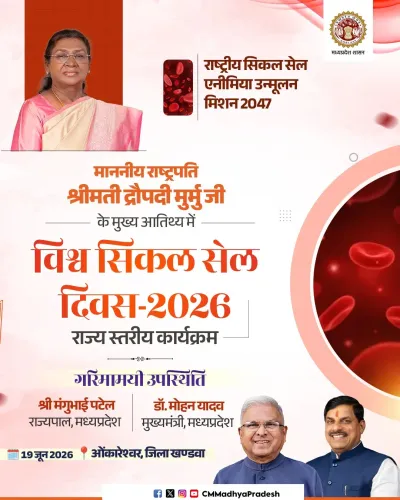
CM Majhi Backs PM Modi's Sickle Cell Elimination Drive on World Sickle Cell Day

Synopsis
On World Sickle Cell Day, Odisha Chief Minister Mohan Charan Majhi backed PM Modi's mission to eliminate sickle cell disease by 2047 and claimed Odisha is the only state that can detect both sickle cell disease and thalassemia from a single blood sample.
Key Takeaways
Odisha CM Mohan Charan Majhi marked World Sickle Cell Day (19 June 2026) with a call to support the national sickle cell elimination mission.
CM Majhi claimed Odisha is the only state capable of detecting both sickle cell disease and thalassemia from a single blood sample.
The National Sickle Cell Anaemia Elimination Mission was launched in July 2023 with a target to screen 7 crore people and eliminate the disease by 2047 .
The mission is integrated with NHM and Ayushman Bharat platforms, focusing on high-burden tribal districts.
The 2047 elimination target is linked to the Viksit Bharat development roadmap.
Tribal communities in Odisha are the primary beneficiaries of expanded sickle cell screening efforts.
Odisha Chief Minister Mohan Charan Majhi on Friday, 19 June 2026, marked World Sickle Cell Day by highlighting the state's diagnostic capabilities and urging citizens to support Prime Minister Narendra Modi's national mission to eliminate sickle cell disease by 2047.
Context
World Sickle Cell Day, observed every year on 19 June, is a global health awareness event focused on sickle cell disease — a hereditary blood disorder that disproportionately affects tribal and marginalised communities. In India, the burden is concentrated in states with large Scheduled Tribe populations, including Odisha, Chhattisgarh, Jharkhand, and Madhya Pradesh.
CM Majhi's post claimed that Odisha is 'the only state capable of detecting both sickle cell disease and thalassemia from a single blood sample' — positioning the state as a leader in combined haemoglobinopathy diagnostics. He called on citizens to 'raise awareness and actively support' the Prime Minister's elimination mission.
Policy Backdrop
The National Sickle Cell Anaemia Elimination Mission was launched in July 2023 by Prime Minister Narendra Modi with a target to eliminate the disease by 2047 — the centenary of India's independence. The mission aims to screen approximately 7 crore people across high-burden districts, with integration into existing platforms such as the National Health Mission (NHM) and Ayushman Bharat.
The 2047 elimination goal is embedded within the broader Viksit Bharat (Developed India) development roadmap, linking public health outcomes to the country's long-term socioeconomic ambitions. Sickle cell screening in tribal districts has been a cornerstone of this effort, with states encouraged to pilot faster, combined diagnostic approaches.
Odisha's claim of a dual-detection capability from a single blood sample — covering both sickle cell disease and thalassemia — fits the pattern of states developing combined haemoglobinopathy testing to accelerate national coverage targets, though independent verification of the state's exclusive status in this regard remains pending.
Stakeholders and Impact
Tribal communities in Odisha are the primary stakeholders, as sickle cell disease prevalence is markedly higher among Scheduled Tribe populations. Early and accurate diagnosis through combined screening can reduce the burden of late-stage complications, lower healthcare costs, and enable genetic counselling for at-risk families.
State health departments across high-burden states are watching Odisha's diagnostic model closely. If the single-sample dual-detection approach is validated and scaled, it could inform central procurement and deployment strategies under the National Sickle Cell Anaemia Elimination Mission in the 2025–26 evaluation cycle.
What's Next
Central health authorities are expected to evaluate state-level screening coverage reports and the performance of combined SCD-thalassemia diagnostic kits as part of the mission's ongoing monitoring framework. Odisha's performance data, if independently corroborated, could position the state as a model for replication in other high-burden states.
As the 2047 deadline approaches incrementally, the pressure on states to demonstrate measurable reductions in disease prevalence will intensify. CM Majhi's public endorsement of the national mission on World Sickle Cell Day signals continued political will at the state level to align Odisha's health agenda with the Centre's elimination targets.
Point of View
If verified, would give Odisha a strong case for additional central funding and recognition under the National Sickle Cell Anaemia Elimination Mission. The framing also reflects a broader BJP strategy of linking state-level governance achievements to national development narratives such as Viksit Bharat 2047. Whether the diagnostic claim translates into measurable screening outcomes will be the real test of Odisha's leadership in this space.
NationPress
19 Sept 2026
Frequently Asked Questions
What is World Sickle Cell Day and when is it observed?
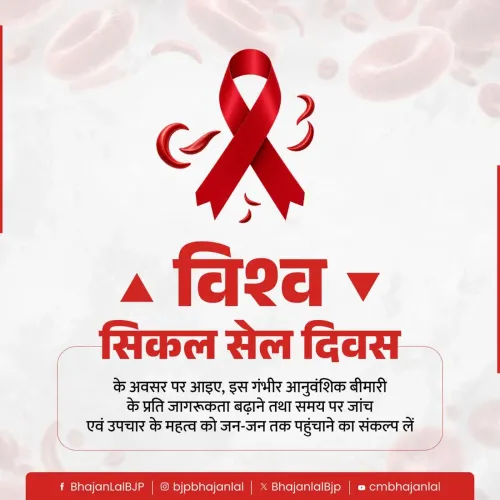
World Sickle Cell Day is observed every year on 19 June to raise global awareness about sickle cell disease, a hereditary blood disorder that disproportionately affects tribal and marginalised communities.
What is India's National Sickle Cell Anaemia Elimination Mission?
The National Sickle Cell Anaemia Elimination Mission was launched by PM Narendra Modi in July 2023 . It aims to screen approximately 7 crore people in high-burden tribal districts and eliminate sickle cell disease in India by 2047 .
What did Odisha CM Mohan Charan Majhi say on World Sickle Cell Day 2026?
CM Majhi stated that Odisha is the only state capable of detecting both sickle cell disease and thalassemia from a single blood sample, and urged citizens to support PM Modi's mission to eliminate sickle cell disease by 2047.
Why is Odisha significant in India's sickle cell disease efforts?
Odisha has a large Scheduled Tribe population with high sickle cell disease prevalence. The state has expanded diagnostic facilities and is piloting combined haemoglobinopathy testing as part of the national elimination mission.
What is the connection between sickle cell elimination and Viksit Bharat 2047?
The 2047 sickle cell elimination target is embedded within India's Viksit Bharat (Developed India) roadmap, which links public health milestones to the country's broader socioeconomic development goals for the centenary of independence.