CM Majhi Urges Cycling Push on World Bicycle Day for Greener Odisha

Synopsis
Odisha Chief Minister Mohan Charan Majhi marked World Bicycle Day on 3 June 2026 by urging citizens to take up cycling for better health, a cleaner environment and a sustainable future, linking the UN observance to his government's vision of a fitter, greener Odisha.
Key Takeaways
Odisha CM Mohan Charan Majhi issued a World Bicycle Day message on 3 June 2026.
He urged citizens to embrace cycling for health, a cleaner environment and sustainability.
The message frames cycling as a contribution to a 'fitter, greener and cleaner Odisha'.
World Bicycle Day was established by a UN General Assembly resolution in 2018.
The appeal aligns with India's Paris Agreement commitments and earlier Fit India and Swachh Bharat campaigns.
Focus now turns to potential cycling lanes, bike-sharing pilots and budget allocations for green mobility.
Odisha Chief Minister Mohan Charan Majhi on 3 June 2026 appealed to citizens to take up cycling as a daily habit, framing it as a low-cost route to better health, cleaner air and a more sustainable future. Marking World Bicycle Day, the Chief Minister tied the global observance to his government's vision of a 'fitter, greener and cleaner Odisha'.
In his message, Majhi wrote, 'On World Bicycle Day, let us embrace cycling as a simple step towards better health, a cleaner environment and a sustainable future.' He added that the occasion should 'inspire more people to choose cycling and contribute to building a fitter, greener and cleaner Odisha,' and extended greetings to citizens marking the day.
Context
World Bicycle Day is observed on 3 June every year following a United Nations General Assembly resolution adopted in 2018. The day was established to recognise the bicycle as a simple, affordable, reliable and environmentally fit means of transport, and to advance the global Sustainable Development Goals.
For Majhi, who took charge as Chief Minister of Odisha in 2024 after the Bharatiya Janata Party won the state assembly election, the message slots into a wider sustainability narrative his government has been cultivating. The Chief Minister has used several international observance days over the past year to push climate-aligned behaviour change among citizens.
Policy backdrop
Cycling promotion sits at the intersection of public health, urban planning and climate policy. Indian states have increasingly leaned on non-motorised transport messaging to help cut urban emissions and contribute to national commitments under the Paris Agreement.
Earlier nationwide campaigns such as Fit India and Swachh Bharat built a template for linking individual lifestyle choices with broader development goals. The Chief Minister's appeal continues that template, asking citizens to view a cycle ride not just as exercise but as a civic contribution to air quality and clean streets.
In urban centres such as Bhubaneswar and Cuttack, where vehicular congestion and air pollution are growing concerns, advocacy groups have long pressed for protected cycling lanes, secure parking and bike-sharing networks. The state's existing smart-city work in Bhubaneswar has previously included non-motorised transport elements.
Stakeholders and impact
The most direct audience for Majhi's appeal is the everyday commuter — office-goers, daily-wage workers and traders who already rely on cycles in smaller towns and peri-urban belts. School and college students, who form a significant share of cyclists in Odisha's district headquarters, are another core constituency.
Environmental groups and public health advocates typically welcome such top-level endorsements because they help legitimise demands for dedicated road space and safer infrastructure. Traffic-safety experts, however, caution that messaging needs to be paired with engineering interventions, since cyclists remain among the most vulnerable road users.
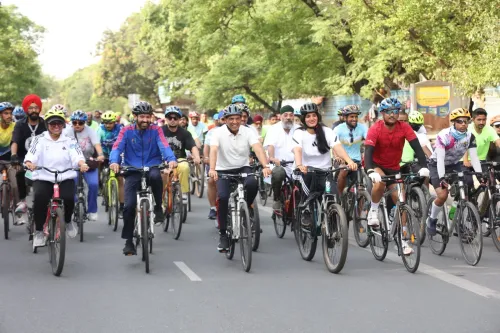
For the cycle industry and local retailers, ministerial endorsements on observance days can nudge short-term demand, particularly when paired with school and college outreach. The image accompanying the Chief Minister's post reinforces the lifestyle framing of the appeal.
What's next
Attention will turn to whether the rhetorical push is followed by concrete steps — dedicated cycling lanes, public bike-sharing pilots, or budget allocations for green mobility under Odisha's urban development programmes. The state's next budget cycle and municipal action plans for Bhubaneswar, Cuttack, Rourkela and Sambalpur will be watched for any such line items.
If the Majhi government converts the World Bicycle Day message into a sustained mobility strategy, it could position Odisha alongside states that have begun treating cycling not as a leisure activity but as a core piece of climate-resilient urban planning.
Point of View
Slotting Odisha into a national pattern of state leaders using UN observance days to align with central sustainability priorities. By tying cycling to the 'fitter, greener and cleaner Odisha' tagline, Majhi extends the rhetorical toolkit of Fit India and Swachh Bharat into the mobility domain. The real test, as with most such appeals, will be whether budgetary commitments and urban-design changes follow the social-media moment. Without protected lanes and last-mile infrastructure, cycling advocacy risks remaining aspirational in fast-motorising state capitals.
NationPress
24 Oct 2026
Frequently Asked Questions
When is World Bicycle Day observed?
World Bicycle Day is observed every year on 3 June. It was established by a United Nations General Assembly resolution in 2018 to promote the health, environmental and social benefits of cycling.
What did Odisha CM Mohan Charan Majhi say on World Bicycle Day 2026?
He urged citizens to embrace cycling as a simple step towards better health, a cleaner environment and a sustainable future. He said the occasion should inspire more people to choose cycling and help build a fitter, greener and cleaner Odisha.
Has Odisha announced any new cycling scheme on World Bicycle Day?
The Chief Minister's post did not announce any new cycling scheme or infrastructure project. It was an appeal to citizens to take up cycling, with attention now on whether the state follows up with dedicated lanes or bike-sharing programmes.
Who is Mohan Charan Majhi?
Mohan Charan Majhi is the Chief Minister of Odisha and a Bharatiya Janata Party leader. He assumed office in 2024 after the party won the Odisha assembly election.
Why does the Odisha government promote cycling?
Cycling promotion supports public health, reduces urban air pollution and aligns with India's climate commitments under the Paris Agreement. State-level messaging also builds on national campaigns such as Fit India and Swachh Bharat that link lifestyle choices to broader development goals.