Amit Shah Launches 'Project Karmaveer' on Police Smriti Divas
Synopsis
On Police Smriti Divas, 21 October 2026, Union Home Minister Amit Shah launched 'Project Karmaveer', placing 400 Common Service Centres with CAPF martyrs' widows and ex-personnel to generate dignified livelihoods through pension, banking, and citizen services.
Key Takeaways
Project Karmaveer was launched by Union Home Minister Amit Shah on Police Smriti Divas, 21 October 2026 .
Under the scheme, 400 Common Service Centres will be operated by martyrs' widows ( veeranganas ) and former police/CAPF personnel across India.
The centres will provide pension, banking, and citizen services , giving beneficiaries a commission-based livelihood.
The Common Service Centre network was originally launched in 2006 under the National e-Governance Plan as a village-level digital service delivery and entrepreneurship platform.
Police Smriti Divas on 21 October commemorates personnel of state police forces and CAPFs — including CRPF, BSF, CISF, ITBP and SSB — killed in the line of duty.
The project connects existing e-governance infrastructure with targeted livelihood support, moving beyond passive ex-gratia transfers to active income generation for martyrs' families.
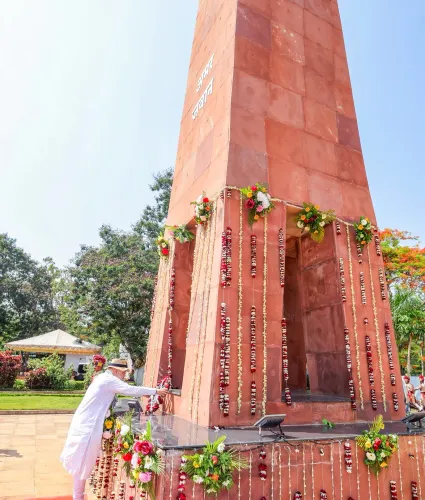
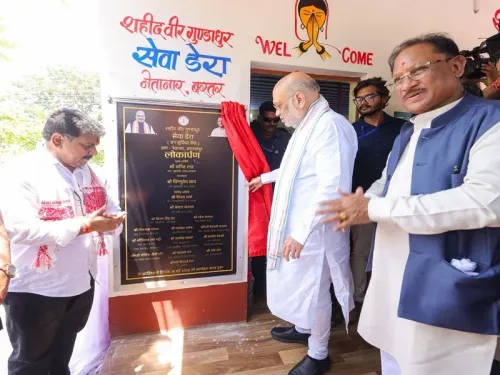
On a day set aside every year to remember those who never came home, Union Home Minister Amit Shah on Wednesday, 21 October 2026 used Police Smriti Divas to announce something concrete for the families left behind — Project Karmaveer, a scheme that will put 400 Common Service Centres in the hands of martyrs' widows and former police personnel across the country.
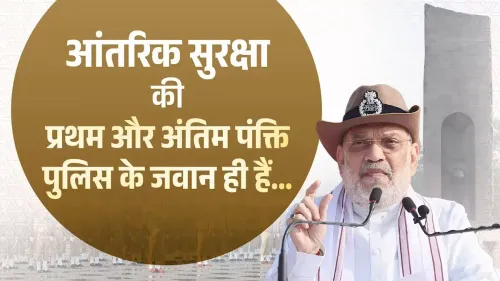
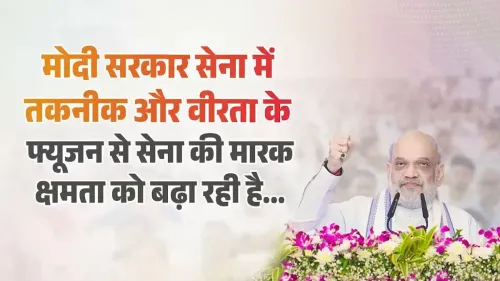
Posting on X, Shah wrote: 'हमारे पुलिस और केंद्रीय सशस्त्र पुलिस बलों के जवान सच्चे कर्मवीर हैं' — 'Our police and Central Armed Police Forces personnel are true karmaveers, who place duty above all else, even the sacrifice of their lives.' The scheme, he said, would allow veeranganas (martyrs' widows) and former personnel to earn a dignified livelihood by running these centres, delivering pension, banking, and citizen services to people in their communities.
What a Common Service Centre actually means for a martyr's family
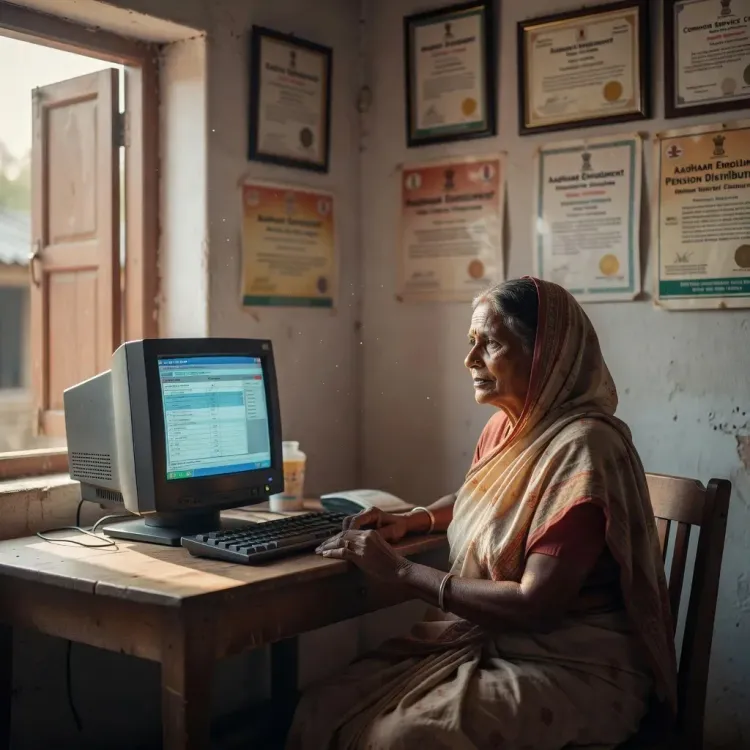
The Common Service Centre (CSC) network was born in 2006 under the National e-Governance Plan as a way to push government-to-citizen services into India's villages through local entrepreneurs. Today the network spans tens of thousands of outlets, handling everything from Aadhaar updates and insurance enrolments to pension disbursals and banking transactions for the unbanked. Running one is not charity — it generates real commission-based income.
That is the precise logic of Project Karmaveer: plug a family that has already shouldered enormous sacrifice into an existing, revenue-generating infrastructure. A widow running a CSC is not receiving a one-time ex-gratia payment; she is running a small business backed by state digital architecture. The 400 centres announced today represent the first tranche of that ambition, spread across the country under the Ministry of Home Affairs.
Police Smriti Divas — the day and its weight
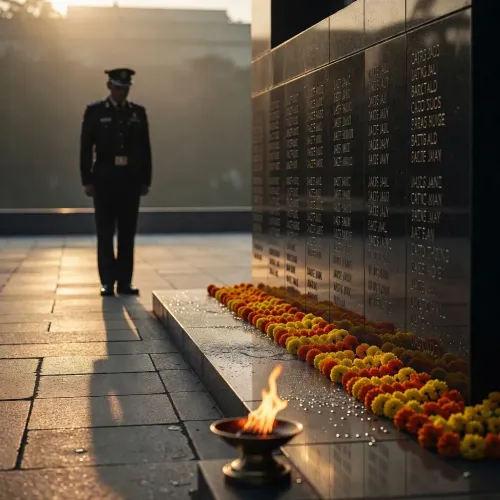
Police Smriti Divas is observed on 21 October every year to honour personnel of state police forces and the Central Armed Police Forces (CAPFs) — the CRPF, BSF, CISF, ITBP and SSB — who have died in the line of duty. The date marks the 1959 ambush in Hot Springs, Ladakh, where 10 CRPF jawans were killed by Chinese troops, the first large-scale sacrifice of independent India's paramilitary forces.
Launching a livelihood scheme on this day is a deliberate act of framing: the tribute is not just ceremonial wreath-laying, but a structural commitment. Shah's post names these jawans 'karmaveers' — warriors of duty — and the project borrows that exact word for its title.
Connecting martyrs' families to India's e-governance grid
India has maintained family pension and ex-gratia rehabilitation packages for CAPF martyrs for decades, but these have historically been passive transfers. The CSC model flips that dynamic. Former personnel and veeranganas who take on a centre become service providers to their own districts — handling pension queries, banking correspondents' work, and access to dozens of citizen-facing government portals.
The broader pattern here is deliberate: successive governments have used the CSC network as a micro-enterprise platform, carving out reservations or preferential allocations for women, veterans, and border-region residents. Project Karmaveer extends that logic specifically to the security-force community, creating a pipeline that ties national sacrifice to national digital infrastructure.
The operational details — state-wise allocation of the 400 centres, training protocols, and revenue-sharing arrangements with CSC e-Governance Services India Ltd — will determine how quickly families see real income. But the architecture is there, and the political signal is clear: on the day India remembers its fallen, the government is building something the living can use.
Point of View
Recurring impact. Launching it on Police Smriti Divas gives the announcement a moral weight that a budget line-item announcement simply cannot replicate. For Amit Shah, who oversees both internal security and the CAPF welfare mandate, the scheme also consolidates his ministry's identity as a steward of the security-force ecosystem, not just its operational commander. The real test will be in the rollout: whether the 400 centres are geographically allocated to where CAPF casualty concentrations are highest, and whether training and revenue-sharing terms make these viable businesses rather than symbolic gestures.
NationPress
21 Oct 2026
Frequently Asked Questions
What is Project Karmaveer launched by Amit Shah?
Project Karmaveer is a welfare-cum-livelihood scheme announced by Union Home Minister Amit Shah on Police Smriti Divas, 21 October 2026. Under it, 400 Common Service Centres will be run by martyrs' widows (veeranganas) and former police/CAPF personnel to deliver pension, banking, and citizen services and earn a dignified income.
What is Police Smriti Divas and why is it observed on 21 October?
Police Smriti Divas is observed every year on 21 October to honour police and Central Armed Police Forces personnel killed in the line of duty. The date marks the 1959 ambush in Hot Springs, Ladakh, where 10 CRPF jawans were killed — the first major sacrifice of independent India's paramilitary forces.
What are Common Service Centres and how will they help CAPF families?
Common Service Centres (CSCs) are village-level digital outlets launched in 2006 under the National e-Governance Plan to deliver government-to-citizen services. Operators earn commission-based income by facilitating services like Aadhaar enrolment, banking, and pension processing. Project Karmaveer assigns 400 such centres to martyrs' widows and ex-personnel, turning a grief support measure into a revenue-generating micro-enterprise.
Who are veeranganas in the context of this scheme?
Veerangana literally means a brave woman or a warrior's wife. In the context of Project Karmaveer, the term refers to the widows of police personnel and CAPF jawans who died in the line of duty. They are the primary intended beneficiaries of the 400 Common Service Centres.
Which forces come under the Central Armed Police Forces (CAPFs)?
The Central Armed Police Forces (CAPFs) operate under the Ministry of Home Affairs and include the CRPF (Central Reserve Police Force), BSF (Border Security Force), CISF (Central Industrial Security Force), ITBP (Indo-Tibetan Border Police), and SSB (Sashastra Seema Bal). They are deployed for internal security, counter-insurgency, and border protection duties.