Amit Shah Meets US Ambassador, Discusses Security Ties
Synopsis
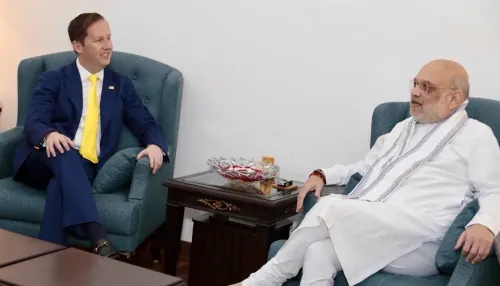
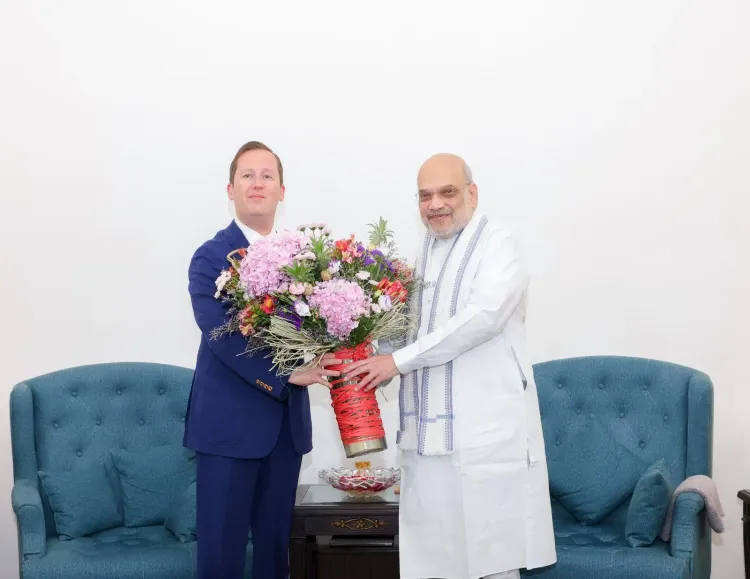
Union Home Minister Amit Shah met U.S. Ambassador Sergio Gor in New Delhi on June 18, 2026, discussing deepened India-US security cooperation with a focus on counter-terrorism and counter-narcotics under the India–U.S. Comprehensive Global Strategic Partnership framework.
Key Takeaways
Ambassador Sergio Gor in New Delhi on June 18, 2026 .
Talks centred on counter-terrorism and counter-narcotics as priority security cooperation areas.
Shah reaffirmed India's commitment to the India–U.S.
Comprehensive Global Strategic Partnership .
The meeting reflects the expanded role of the Home Ministry in India-US bilateral security engagement.
Possible follow-up mechanisms include the India-US Homeland Security Dialogue and the 2+2 Ministerial .
India-US security ties are underpinned by foundational agreements including COMCASA (2018) and the renewed Defence Framework (2015) .
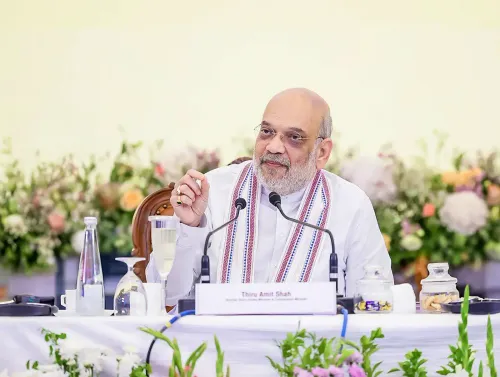
Union Home Minister Amit Shah met U.S. Ambassador to India Sergio Gor in New Delhi on Thursday, June 18, 2026, for a detailed discussion on deepening bilateral cooperation in security, counter-terrorism, and counter-narcotics. The meeting signals continued high-level engagement between India and the United States on shared transnational threats.
Context
Shah described the talks as focused on 'further strengthening cooperation between India and the U.S. in the area of security, particularly in counter-terrorism and counter-narcotics.' The Home Minister reaffirmed India's commitment to advancing the India–U.S. Comprehensive Global Strategic Partnership, invoking the leadership of Prime Minister Narendra Modi. The meeting comes at a time when India-US security ties have expanded well beyond traditional defence domains into law enforcement and intelligence collaboration.
Policy Backdrop
India-US security cooperation has been institutionalised through a series of landmark agreements over the past decade. The Framework for the US-India Defence Relationship, renewed in 2015, broadened military-to-military engagement and technology sharing, while the Communications Compatibility and Security Agreement (COMCASA), signed in 2018, enabled secure data links across defence platforms. Counter-narcotics has increasingly featured as a standalone track alongside traditional counter-terrorism and intelligence-sharing dialogues, reflecting the evolving nature of transnational threats that both countries face.
The India–U.S. Comprehensive Global Strategic Partnership — the overarching framework governing the bilateral relationship — has been progressively deepened under the current Indian government, with security cooperation forming one of its most active pillars. Home Ministry-level engagement with the U.S. side complements the defence and foreign ministry channels, underscoring the breadth of the partnership.
Stakeholders and Impact
The primary stakeholders in this engagement are the security and intelligence agencies of both countries, as well as law enforcement bodies dealing with narcotics trafficking. For India, deepening counter-narcotics cooperation with the United States is particularly relevant given the cross-border drug trade threats emanating from the region. Counter-terrorism collaboration, meanwhile, has long been a cornerstone of the relationship, with both nations sharing concerns over globally active terror networks.
India's multi-alignment foreign policy approach ensures that such bilateral security engagements are pursued on practical, issue-based terms. The involvement of the Home Minister — rather than the Defence or External Affairs Ministry alone — signals that internal security dimensions of the partnership are receiving direct attention at the highest political level.
What's Next
The meeting could feed into structured bilateral mechanisms such as the India-US Homeland Security Dialogue or the 2+2 Ministerial meeting, which brings together the foreign and defence ministers of both countries. Concrete outcomes — whether in the form of joint working group mandates, information-sharing protocols, or coordinated counter-narcotics operations — are likely to be formalised through these established channels. The pace and depth of follow-through will be a key indicator of how quickly the discussions translate into operational cooperation.
Point of View
A concern both capitals share. The explicit invocation of PM Modi's leadership frames the meeting as part of a deliberate, top-down strategic push rather than routine diplomatic contact. Taken together, this signals that the India-US partnership is deepening its operational — not merely declaratory — security architecture.
NationPress
18 Sept 2026
Frequently Asked Questions
Why did Amit Shah meet the US Ambassador?
Amit Shah met U.S. Ambassador Sergio Gor to discuss strengthening bilateral cooperation in security, specifically counter-terrorism and counter-narcotics, as part of the India–U.S. Comprehensive Global Strategic Partnership.
What is the India–U.S. Comprehensive Global Strategic Partnership?
It is the overarching framework that defines the multi-domain relationship between India and the United States, covering defence, security, trade, and technology cooperation, pursued actively under the current Indian government.
What is COMCASA and why does it matter for India-US ties?
COMCASA, signed in 2018, is the Communications Compatibility and Security Agreement that enables secure data links between Indian and U.S. defence platforms, forming a key technical pillar of the bilateral security relationship.
What could be the next steps after Amit Shah's meeting with the US Ambassador?
Possible follow-up steps include outcomes from the India-US Homeland Security Dialogue or the 2+2 Ministerial meeting, where defence and foreign ministers of both countries convene to advance strategic cooperation.
What is India's approach to counter-narcotics cooperation with the US?
India has increasingly treated counter-narcotics as a distinct bilateral track alongside counter-terrorism, reflecting shared concerns over cross-border drug trafficking networks that can intersect with terror financing.