Amit Shah Pays Tribute to Lokmanya Tilak on Death Anniversary
Synopsis
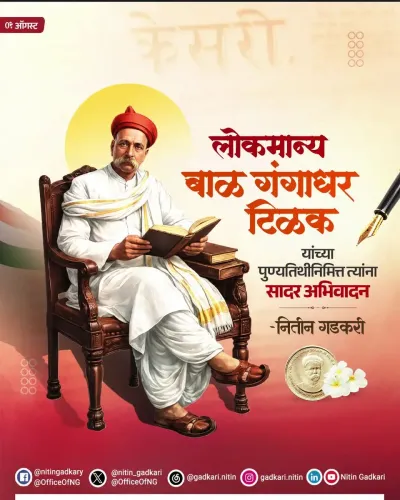
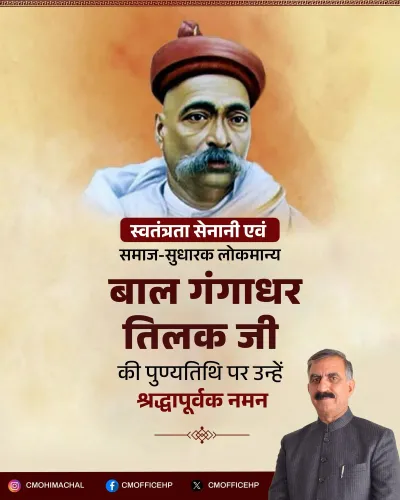
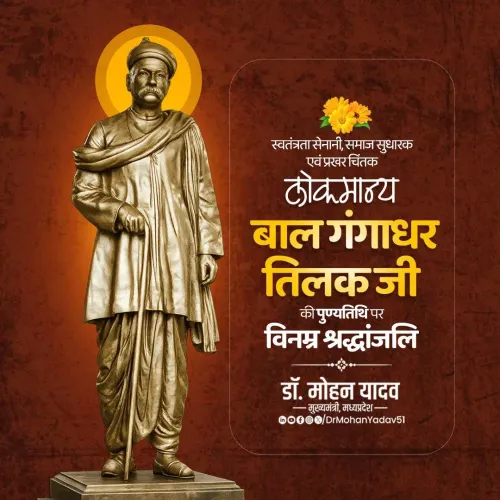
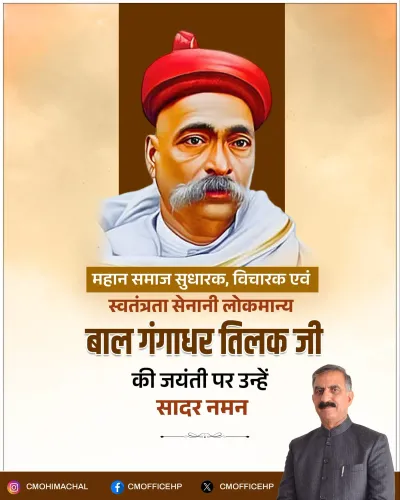
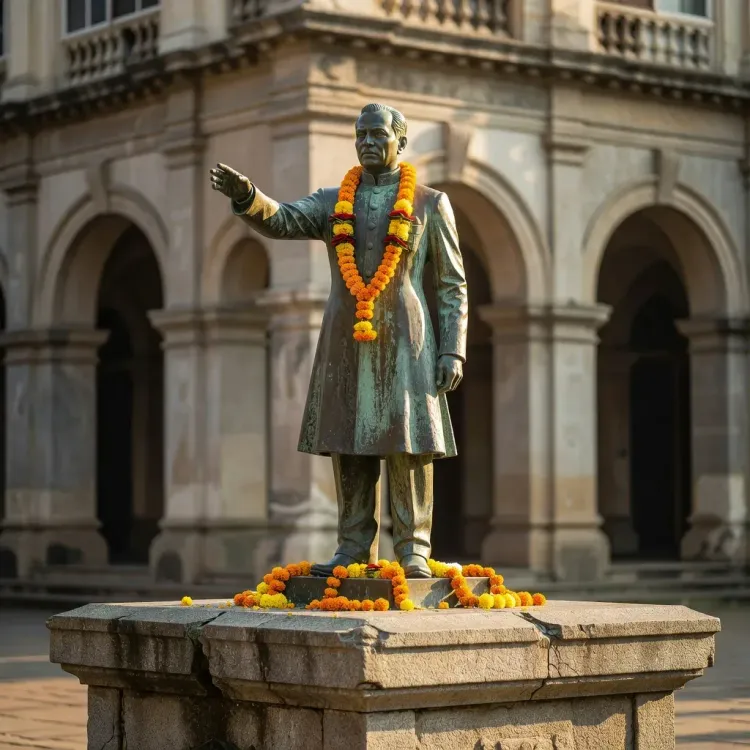
Union Home Minister Amit Shah on 1 August 2026 paid tribute to Lokmanya Bal Gangadhar Tilak on his death anniversary, honouring the nationalist leader's fiery ideas, organisational genius, and pen-driven resistance against British rule that shaped India's independence movement.
Key Takeaways
Union Home Minister Amit Shah posted a bilingual Hindi-Marathi tribute to Lokmanya Bal Gangadhar Tilak on his death anniversary, 1 August 2026 .
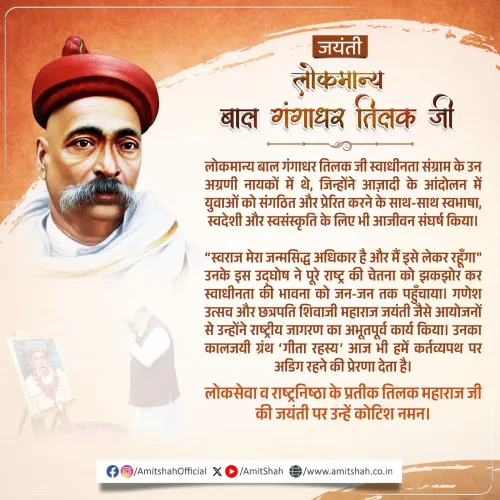
Shah credited Tilak with giving the Indian independence movement 'a new direction' through his 'fiery ideas and unparalleled organisational skill.' The tribute highlighted Tilak's journalism — his newspapers Kesari and Mahratta — as a 'powerful voice of resistance against British rule.' Shah invoked Tilak's legacy of cultural awakening and youth mobilisation under the banner of Swaraj (self-rule).
The tribute closed with a call to walk the path of 'Rashtra Pratham' (nation first), a recurring theme in BJP commemorations of independence-era leaders.
On the death anniversary of one of India's most electrifying freedom fighters, Union Home Minister Amit Shah on Saturday, 1 August 2026, paid tribute to Lokmanya Bal Gangadhar Tilak — the man who first thundered that 'Swaraj is my birthright' — calling him a vanguard leader who gave the Indian independence movement an entirely new direction.
Posting in both Hindi and Marathi, Shah wrote that Tilak used his 'fiery ideas and unparalleled organisational skill' to connect the youth of India with the freedom struggle under the banner of Swaraj (self-rule). He also noted that Tilak's pen became 'a powerful voice of resistance against British rule' — a direct reference to Tilak's legendary newspapers Kesari and Mahratta, through which he mobilised mass opinion at the turn of the 20th century.
The pen, the platform, and the people
Tilak's significance in the independence movement rested on two pillars: journalism and public mobilisation. His Marathi weekly Kesari ('Lion') gave ordinary Indians a combative, unapologetic voice against colonial authority at a time when open dissent carried the risk of sedition charges — charges Tilak himself faced and endured. Shah's tribute specifically acknowledged this dual legacy of the written word and grassroots organisation.
The Home Minister also highlighted Tilak's role in cultural awakening — his revival of the Ganesh Chaturthi festival as a public congregation became a template for mass nationalist mobilisation, turning a religious celebration into a platform for political consciousness across Maharashtra and beyond.
Why BJP leaders invoke Tilak's 'Rashtra Pratham' thread
Shah's tribute closed with a line that runs like a throughline in BJP commemorations of independence-era figures: that Tilak's life and personality will 'forever inspire us all to walk the path of Rashtra Pratham' — nation first. Senior BJP leaders have consistently drawn from Tilak's legacy to anchor the party's own ideological emphasis on cultural nationalism and mass participation in public life.
Tilak, who died on 1 August 1920, is remembered each year with tributes from political leaders across the spectrum — but it is figures from Maharashtra's political landscape, and the BJP in particular, who most visibly claim his legacy as their own.
More than a century after his passing, Lokmanya Tilak's insistence that freedom is not a petition but a birthright continues to echo in the vocabulary of Indian public life — and in the annual ritual of remembrance that his death anniversary has become.
Point of View
Where Tilak's legacy carries particular weight. The BJP has long sought to position itself as the inheritor of Tilak's brand of assertive, culturally rooted nationalism, and annual death-anniversary tributes from senior party figures reinforce that claim. The emphasis on 'Rashtra Pratham' is not incidental — it maps Tilak's 19th-century vocabulary of Swaraj onto the party's contemporary ideological framework. As Maharashtra remains an electorally consequential state, such commemorations serve both as genuine historical remembrance and as soft political messaging.
NationPress
1 Aug 2026
Frequently Asked Questions
When is Bal Gangadhar Tilak's death anniversary?
Bal Gangadhar Tilak passed away on 1 August 1920 , and his death anniversary is observed every year on 1 August .
What did Amit Shah say about Lokmanya Tilak?
Amit Shah said Tilak used his 'fiery ideas and unparalleled organisational skill' to give the Indian independence movement a new direction, connected youth to the cause of Swaraj , and made his pen a powerful voice of resistance against British rule.
Why is Bal Gangadhar Tilak called Lokmanya?
Bal Gangadhar Tilak was given the title 'Lokmanya' — meaning 'accepted by the people as their leader' — in recognition of his mass appeal and his role as a people's champion during the Indian independence movement.
What was Tilak's contribution to India's freedom struggle?
Tilak coined the rallying cry 'Swaraj is my birthright and I shall have it,' mobilised youth through the Swaraj movement, used his newspapers Kesari and Mahratta to challenge British authority, and revived the Ganesh Chaturthi festival as a platform for nationalist mass mobilisation.
Why do BJP leaders frequently tribute Bal Gangadhar Tilak?
BJP leaders invoke Tilak's legacy of cultural nationalism, mass mobilisation, and the 'nation first' ethos to connect their own ideological positions to the mainstream of India's independence movement, particularly in Maharashtra where Tilak's influence remains deep-rooted.