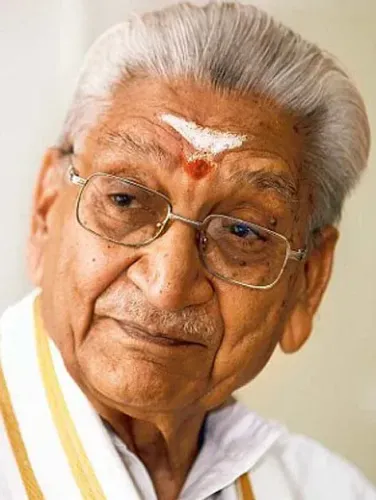
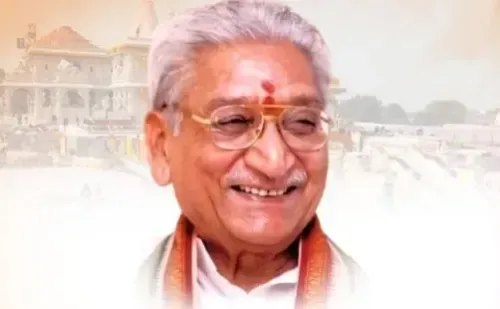
Amit Shah pays tribute to VHP icon Ashok Singhal
Synopsis
Union Home Minister Amit Shah paid tribute to veteran VHP leader Ashok Singhal, calling his life a 'confluence of sacrifice, simplicity, patriotism, religious devotion, volunteerism, and struggle' as the Sangh Parivar marks his birth centenary in September 2026.
Key Takeaways
Amit Shah posted a Hindi tribute to Ashok Singhal on September 27, 2026 , during centenary commemorations.
Singhal served as VHP president from 1980 to 2011 and was a central figure in the Ram Janmabhoomi agitation.
In 1984 , the VHP formed the Shri Ram Janmabhoomi Mukti Yagna Samiti under leaders including Singhal to intensify the Ayodhya campaign.
Shah's tribute explicitly invokes 'swayamsevaktva' (volunteerism), framing Singhal primarily as an RSS -trained karyakarta.
The post is part of a broader pattern of senior BJP leaders reinforcing ideological continuity with the Sangh Parivar on key anniversaries.
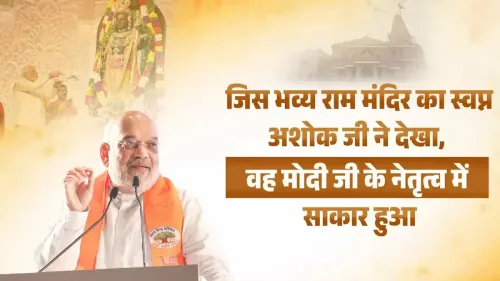
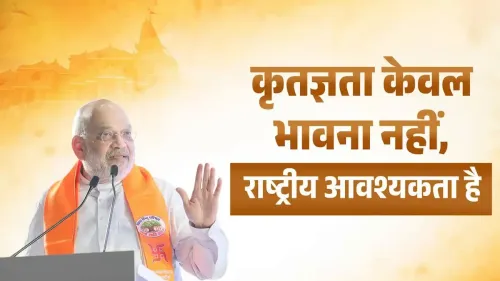
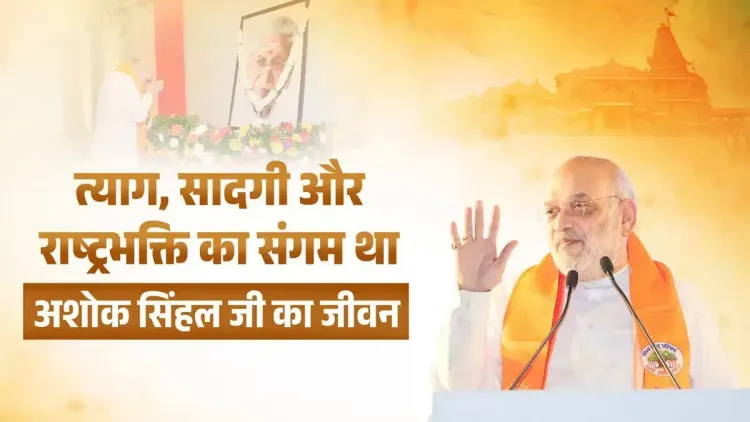
A life defined by sacrifice, simplicity, and an unshakeable commitment to the nation — that is how Union Home Minister Amit Shah remembered veteran Vishva Hindu Parishad (VHP) leader Ashok Singhal in a post on X on Sunday, September 27, 2026.
Shah wrote in Hindi: 'Ashok Singhal ji ka jeevan tyaag, saadgi, utkrisht rashtrbhakti, dharmanishtha, swayamsevaktva aur sangharsh, in sabhi gunon ka sangam tha' — ('The life of Ashok Singhal ji was a confluence of sacrifice, simplicity, outstanding patriotism, religious devotion, volunteerism, and struggle.')
The man who shaped the Ram Janmabhoomi movement
Ashok Singhal served as president of the VHP from 1980 to 2011, steering the organisation through its most consequential decades. He was among the principal architects of the Ram Janmabhoomi agitation — the decades-long campaign to build a Ram temple at Ayodhya that began gathering national momentum in the 1980s and concluded with the historic consecration in 2024. In 1984, the VHP formed the Shri Ram Janmabhoomi Mukti Yagna Samiti under leaders including Singhal to intensify that campaign.
His roots ran deep into the Rashtriya Swayamsevak Sangh (RSS), the 1925-founded volunteer organisation that forms the ideological spine of the broader Sangh Parivar. Shah's tribute explicitly invokes 'swayamsevaktva' — volunteerism — signalling that Singhal is being remembered first as an RSS-trained karyakarta, not merely as an organisation head.
Why September 2026 and what it signals for the Sangh Parivar
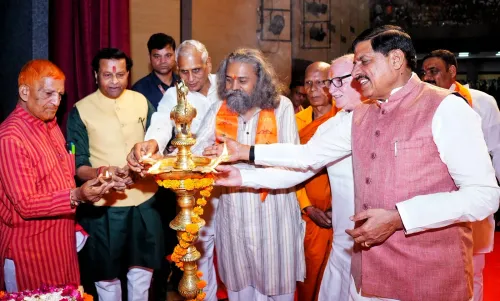
The tribute comes during a period when the VHP and RSS are marking commemorative programmes tied to Singhal's birth centenary in September 2026. Senior BJP leaders routinely issue public statements on such anniversaries, reinforcing the ideological thread connecting the ruling party to its Sangh Parivar origins. For Shah — himself a long-time RSS-trained organiser — the gesture carries extra weight: it is a reminder of the movement-era sacrifices that preceded the party's political ascent from the late 1980s onward.
The five qualities Shah names — sacrifice, simplicity, patriotism, religious devotion, and struggle — read almost as a checklist of the Sangh ideal of a 'complete swayamsevak', a framing that speaks directly to the VHP cadre and RSS rank-and-file who revered Singhal as a living embodiment of that ideal.
Point of View
Timed to Ashok Singhal's birth centenary, is as much an act of ideological reinforcement as it is personal remembrance — the Home Minister is speaking directly to the Sangh Parivar's base at a moment when commemorative energy is already high. By foregrounding 'swayamsevaktva' alongside patriotism, Shah implicitly ties the BJP's current governance mandate to the movement-era sacrifices that made it politically viable. The Ram Janmabhoomi thread running through Singhal's legacy also allows the party to periodically re-anchor its identity in a milestone — the 2024 Ayodhya consecration — that it considers its defining achievement. For a Home Minister who rarely makes symbolic gestures without strategic texture, this tribute is a reminder that party and parent organisation remain deliberately, publicly inseparable.
NationPress
28 Sept 2026
Frequently Asked Questions
Who was Ashok Singhal?
Ashok Singhal was a veteran leader of the Vishva Hindu Parishad (VHP) who served as its president from 1980 to 2011 and was one of the principal architects of the Ram Janmabhoomi movement for a temple at Ayodhya.
Why is Amit Shah paying tribute to Ashok Singhal in September 2026?
September 2026 marks Ashok Singhal's birth centenary, and the VHP and RSS are holding commemorative programmes; senior BJP leaders including Home Minister Amit Shah have issued public tributes as part of those observances.
What was Ashok Singhal's role in the Ram Janmabhoomi movement?
Singhal was central to organising the Ram Janmabhoomi agitation; in 1984 the VHP formed the Shri Ram Janmabhoomi Mukti Yagna Samiti under leaders including him to intensify the Ayodhya campaign, which concluded with the 2024 temple consecration.
What is the VHP and its connection to the RSS?
The Vishva Hindu Parishad is a Hindu nationalist organisation founded in 1964 as part of the Sangh Parivar, the ideological family anchored by the Rashtriya Swayamsevak Sangh (RSS), which was established in 1925.
What qualities did Amit Shah attribute to Ashok Singhal?
Shah described Singhal's life as a confluence of sacrifice, simplicity, outstanding patriotism, religious devotion, volunteerism, and struggle.