Amit Shah Plants Neem at India-Pak Border Outpost in Bhuj
Synopsis
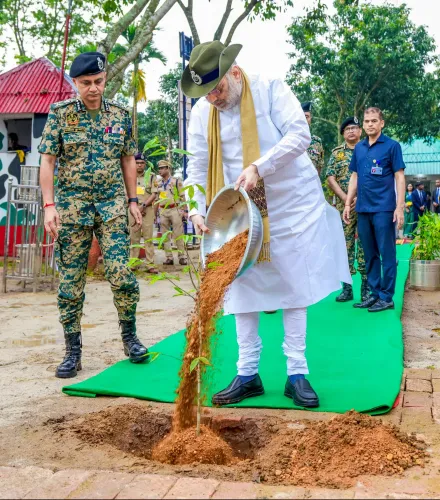
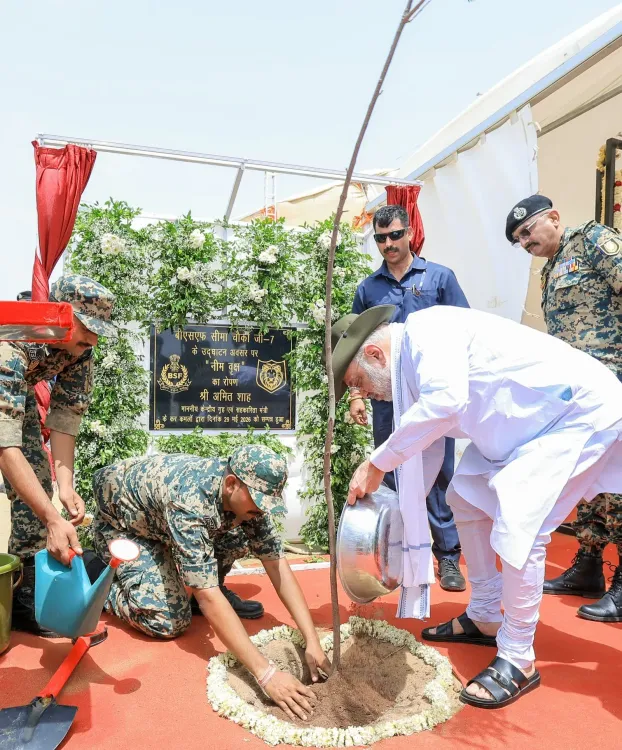
Union Home Minister Amit Shah planted a neem sapling at the G-7 Border Outpost on the India-Pakistan boundary near Bhuj, Gujarat, on 29 May 2026, highlighting that India's security forces have planted over 7.5 crore saplings in five years while guarding the nation's borders.
Key Takeaways
Amit Shah personally planted a neem sapling at the G-7 Border Outpost on the India-Pakistan boundary near Bhuj, Gujarat on 29 May 2026 .
India's security forces have planted more than 7.5 crore (75 million) saplings over the past five years , according to Shah's post.
The Border Security Force (BSF) , under the Ministry of Home Affairs , is the primary force guarding the India-Pakistan border in this sector.
Afforestation in the arid Kutch belt addresses desertification and supports India's carbon sequestration targets under the Green India Mission .
Neem was chosen as the sapling species, suited to the semi-arid conditions of western Gujarat .
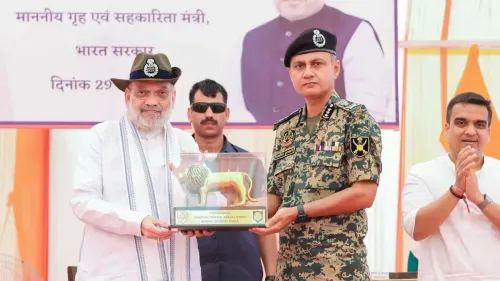
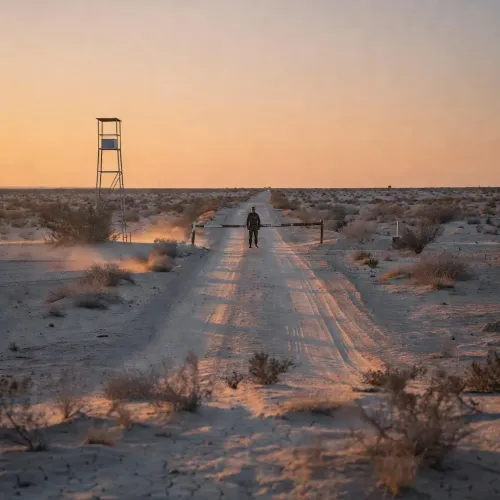
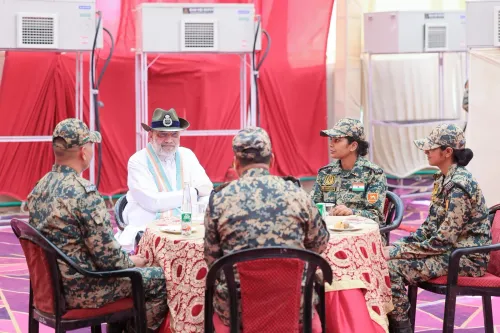
Union Home Minister Amit Shah on Friday, 29 May 2026, planted a neem sapling at the G-7 Border Outpost on the India-Pakistan international boundary near Bhuj, Gujarat, underscoring the dual role India's security forces play in both guarding the frontier and protecting the environment.
Context
Posting on X, Shah noted that India's security force personnel are simultaneously securing the nation's borders and contributing to environmental conservation — planting more than 7.5 crore (75 million) saplings over the past five years. 'हमारे सुरक्षा बलों के जवान जहाँ एक ओर देश की सीमाओं को सुरक्षित बना रहे हैं, वहीं बीते 5 वर्षों में 7.5 करोड़ से अधिक पौधारोपण कर पर्यावरण संरक्षण में भी महत्त्वपूर्ण योगदान दे रहे हैं' [Our security force personnel are not only securing the borders of the country but have also made an important contribution to environmental conservation by planting more than 7.5 crore saplings in the last 5 years], he wrote.
The visit to the G-7 Border Outpost in the Kutch sector places the Home Minister at one of the most strategically sensitive stretches of India's western frontier.
Policy Backdrop
India's Central Armed Police Forces (CAPFs), which include the Border Security Force (BSF) — the primary paramilitary force under the Ministry of Home Affairs responsible for the India-Pakistan and India-Bangladesh borders — have been increasingly tasked with supplementary environmental duties alongside their core security mandate.
The Green India Mission, launched in 2014 under the National Action Plan on Climate Change, explicitly encourages participation by government agencies, including paramilitary forces, in afforestation. Arid border belts such as Kutch in Gujarat are particularly targeted in such drives to counter desertification and support carbon sequestration goals.
Neem, a drought-resistant species well suited to semi-arid conditions, is a common choice for plantation drives in western India's border regions.
Stakeholders and Impact
The primary beneficiaries of border-belt afforestation are border villages in Kutch, which face persistent challenges of soil erosion, water scarcity, and extreme heat. A greener buffer along the international boundary also serves ecological purposes for local communities dependent on marginal agriculture and pastoralism.
For the CAPFs themselves, participation in environmental programmes has become a visible part of their public-facing identity, reinforcing a narrative that security forces contribute to national development beyond their primary mandate. The Ministry of Home Affairs regularly highlights such activities in annual reports on CAPF community outreach.
What's Next
The Ministry of Home Affairs is expected to document this drive in its annual report on CAPF environmental activities. Observers will watch whether the government announces fresh plantation targets beyond the 7.5 crore milestone, particularly as India's climate commitments under the Paris Agreement require sustained afforestation efforts. Shah's visit to the G-7 outpost also signals continued high-level attention to the western border infrastructure in Gujarat, a state that remains central to India's security calculus vis-à-vis Pakistan.
Point of View
The government positions CAPFs within India's climate commitments, lending the paramilitary a softer, developmental identity alongside their security role. The choice of Bhuj and the Kutch frontier is also politically legible: Gujarat is the BJP's home state, and high-profile ministerial visits to its border infrastructure reinforce both national-security optics and local political capital. The broader pattern suggests that environment-linked outreach by security forces will continue to feature prominently in MHA's public communications ahead of climate-related international reviews.
NationPress
13 Oct 2026
Frequently Asked Questions
Why did Amit Shah visit Bhuj in May 2026?
Union Home Minister Amit Shah visited Bhuj, Gujarat on 29 May 2026 to plant a neem sapling at the G-7 Border Outpost on the India-Pakistan boundary, as part of an afforestation drive by India's security forces.
How many saplings have Indian security forces planted in five years?
According to Amit Shah's post on X, India's security forces have planted more than 7.5 crore (75 million) saplings over the past five years.
What is the G-7 Border Outpost in Bhuj?
The G-7 Border Outpost is a forward security post located on the India-Pakistan international boundary in the Bhuj sector of Kutch district, Gujarat , manned by the Border Security Force (BSF) .
What is the Green India Mission?
The Green India Mission was launched in 2014 under India's National Action Plan on Climate Change . It encourages government agencies, including paramilitary forces, to participate in afforestation and ecological restoration across the country.
Why is neem planted in border areas like Kutch?
Neem is a drought-resistant tree well suited to the semi-arid conditions of Kutch and western Gujarat. It is commonly used in plantation drives in border belts to counter desertification, improve soil health, and support carbon sequestration goals.