Amit Shah: PM-KISAN 24th instalment sends ₹18,690 Cr to farmers

Synopsis
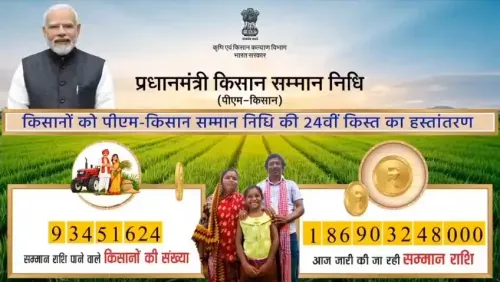
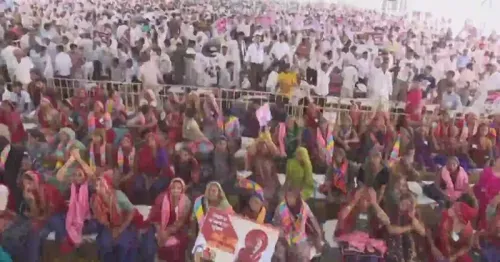
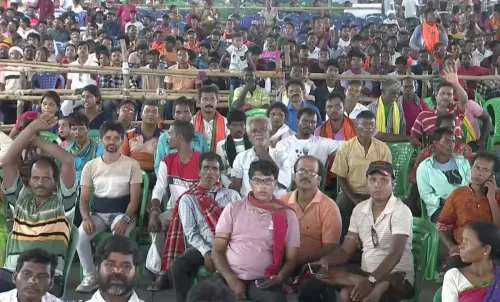
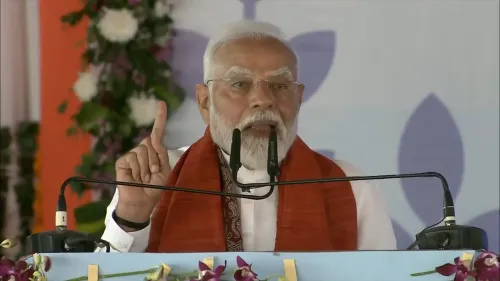
PM Modi released the 24th PM-KISAN instalment from Banaskantha, Gujarat, transferring over ₹18,690 crore to 9.34 crore farmer families. Cumulative payouts crossed ₹4.47 lakh crore, including ₹1.06 lakh crore to women. He also inaugurated ₹14,000 crore worth of projects and the India Govansh Breeding and Research Centre.
Key Takeaways
₹18,690 crore disbursed to 9.34 crore farmer families as the 24th PM-KISAN instalment on 30 October 2026 .
Cumulative PM-KISAN payouts have now crossed ₹4.47 lakh crore since the scheme's launch in February 2019 . ₹1.06 lakh crore of total disbursements has reached women beneficiaries .
The release was timed to support farmers during the rabi sowing season and coincides with the Diwali festive period.
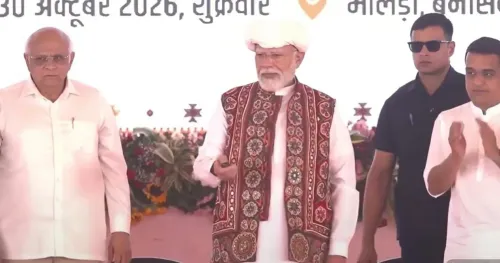
PM Modi also inaugurated and laid foundation stones for ₹14,000 crore worth of development projects in Banaskantha, Gujarat .
The India Govansh Breeding and Research Centre was formally dedicated to the nation at the same event.
Just days before Diwali, Prime Minister Narendra Modi disbursed the 24th instalment of the Pradhan Mantri Kisan Samman Nidhi (PM-KISAN) scheme on Friday, 30 October 2026, transferring over ₹18,690 crore directly into the bank accounts of 9.34 crore farmer families — timing the release to coincide with the festive season and the start of rabi sowing. Union Home Minister Amit Shah hailed the disbursement as a Diwali gift to the country's annadatas (food providers).
₹4.47 lakh crore and counting: PM-KISAN's seven-year arc
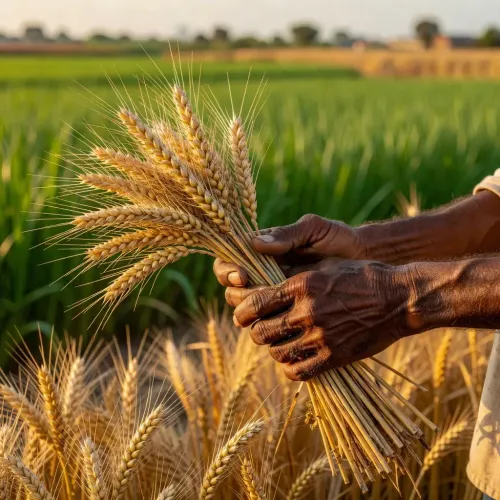
Launched in February 2019, PM-KISAN was designed as a straightforward proposition: deposit ₹6,000 a year — in three equal instalments — directly into the accounts of eligible landholding farmer families, bypassing every intermediary. Friday's disbursement pushes the scheme's cumulative payout past ₹4.47 lakh crore, cementing its standing as one of the world's largest Direct Benefit Transfer (DBT) programmes.
Of that total, ₹1.06 lakh crore has flowed exclusively to women beneficiaries — a figure Home Minister Shah underscored to highlight the scheme's gender reach. The instalment's timing is deliberate: rabi sowing begins in October-November, and the cash infusion is intended to help farmers purchase seeds, fertilisers, and equipment at the season's critical opening window.
Why Banaskantha — and what else Modi unveiled there
Modi chose Banaskantha district in northern Gujarat as the launch venue — a predominantly agrarian district known for dairy farming and horticulture. Beyond the PM-KISAN transfer, he inaugurated and laid the foundation stones of development projects worth over ₹14,000 crore in the district.
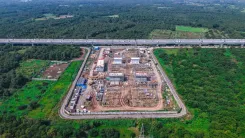
The headline addition was the India Govansh Breeding and Research Centre, a new facility dedicated to indigenous cattle breeding and bovine research, which Modi formally dedicated to the nation. The centre underlines the government's parallel push to upgrade indigenous cattle genetics alongside conventional farm-income support.
DBT as policy architecture — not just welfare delivery
PM-KISAN's scale makes it a reference point for direct-transfer design globally. By eliminating leakage through the account-linked Aadhaar-authenticated pipeline, the government has argued the scheme delivers a higher effective value per rupee than input subsidies. Critics have noted the flat ₹6,000 annual ceiling has not been revised since 2019, and with input costs rising, the real value of the transfer has eroded — a debate that resurfaces with each new instalment.
Shah's post frames the disbursement in the language of festivity and agricultural seasonality — 'tyoharon ke is mausam mein' (in this festive season) — a framing the BJP has consistently used to connect welfare delivery to cultural moments and build rural political goodwill ahead of state election cycles.
Point of View
A Gujarat district with strong dairy and agrarian identity, allows the Centre to simultaneously amplify a national scheme and reinforce state-level political messaging. The ₹6,000 annual cap, unchanged since 2019, remains a latent vulnerability: as input costs rise, each successive instalment draws more scrutiny over real purchasing power. The inauguration of the Govansh Breeding Centre alongside a cash-transfer milestone signals the government's intent to broaden its agricultural narrative beyond income support toward productivity and indigenous livestock development.
NationPress
30 Oct 2026
Frequently Asked Questions
What is the 24th PM-KISAN instalment amount per farmer?
The 24th PM-KISAN instalment maintains the scheme's standard payout of ₹2,000 per farmer family , which forms one of three equal tranches of the annual ₹6,000 income support. The total disbursed in this instalment across all beneficiaries exceeded ₹18,690 crore .
How many farmers received PM-KISAN 24th instalment?
Over 9.34 crore farmer families received the 24th PM-KISAN instalment directly into their bank accounts on 30 October 2026 , according to Home Minister Amit Shah's post.
What is PM-KISAN scheme and who is eligible?
Pradhan Mantri Kisan Samman Nidhi (PM-KISAN) is a central government scheme launched in February 2019 that provides ₹6,000 per year to eligible landholding farmer families in three equal instalments via Direct Benefit Transfer. Farmers must have valid Aadhaar-linked bank accounts.
What projects did Modi inaugurate in Banaskantha on 30 October 2026?
PM Modi inaugurated and laid foundation stones of development projects worth over ₹14,000 crore in Banaskantha, Gujarat . He also formally dedicated the India Govansh Breeding and Research Centre — focused on indigenous cattle breeding and bovine research — to the nation.
How much has PM-KISAN disbursed in total so far?
As of the 24th instalment, PM-KISAN has cumulatively disbursed over ₹4.47 lakh crore to farmer families since its launch in 2019 , including over ₹1.06 lakh crore transferred specifically to women beneficiaries.