Amit Shah Releases Mahtari Vandan Yojana's 33rd Instalment
Synopsis
Union Home Minister Amit Shah, alongside Chhattisgarh CM Vishnu Dev Sai, released the 33rd instalment of Mahtari Vandan Yojana on 3 November 2026, transferring ₹632.40 crore to over 67 lakh women via DBT, just ahead of Diwali and Chhattisgarh Rajyotsav 2026.
Key Takeaways
₹632.40 crore transferred in the 33rd instalment of Mahtari Vandan Yojana on 3 November 2026 .
Over 67 lakh women in Chhattisgarh received funds directly via Direct Benefit Transfer (DBT) .
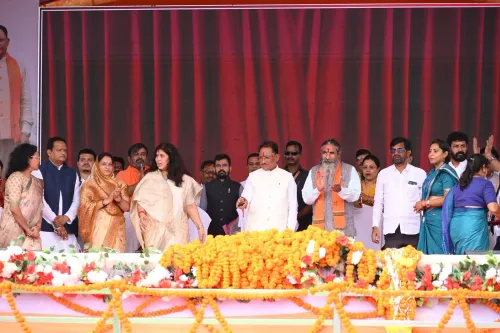
Union Home Minister Amit Shah formally released the instalment alongside CM Vishnu Dev Sai .
The disbursement was timed ahead of Diwali and Chhattisgarh Rajyotsav 2026 .
The scheme targets women's dignity, self-reliance, and prosperity under the state's Sushaasan (good governance) framework.
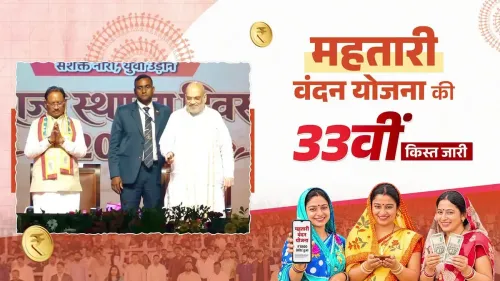
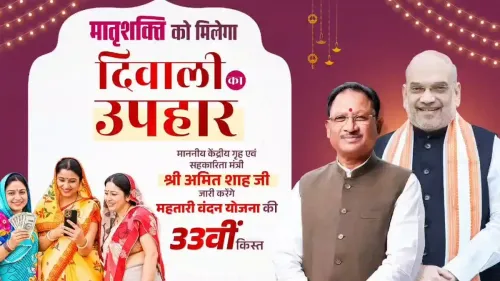
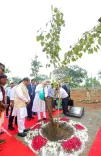
Days before Diwali 2026, more than 67 lakh women across Chhattisgarh woke up to a direct deposit: ₹632.40 crore credited to their bank accounts in a single sweep. Union Home and Cooperation Minister Amit Shah formally released the 33rd instalment of the Mahtari Vandan Yojana on Tuesday, 3 November 2026, in the presence of Chief Minister Vishnu Dev Sai, marking another milestone in the state government's flagship women's welfare programme.
What Mahtari Vandan Yojana delivers — and to whom
The scheme channels periodic financial assistance directly into the accounts of women beneficiaries through the Direct Benefit Transfer (DBT) mechanism — bypassing middlemen entirely. The Chief Minister's Office described the disbursement as a gift to 'maataon-bahnon' (mothers and sisters) of the state ahead of the festival season, framing it within the ruling government's 'Sushaasan' (good governance) philosophy.
At its core, the programme targets what policymakers call the three pillars: samman, swavalamban aur samriddhi — dignity, self-reliance, and prosperity for women. With 67 lakh-plus verified beneficiaries, the scheme is among the largest direct cash-transfer programmes for women at the state level in central India.
Why Amit Shah's presence carries political weight
Central ministers do not routinely chair state-level welfare disbursements. Shah's participation signals deliberate federal visibility — underscoring the Bharatiya Janata Party's coordinated messaging on women's economic empowerment ahead of Chhattisgarh Rajyotsav 2026, the state's founding anniversary. It is a pattern seen across BJP-governed states: when a welfare scheme hits a round-number milestone or a high-visibility instalment, a senior Union leader joins to amplify the moment.
Chief Minister Vishnu Dev Sai, who has anchored the programme since taking office, stood alongside Shah — a tableau designed to project continuity between state delivery and central endorsement.
₹632 crore in one transfer — the scale of DBT at work
Moving ₹632.40 crore to over 67 lakh accounts in a single DBT cycle is a logistical statement as much as a financial one. Each beneficiary receives roughly ₹1,000 per instalment — a modest but regular income supplement that, over 33 months, aggregates into a meaningful household resource. States across India have adopted variants of this model, but the scale and regularity of Chhattisgarh's disbursements under Mahtari Vandan have drawn sustained policy attention.
The 33rd instalment also underlines programme durability: schemes that survive budget cycles, government transitions, and administrative churn tend to build genuine beneficiary trust — and voter memory.
With Diwali around the corner and Chhattisgarh Rajyotsav on the horizon, the state government has timed this release for maximum resonance. The question is not whether the money reached wallets — DBT confirms that it did — but whether each of those 67 lakh women feels it as a promise kept, not just a transfer processed.
Point of View
Especially ahead of symbolic occasions like Diwali and Rajyotsav. With direct cash transfers to women now a competitive arena across Indian states, Chhattisgarh's sustained 33-month run demonstrates that programme longevity itself becomes a political asset. The scale — 67 lakh beneficiaries, over ₹632 crore in a single cycle — also signals the state's administrative capacity to execute DBT at volume, a metric that increasingly defines governance credibility in New Delhi's federal calculus.
NationPress
3 Nov 2026
Frequently Asked Questions
What is Mahtari Vandan Yojana in Chhattisgarh?
Mahtari Vandan Yojana is a Chhattisgarh state government scheme that provides periodic financial assistance directly to women beneficiaries through Direct Benefit Transfer (DBT), aimed at supporting women's dignity, self-reliance, and economic prosperity.
How much money was transferred in the 33rd instalment of Mahtari Vandan Yojana?
₹632.40 crore was transferred to over 67 lakh women in Chhattisgarh in the 33rd instalment, released on 3 November 2026.
Who released the 33rd instalment of Mahtari Vandan Yojana?
Union Home and Cooperation Minister Amit Shah formally released the instalment in the presence of Chhattisgarh Chief Minister Vishnu Dev Sai.
How many women benefit from Mahtari Vandan Yojana in Chhattisgarh?
More than 67 lakh (6.7 million) women across Chhattisgarh are enrolled as beneficiaries of the Mahtari Vandan Yojana.
What is DBT and how does Mahtari Vandan Yojana use it?
DBT stands for Direct Benefit Transfer — a system that sends government funds directly to verified beneficiary bank accounts without intermediaries. Mahtari Vandan Yojana uses DBT to ensure the cash assistance reaches each enrolled woman's account reliably every instalment cycle.