Amit Shah to Visit Mansa, Sangrur, Gurdaspur Over Punjab Drug Violence
Synopsis
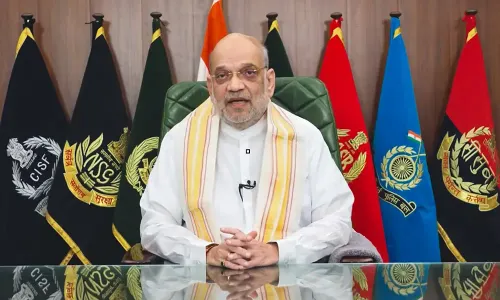
Union Home Minister Amit Shah announced he will visit Mansa, Sangrur, and Gurdaspur on 20 October to meet families of people killed for opposing drug networks, directly accusing the AAP state government of enabling Punjab's narcotics trade and promising central enforcement action.
Key Takeaways
Amit Shah will visit Mansa, Sangrur, and Gurdaspur on Tuesday, 20 October to meet families of anti-drug activists recently killed in Punjab.
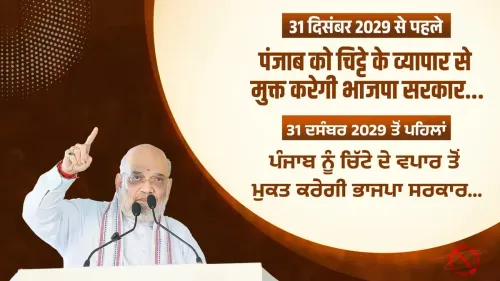
Shah accused the AAP government of allowing chitte (white heroin) traders to 'flourish under state patronage,' pushing Punjab into a 'swamp of drugs.' He pledged that the Government of India will 'selectively send every drug trader behind bars' and free Punjab and the nation from the narcotics trade.
All three districts — Mansa, Sangrur, Gurdaspur — have documented histories of high drug prevalence and figure prominently in central enforcement operations.
The announcement intensifies BJP-AAP political friction over Punjab's law-and-order record since the 2022 state elections.
The Narcotics Control Bureau has conducted repeated operations in Punjab; Shah's visit signals the Centre may escalate enforcement action.
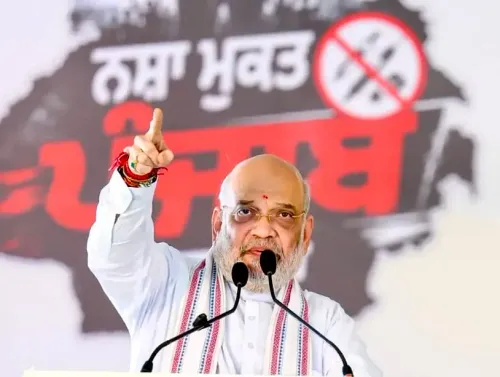
Families who lost loved ones for speaking out against Punjab's drug networks will receive a visit from Union Home Minister Amit Shah on Tuesday, 20 October — a direct escalation of the Centre's confrontation with the Aam Aadmi Party government over the state's narcotics crisis.
In a post in Punjabi on Sunday evening, Shah announced he will meet bereaved families in Mansa, Sangrur, and Gurdaspur — three districts that have long sat at the epicentre of Punjab's drug problem. The families, he wrote, lost members who had raised their voices against chitte de kaarobaari (white heroin traders) operating under what he described as the protection of the AAP state government. 'The pain of what these families have lost cannot be expressed in words,' he said.
Shah's Direct Charge Against the AAP Government
The Home Minister's language was stark and unsparing. He accused the AAP government of leaving 'no stone unturned in pushing Punjab into the swamp of drugs,' holding it responsible for the deaths of countless children across countless families. The specific allegation — that chitte traders are 'flourishing under the patronage' of the state government — is the sharpest political indictment yet from the Centre on Punjab's law-and-order record since AAP came to power in the 2022 assembly elections.
Shah coupled the condemnation with a direct promise: the Government of India will 'selectively send every drug trader behind bars' and will 'free Punjab and the entire country from this dark trade.' The framing positions the Union Home Ministry — which oversees the Narcotics Control Bureau — as the guarantor of enforcement where, in his telling, the state has abdicated responsibility.
Three Districts, Three Fault Lines in Punjab's Drug Map
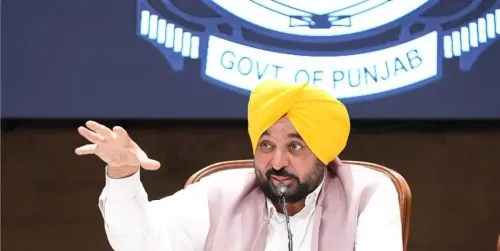
Mansa, Sangrur, and Gurdaspur are not chosen at random. All three have documented histories of high narcotics prevalence and have appeared repeatedly in central agency enforcement data over years. Sangrur, notably, was the constituency AAP's chief ministerial face Bhagwant Mann represented before becoming Chief Minister. Gurdaspur sits along the Pakistan border corridor historically associated with cross-border drug and arms smuggling. Mansa, in the Malwa belt, has seen some of Punjab's highest per-capita drug casualty figures over the past decade.
By scheduling meetings in precisely these three locations, Shah is drawing a political map as much as a security itinerary — planting the Centre's flag in AAP's backyard on its most vulnerable issue.
The NCB's Role and the Centre-State Friction
Central agencies, led by the Narcotics Control Bureau, have run repeated coordinated operations in Punjab alongside state police since well before the current government took office. But the tempo and political framing of those operations have intensified since 2022. The Union Home Ministry's position — that narcotics control is a national security matter that cannot be left to a non-cooperative state government — has become a recurring sub-text in BJP-AAP clashes on multiple fronts.
Shah's warning that attempts to 'silence voices raised against this dark trade will never succeed' signals the Centre's intent to keep the pressure sustained — and public — heading into Punjab's political cycle.
When the Home Minister lands in Mansa, Sangrur, and Gurdaspur on Tuesday, the visit will be watched for what comes after: whether the meetings translate into fresh NCB operations, FIRs, or a broader central crackdown that turns political rhetoric into enforcement reality.
Point of View
Which would force the NCB and central agencies to either deliver visible arrests or hand AAP a counter-narrative. The families caught in the middle deserve outcomes, not only optics.
NationPress
18 Oct 2026
Frequently Asked Questions
Why is Amit Shah visiting Punjab on 20 October 2026?
Amit Shah is visiting Punjab on 20 October to meet families of individuals who were killed after speaking out against drug traders in the state. He announced visits to Mansa, Sangrur, and Gurdaspur districts.
What is 'chitte' and why is it a political issue in Punjab?
'Chitte' is a colloquial Punjabi term for white heroin or synthetic drugs that have devastated communities across Punjab for years. It has become a central political flashpoint between the BJP-led Centre and the AAP state government, with each side blaming the other for its spread.
What action has Amit Shah promised against drug traders in Punjab?
Shah pledged that the Government of India will 'selectively send every drug trader behind bars' and will work to free Punjab and the entire country from the narcotics trade, signalling possible escalation by central enforcement agencies like the NCB.
What is the AAP government's record on drugs in Punjab?
AAP came to power in Punjab in 2022 partly on a promise to eradicate drugs. The BJP and the Union Home Ministry have since accused the state government of failing on this promise and even of allowing drug networks to operate under official protection — charges AAP denies.
Which central agency handles drug enforcement in Punjab?
The Narcotics Control Bureau, which functions under the Union Home Ministry, is the primary central agency for narcotics enforcement. It has conducted multiple coordinated operations in Punjab in conjunction with state police over the past several years.