Vaishnaw Meets Omar Abdullah, Anantnag Gets Vande Bharat Stop
Synopsis
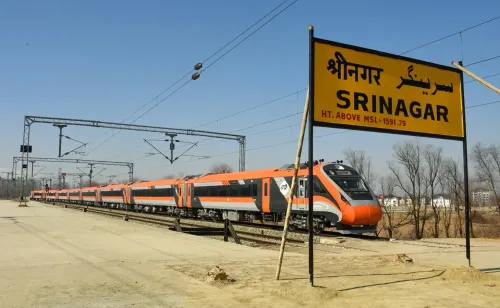
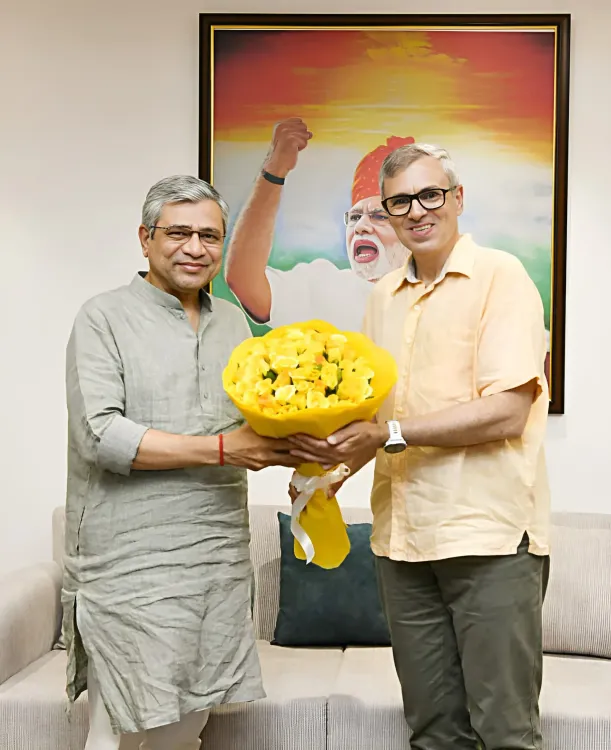
Union Minister Ashwini Vaishnaw met J&K Chief Minister Omar Abdullah on June 10, 2026. The two reviewed the Vande Bharat service on the Jammu-Srinagar route and agreed to add a new stoppage at Anantnag, boosting connectivity for south Kashmir's residents and the region's fruit and construction economy.
Key Takeaways
Union Minister Ashwini Vaishnaw met J&K Chief Minister Omar Abdullah on June 10, 2026 to review railway connectivity in the region.
CM Omar Abdullah acknowledged the 'transformative impact' of the Vande Bharat service on the Jammu-Srinagar route.
Both leaders agreed to add a new Vande Bharat stoppage at Anantnag , a key district in south Kashmir.
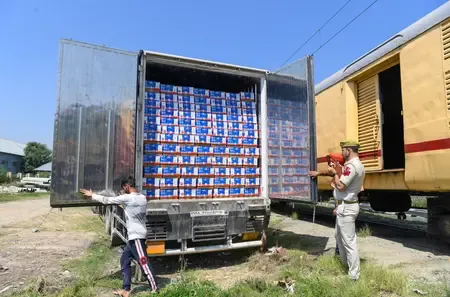
The rail network is already facilitating movement of fruits and cement , supporting the local economy.
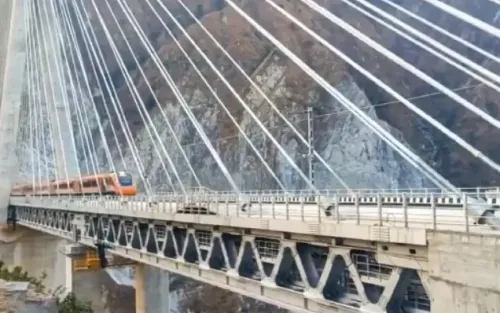
The decision builds on the long-running Udhampur-Srinagar-Baramulla Rail Link (USBRL) , a 272-km strategic project.
Kashmiri apple growers and the J&K construction sector are among the primary beneficiaries of expanded rail access.
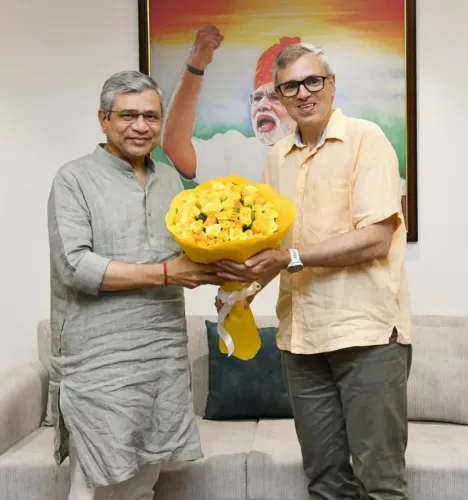
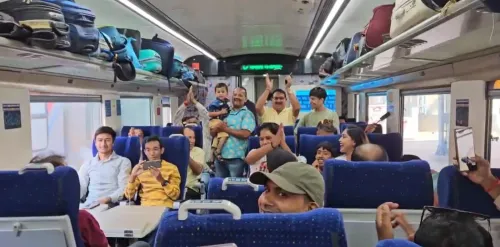
Union Minister Ashwini Vaishnaw met Jammu and Kashmir Chief Minister Omar Abdullah on Wednesday, June 10, 2026, with the two leaders reviewing the performance of the Vande Bharat Express on the Jammu-Srinagar route and agreeing to add a new stoppage at Anantnag to expand passenger connectivity across the valley.
Context
The meeting centred on the operational impact of the Vande Bharat service since its extension to the Kashmir Valley. Chief Minister Omar Abdullah acknowledged the 'transformative impact' of the service and highlighted the growing movement of fruits and cement through the rail network as a positive signal for the region's economy. The two leaders also confirmed the decision to provide a dedicated stoppage for the Vande Bharat at Anantnag, a district headquarters in south Kashmir.
Policy Backdrop
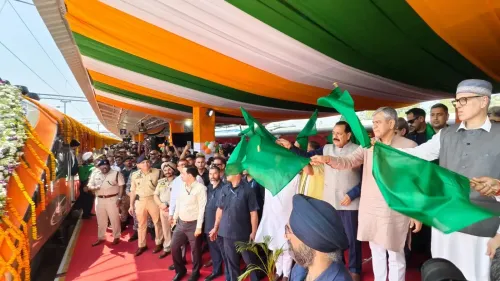
The Udhampur-Srinagar-Baramulla Rail Link (USBRL), a 272-km strategic rail project sanctioned in the 1990s, forms the backbone of this connectivity push. The project was designed to connect the Kashmir Valley with the national rail network through difficult Himalayan terrain, featuring major bridges and tunnels, with valley sections opened progressively after 2020. Vande Bharat services, first launched nationally in 2019, were subsequently extended to the Jammu and Kashmir corridor as part of Indian Railways' broader semi-high-speed expansion.
Following the reorganisation of Jammu and Kashmir into a Union Territory in 2019, the central government accelerated rail, road and tunnel investments to improve year-round logistics and reduce the region's dependence on road transport. The emphasis on freight movement — particularly horticulture produce and construction materials — reflects a deliberate policy of using rail as a tool for economic integration in border and hill regions.
Stakeholders and Impact
Anantnag is a key district in south Kashmir well known for apple production, and a dedicated Vande Bharat stoppage there is expected to benefit local farmers, traders and daily commuters who currently rely heavily on road transport. The district sits along the USBRL corridor, making it a natural candidate for enhanced rail access. For the broader J&K cement and construction sector, improved rail freight movement offers a cost-effective alternative to road haulage, particularly during winter months when highway connectivity is disrupted.
Kashmiri apple growers stand to gain directly from faster, more reliable rail links to markets in the rest of the country, reducing post-harvest losses and logistics costs that have long squeezed margins for small and medium orchardists in the valley.
What's Next
The formal implementation timeline for the Anantnag stoppage will be one to watch, along with any broader announcement on additional Vande Bharat extensions or dedicated freight terminals in the next Railway Budget or J&K development plan. The meeting signals continued coordination between the Union Ministry of Railways and the elected J&K government on infrastructure priorities — a pattern likely to intensify as the USBRL project moves toward full completion. Wider stoppage rationalisation across the valley, bringing more towns onto the high-speed rail map, could follow as ridership and freight volumes grow.
Point of View
Blending connectivity optics with tangible economic benefit for a commercially important constituency. It fits a broader national pattern of using high-profile train services as anchors for regional development narratives, particularly in strategically sensitive border areas. The emphasis on freight — fruits and cement — signals that the rail push is being framed not just as passenger convenience but as an economic integration project, which could shape future Railway Budget allocations for J&K.
NationPress
26 Oct 2026
Frequently Asked Questions
What was decided in the Ashwini Vaishnaw Omar Abdullah meeting?
The two leaders agreed to provide a new stoppage for the Vande Bharat Express at Anantnag in south Kashmir, and reviewed the positive economic impact of the Jammu-Srinagar rail service.
Where is Anantnag and why is it important for rail connectivity?
Anantnag is a district headquarters in south Kashmir located along the USBRL corridor. It is a major apple-producing area and a new Vande Bharat stoppage there will benefit farmers, traders and daily commuters.
What is the Vande Bharat service on the Jammu-Srinagar route?
Vande Bharat is Indian Railways' indigenous semi-high-speed train service, first launched in 2019 and later extended to the Jammu-Srinagar section as part of the Udhampur-Srinagar-Baramulla Rail Link corridor.
How does the railway network help J&K's economy?
The rail network enables faster and more cost-effective movement of fruits such as apples and construction materials like cement, reducing dependence on road transport and lowering logistics costs for local businesses.
What is the USBRL project?
The Udhampur-Srinagar-Baramulla Rail Link is a 272-km strategic rail project sanctioned in the 1990s to connect the Kashmir Valley with India's national rail network through tunnels and bridges in difficult Himalayan terrain.